
August 20, 1527 - King Frederik Allows Protestants to Enter Denmark
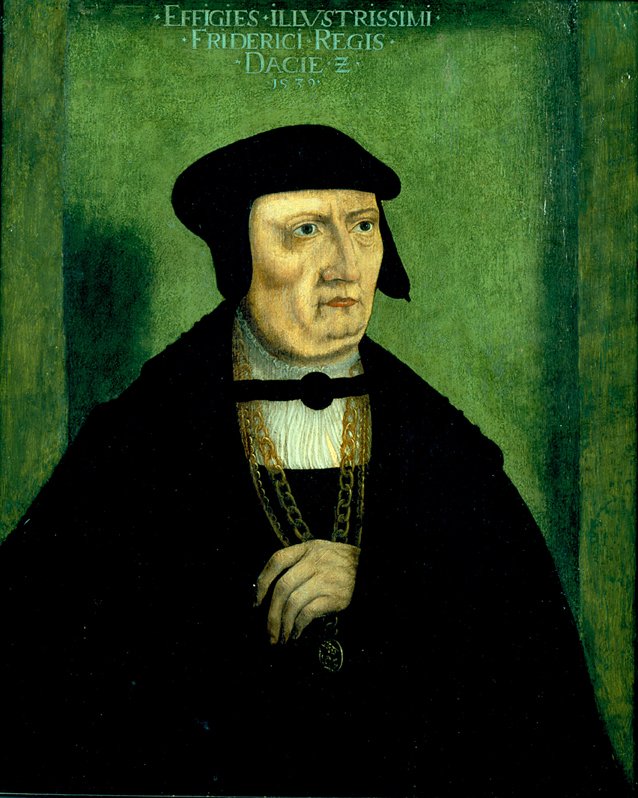
Jacob Binck (attributed), King Frederick I of Denmark, 1539. Public domain. Courtesy of Wikimedia Commons.
King Frederik I of Denmark began his reign by promising to uphold the Roman Catholic Church and prevent the spread of Martin Luther's teachings throughout his kingdom. Although Lutheran ideas had already begun circulating in Denmark through merchants, students, and preachers, the king initially assured Catholic leaders that he would suppress the growing Protestant movement.
That policy changed dramatically at the Diet of Odense on August 20, 1527. Frederik chose to grant greater religious freedom to Lutheran preachers and limited the authority of Roman Catholic bishops. While he did not immediately make Lutheranism the official religion of Denmark, his decision gave the Reformation legal room to expand throughout the kingdom.
In the years that followed, Lutheran influence grew rapidly. Churches, clergy, and universities increasingly embraced Protestant theology, and after Frederik's death, his son Christian III completed the Danish Reformation in 1536 by officially establishing Lutheranism as the state church and reorganizing the nation's religious life around biblical preaching and Lutheran doctrine.
Why it matters:
The Diet of Odense marked a turning point in Scandinavian Christianity. By allowing Lutheranism to take root legally, Frederik I set Denmark on a path that transformed its churches, government, and culture. Today, the Evangelical Lutheran Church remains Denmark's national church, and the country's religious identity continues to reflect the Reformation that began with the king's decision in 1527.