
August 21, 1831 - Baptist Preacher Nat Turner’s Rebellion
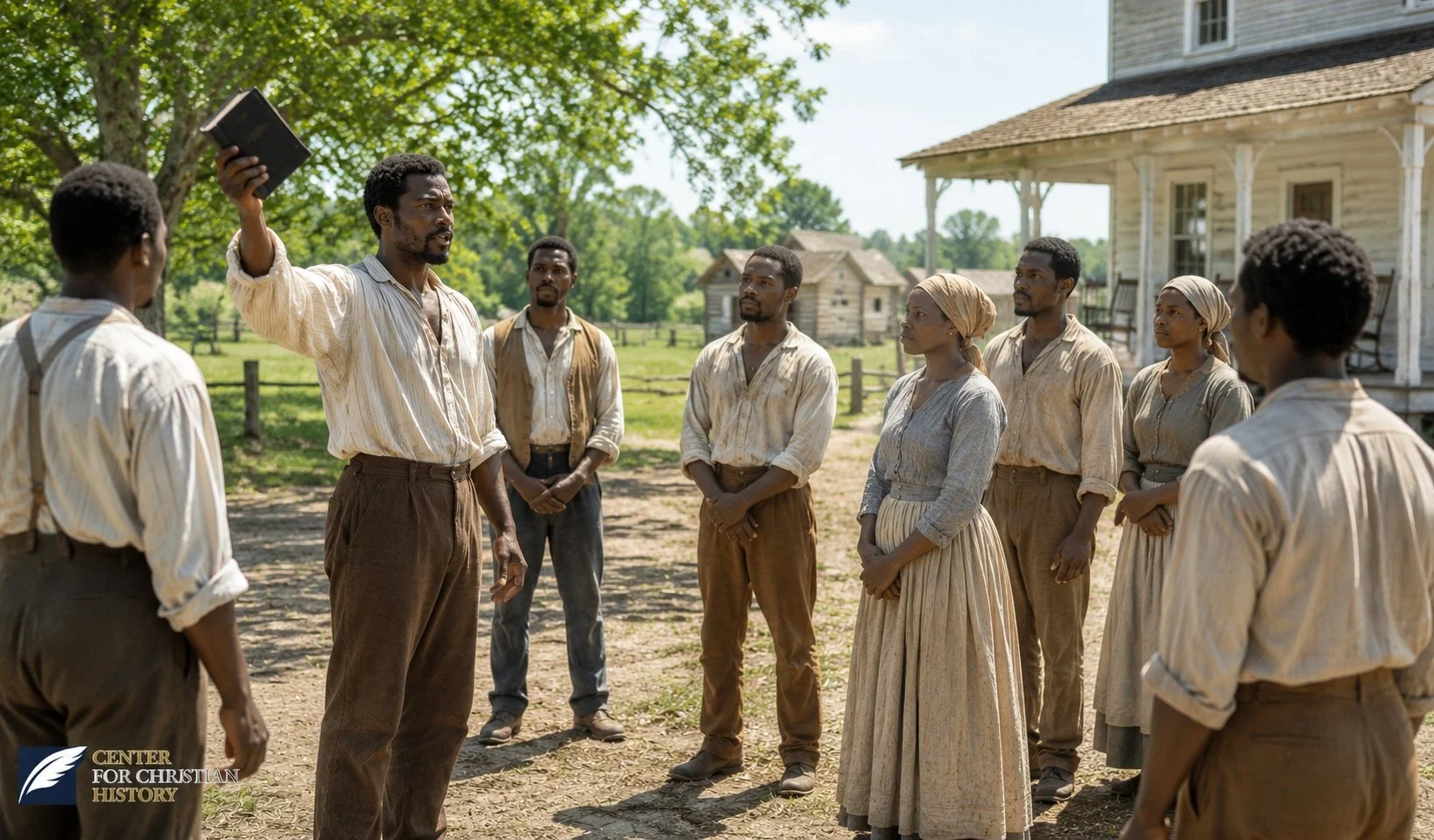
AI-generated historical reconstruction for the Center for Christian History (2026), depicting Nat Turner addressing fellow enslaved people in Southampton County, Virginia, shortly before the 1831 rebellion. Created for educational purposes based on historical accounts from Encyclopaedia Britannica and the Encyclopedia of Virginia. Copyright © 2026 Center for Christian History.
One of the events in American history that generated debate among Christians was the rebellion led by Nat Turner. An enslaved Baptist preacher in Southampton County, Virginia, Turner believed God had called him to bring judgment upon the institution of slavery. Guided by visions and a deep conviction that he was carrying out a divine mission, he gathered a small group of followers and launched an uprising that began on August 21, 1831.
Over the next two days, the rebels killed approximately 55 white men, women, and children before state militia and federal troops suppressed the revolt. Turner escaped capture for nearly two months but was eventually arrested, tried, and executed on November 11, 1831. In the aftermath, more than 100 African Americans—many of whom had not participated in the rebellion—were killed in retaliatory violence.
The rebellion sent shockwaves throughout the United States. Southern legislatures enacted stricter slave codes, limiting the education, movement, worship, and assembly of enslaved people. At the same time, the uprising intensified national debates over slavery, strengthening abolitionist arguments in the North while deepening fears in the South. The growing divide helped set the nation on a path toward the Civil War.
Why It Matters
Nat Turner's story reminds us that Christians have wrestled for centuries with difficult questions about justice, oppression, violence, and obedience to God. While believers continue to disagree about Turner's actions, few dispute that slavery was a profound moral evil. His rebellion exposed the deep contradictions of a nation that proclaimed liberty while denying freedom to millions, making it one of the defining moments in the long struggle over slavery in America.