
August 22, 556 - St. Columba “Encounters” the Loch Ness Monster
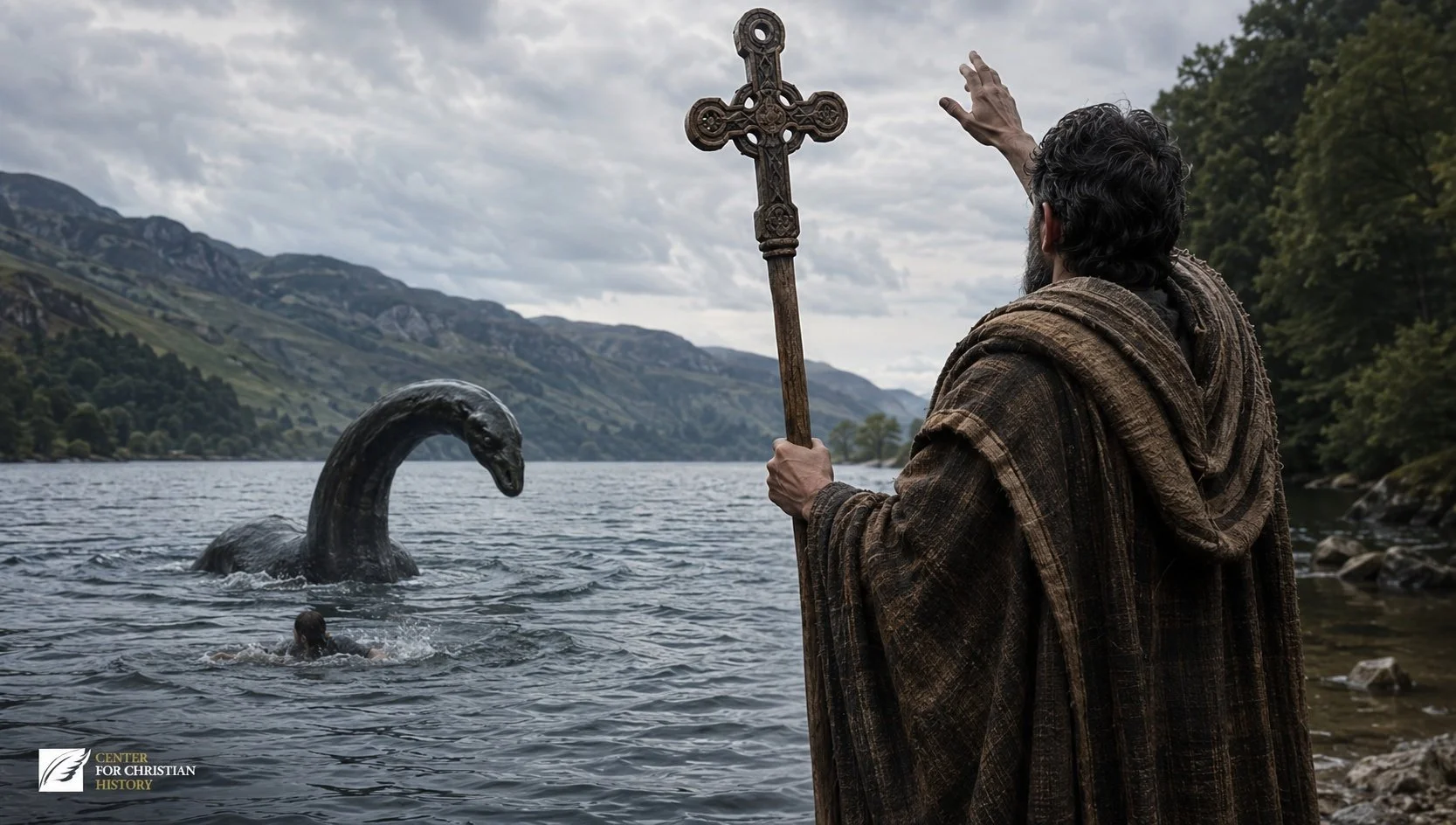
AI-generated historical reconstruction of St. Columba confronting the legendary creature at the River Ness (A.D. 556). Created for educational purposes by the Center for Christian History, 2026.
Stories of saints, miracles, monsters, and ancient wonders often reveal how Christianity interacted with the folklore of the cultures it entered.
According to a biography written about a century after St. Columba’s death, the Irish missionary encountered a dangerous creature near the River Ness in Scotland. When the creature approached a swimmer, Columba reportedly commanded it to stop. At his voice, “the monster was terrified and fled more quickly than if it had been pulled back with ropes.” Tradition places the event on August 22, 556.
The account is sometimes described as the earliest written reference to the Loch Ness monster, but it should not be treated as a modern eyewitness report. Medieval Christian biographies frequently blended historical events, theological themes, local traditions, and legendary elements. Such accounts were written primarily to demonstrate the spiritual authority of a saint rather than to document unexplained creatures. Most historians view the story as part of Scotland's rich tradition of Christian folklore rather than as historical evidence for the existence of the Loch Ness monster.
Why It Matters
As Christianity spread into new regions, it encountered existing pagan beliefs, local legends, and stories about supernatural beings. These traditions sometimes became intertwined with Christian history, producing accounts that mixed historical figures with legendary narratives. The story of St. Columba and the creature at the River Ness illustrates how mythology and history could become intertwined in the medieval world. Distinguishing between documented history, theological literature, and folklore helps modern readers better understand both the historical context and the purpose of these ancient accounts.