
August 23, 1901 - Thomasites Arrive in the Philippines
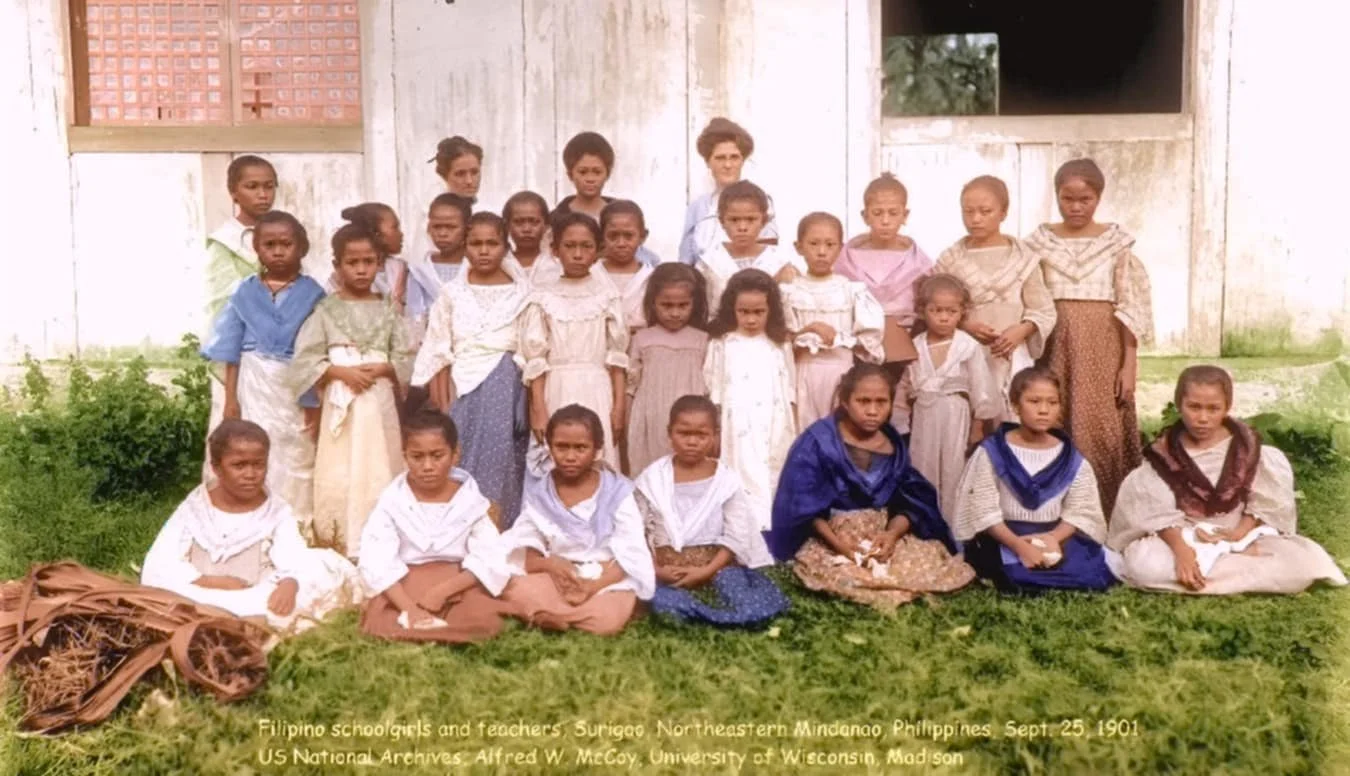
Surigaonon schoolgirls with their teachers, including American Thomasite teachers, Surigao, Philippines, 1901. Via Wikimedia Commons. CC0 1.0 (Public Domain Dedication).
Following the Spanish-American War, the United States acquired the Philippines from Spain in 1898 and established a new colonial government. One of its highest priorities was creating a modern public school system. On August 23, 1901, approximately 600 American teachers—later known as the "Thomasites" after the U.S. Army transport Thomas that carried most of them—arrived in Manila to begin that work. They joined several hundred teachers who had arrived earlier with the U.S. military, but the Thomasites became the best-known group because of the scale and organization of their mission.
The Thomasites established thousands of public schools throughout the islands, introduced English as the primary language of instruction, trained Filipino educators, and developed a standardized curriculum in subjects ranging from mathematics and science to civics and literature. Their efforts dramatically expanded educational opportunities and helped create one of the most extensive public school systems in Southeast Asia. Many Filipino leaders of the twentieth century received their education in schools founded or influenced by the Thomasite program.
The educational transformation also opened new opportunities for Protestant Christianity. During more than three centuries of Spanish rule, Roman Catholicism had become deeply rooted in Filipino society, and Protestant missionary activity had been largely prohibited. American rule changed that environment. Protestant denominations—including Methodists, Presbyterians, Baptists, Episcopalians, Congregationalists, and others—established churches, schools, hospitals, seminaries, and colleges across the islands. Many missionary organizations viewed education as one of their most effective means of serving communities while introducing Protestant beliefs.
Despite this growth, Roman Catholicism remained the dominant faith in the Philippines and continues to do so today. Approximately 78–80% of Filipinos identify as Roman Catholic, while about 6–8% belong to Protestant churches. The educational institutions founded during this period, however, continue to influence Philippine society, and many Protestant schools and universities remain respected centers of learning.
Why It Matters
The arrival of the Thomasites demonstrates how education can shape a nation's future in ways that extend beyond the classroom. Their work transformed public education in the Philippines while creating opportunities for Protestant Christianity to establish a lasting presence in a country that had been overwhelmingly Catholic for centuries. The result was not a replacement of one tradition by another, but the emergence of a more diverse Christian landscape that continues to characterize the Philippines today.