
August 24, 1662 - Book of Common Prayer Instituted
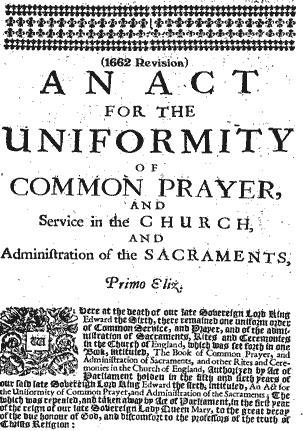
Title page of the 1662 revision of the Book of Common Prayer. Public Domain. Via Wikimedia Commons.
One of the most significant events in English church history occurred when nearly 2,000 ministers refused to conform to the requirements of the Church of England. The crisis became known as the Great Ejection.
The Act of Uniformity, passed by the English Parliament on May 19, 1662, required every minister serving in the Church of England to use the revised Book of Common Prayer and to publicly affirm conformity with its teachings and forms of worship. Those who refused would lose their positions and could face additional legal penalties. The deadline for compliance was August 24, 1662—St. Bartholomew's Day.
Approximately 2,000 Puritan ministers chose conscience over conformity and were removed from their churches rather than accept the Act's requirements. Their ejection reshaped English Protestantism, strengthening the growth of Nonconformist groups such as Presbyterians, Congregationalists, and Baptists outside the established church. While enforcement of religious uniformity gradually eased over time through later legislation, the Act of Uniformity of 1662 technically remains on the statute books in modified form and continues to govern aspects of worship within the Church of England.
Why It Matters
The Great Ejection marked one of the defining moments in the history of religious liberty in England. It highlighted the tension between government authority over an established church and the conviction that believers should not be compelled by the state in matters of worship and conscience. The event also helped shape the development of Protestant denominations that operated independently of the Church of England, influencing religious life in Britain and, eventually, North America.