
August 25, 1568 - Elizabeth Vander Kerk Executed
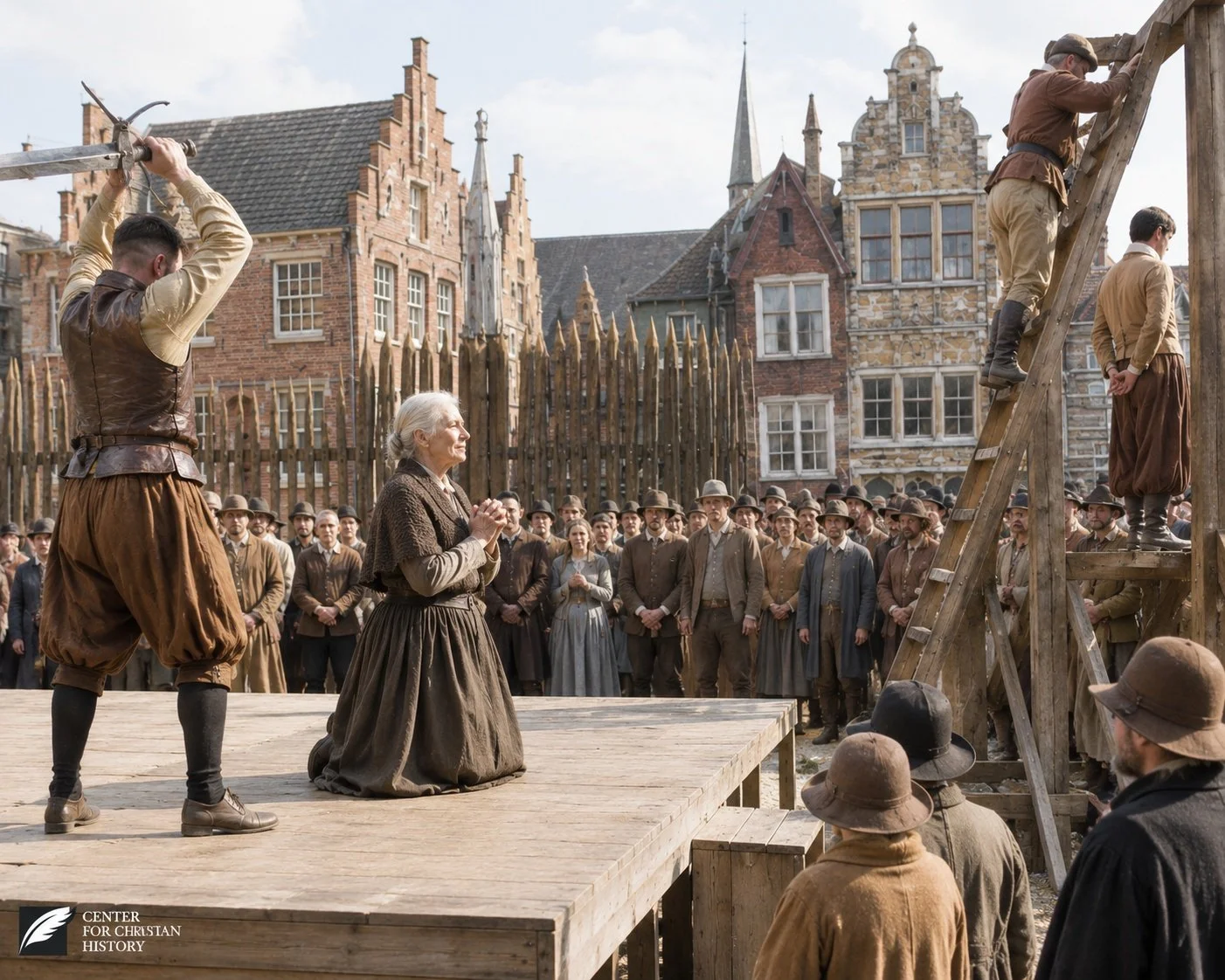
AI-generated image (photorealistic) based on Jan Luyken (after earlier sources), Executions on the Orders of the Duke of Alva, engraving, Rijksmuseum Amsterdam. Created for the Center for Christian History, 2026.
At 84 years old, Elizabeth Vander Kerk became one of the many victims of the religious turmoil that engulfed the Netherlands during the Reformation. On August 25, 1568, she was executed in Utrecht under the authority of the Duke of Alva, the Spanish governor sent by King Philip II to suppress Protestantism and rebellion in the Low Countries.
Authorities charged Elizabeth with allowing her nephew to bring a Reformed minister into her home. Protestant writers of the time, however, claimed the accusation was only a pretext. They believed the real motive was to confiscate the wealthy widow's considerable estate, illustrating how religious prosecutions could also serve political and financial purposes.
According to James Anderson's Ladies of the Reformation, Elizabeth faced her execution with remarkable composure. As she stood at the block with her hands raised in prayer, the executioner asked her to lower them. She reportedly replied, "Do your business; when the head is off the fingers will feel no pain."
Whether every detail of the account can be verified, Elizabeth Vander Kerk has long been remembered as one of the many ordinary believers whose lives were caught up in the violence of the Reformation era.
Why It Matters
Elizabeth Vander Kerk's story reminds us that the Reformation affected far more than famous reformers and political leaders. Thousands of ordinary men and women faced imprisonment, exile, or death as religious conflict became intertwined with political power and economic interests. Her execution illustrates the human cost of one of Europe's most transformative periods.