
June 16, 1846 - Giovanni Maria Mastai Ferretti Named Pope Pius IX
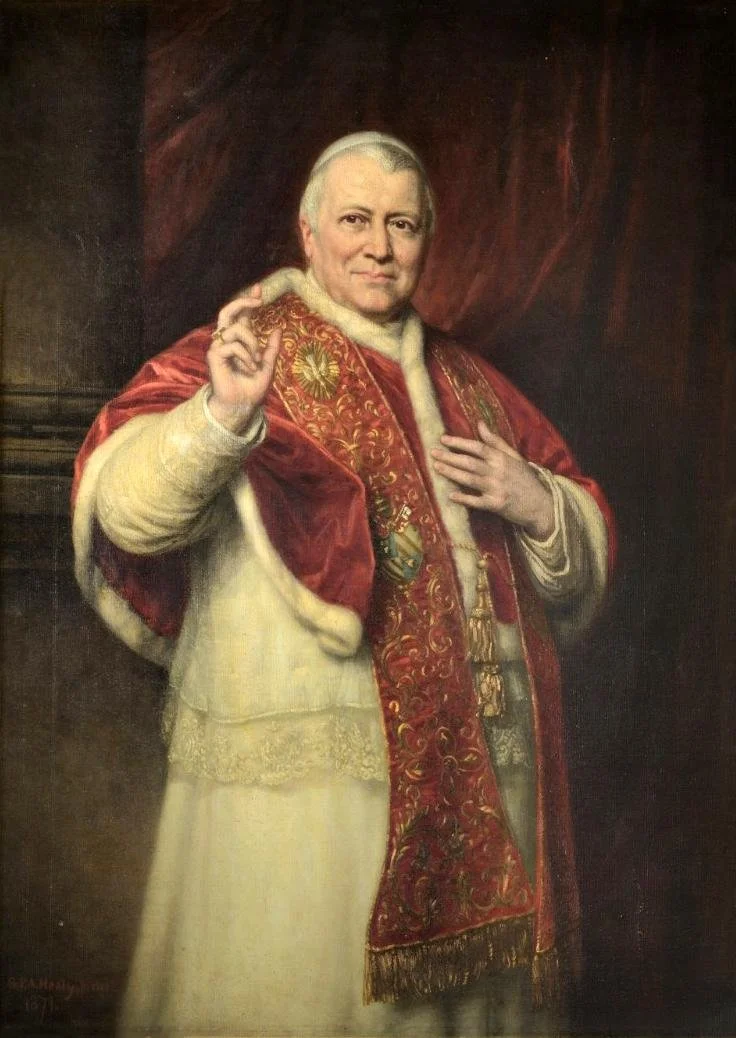
George Peter Alexander Healy, Portrait of Pope Pius IX (1871). Public domain. Original artwork in the collection of the Vatican Museums. Digital reproduction available through Wikimedia Commons, identified as public domain.
On June 16, 1846, the cardinals of the Roman Catholic Church elected Giovanni Maria Mastai-Ferretti as Pope. Taking the name Pius IX, he would go on to become one of the most influential and controversial popes in church history. His pontificate lasted more than thirty-one years, making it the longest verified papal reign in history and one that reshaped Roman Catholic theology and governance in profound ways.
When Pius IX was elected, many Catholics viewed him as a reform-minded leader. Early in his papacy, he granted amnesty to political prisoners and implemented limited reforms within the Papal States. However, the revolutionary upheavals that swept across Europe in 1848 dramatically altered his outlook. Forced to flee Rome for a time, Pius became increasingly committed to defending the authority of the church against what he saw as the dangers of secularism, nationalism, and modern political ideologies.
One of the most significant moments of his pontificate came in 1854 when he formally proclaimed the doctrine of the Immaculate Conception. This teaching holds that Mary, the mother of Jesus, was preserved by God's grace from original sin from the first moment of her conception. While many Christians had believed some form of this doctrine for centuries, Pius IX elevated it to the status of official church dogma, requiring Roman Catholics to affirm it as a matter of faith.
Pius IX also presided over the First Vatican Council, which met from 1869 to 1870. The council addressed numerous issues facing the church in the modern world, but it is best remembered for defining the doctrine of papal infallibility. This teaching does not mean that a pope is incapable of making mistakes in everyday matters. Rather, it states that when the pope officially speaks on behalf of the entire church concerning faith or morals and intends to define a doctrine for all believers, the Holy Spirit preserves him from error. The declaration strengthened the central authority of the papacy and remains one of the defining characteristics of Roman Catholic theology.
The long reign of Pius IX was marked by both triumph and loss. While he oversaw important theological developments, he also witnessed the collapse of the Papal States during the unification of Italy. By 1870, Rome itself had been incorporated into the new Italian kingdom, leaving the pope without temporal rule over central Italy. Pius spent the remainder of his life considering himself a "prisoner of the Vatican."
Whether admired or criticized, Pius IX left an enduring mark on Christianity. His pontificate helped define modern Roman Catholic doctrine and strengthened the role of the papacy at a time of immense political and cultural change. The decisions made during his reign continue to influence the beliefs and practices of more than a billion Catholics around the world.
Why This Matters
Pius IX's papacy illustrates how Christian leaders often respond to periods of rapid social and political change. His reign helped establish doctrines and structures that continue to shape Roman Catholicism today. Understanding his influence provides insight into how churches preserve tradition, define doctrine, and navigate challenges from the surrounding culture.
