
March 22, 337 - Constantine Dies
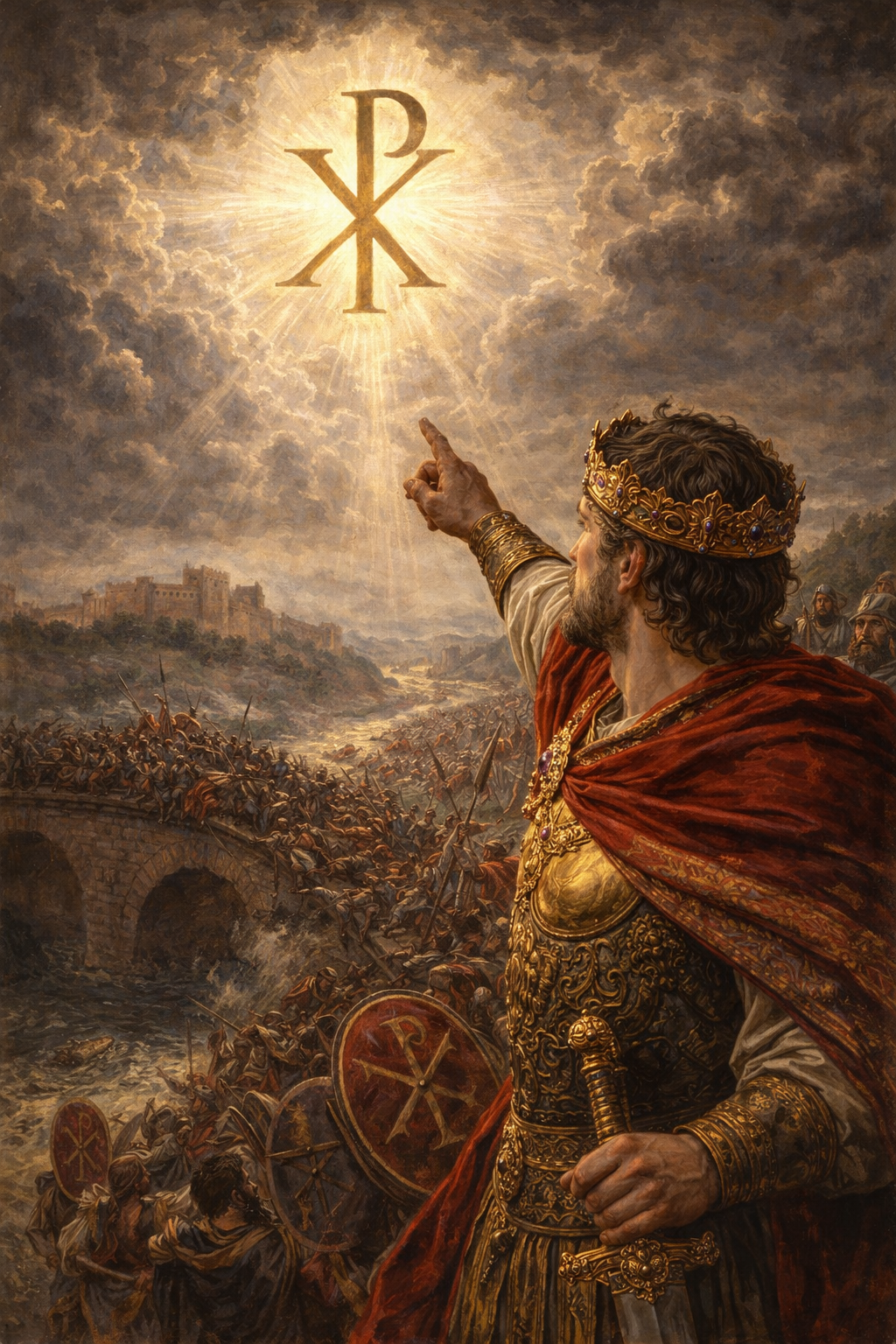
Constantine I and the Vision of the Chi-Rho at the Battle of the Milvian Bridge. AI-generated historical illustration created using ChatGPT, 2026.
When Emperor Diocletian issued the Edict Against the Christians in AD 303, it inaugurated one of the most severe persecutions in early church history. Churches were destroyed, Scriptures burned, and believers imprisoned or executed. For many Christians, it appeared that imperial hostility would never end.
The political landscape shifted dramatically when Constantine rose to power in AD 306. After his reported vision before the Battle of the Milvian Bridge in 312, Constantine adopted a favorable posture toward Christianity. The Edict of Milan in 313 granted religious toleration throughout the empire, effectively ending official persecution. Over time, imperial patronage expanded Christian influence, and by the end of the fourth century Christianity would become the empire’s official religion under Theodosius I.
Before his death on March 22, 337, Constantine had permanently altered the relationship between church and state. He convened the Council of Nicaea in 325, seeking unity amid theological controversy, particularly regarding the divinity of Christ. Though not a theologian himself, Constantine understood that doctrinal division threatened imperial stability.
His reign marked the beginning of what later historians call the “Constantinian shift”—the transition from persecuted minority to imperially supported church. The consequences of that shift would shape Christian history for centuries, raising enduring questions about power, authority, and the proper relationship between spiritual and political leadership.
