
March 3, 1033 - Queen Cunegunda Dies
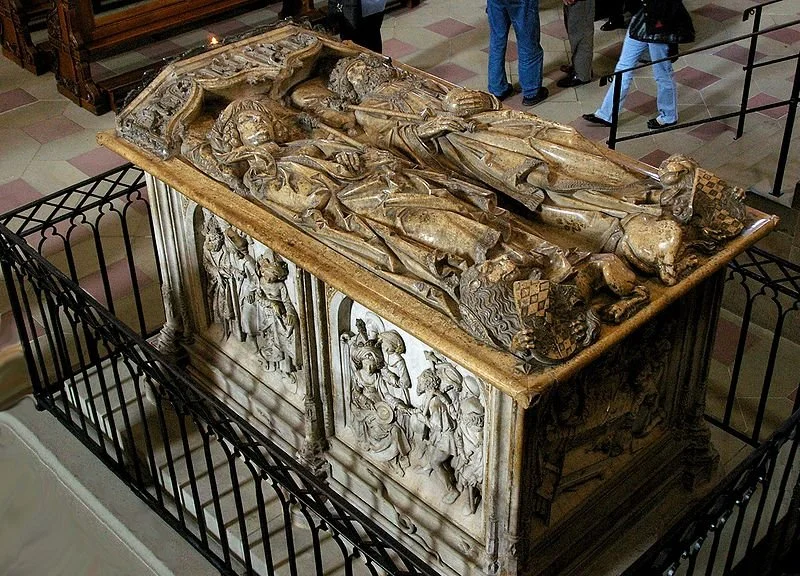
Memorial Monument Memorial monument photograph. Creative Commons Attribution ShareAlike license. Source: Wikimedia Commons.
Queen Cunegunda, wife of Holy Roman Emperor Henry II, stands as a notable example of medieval Christian rulership shaped by personal devotion. Together, Henry and Cunegunda supported ecclesiastical reform and commissioned the construction of Bamberg Cathedral in Germany, which became both a spiritual and political center of the empire.
Henry II was crowned Holy Roman Emperor in 1014, and his reign was marked by close cooperation with church leadership. Cunegunda shared in imperial responsibilities and was crowned empress. Medieval tradition emphasized her piety, charity, and commitment to Christian service.
When Henry died in 1024, Cunegunda did not attempt to maintain political authority or engage in imperial power struggles. Instead, she withdrew from public rule and entered a Benedictine convent she had helped establish. There she lived as a nun, dedicating herself to prayer, service, and communal religious life.
She died on March 3, 1033. Both Henry and Cunegunda were later canonized, reflecting the medieval conviction that sanctity and governance were not mutually exclusive callings.
Cunegunda’s life illustrates a distinctive feature of medieval Christendom: political authority was often interpreted through a theological lens. Her decision to exchange imperial status for monastic life underscores the era’s belief that ultimate allegiance belonged not to empire, but to God.
