
March 7, 1274 - Thomas Aquinas Dies
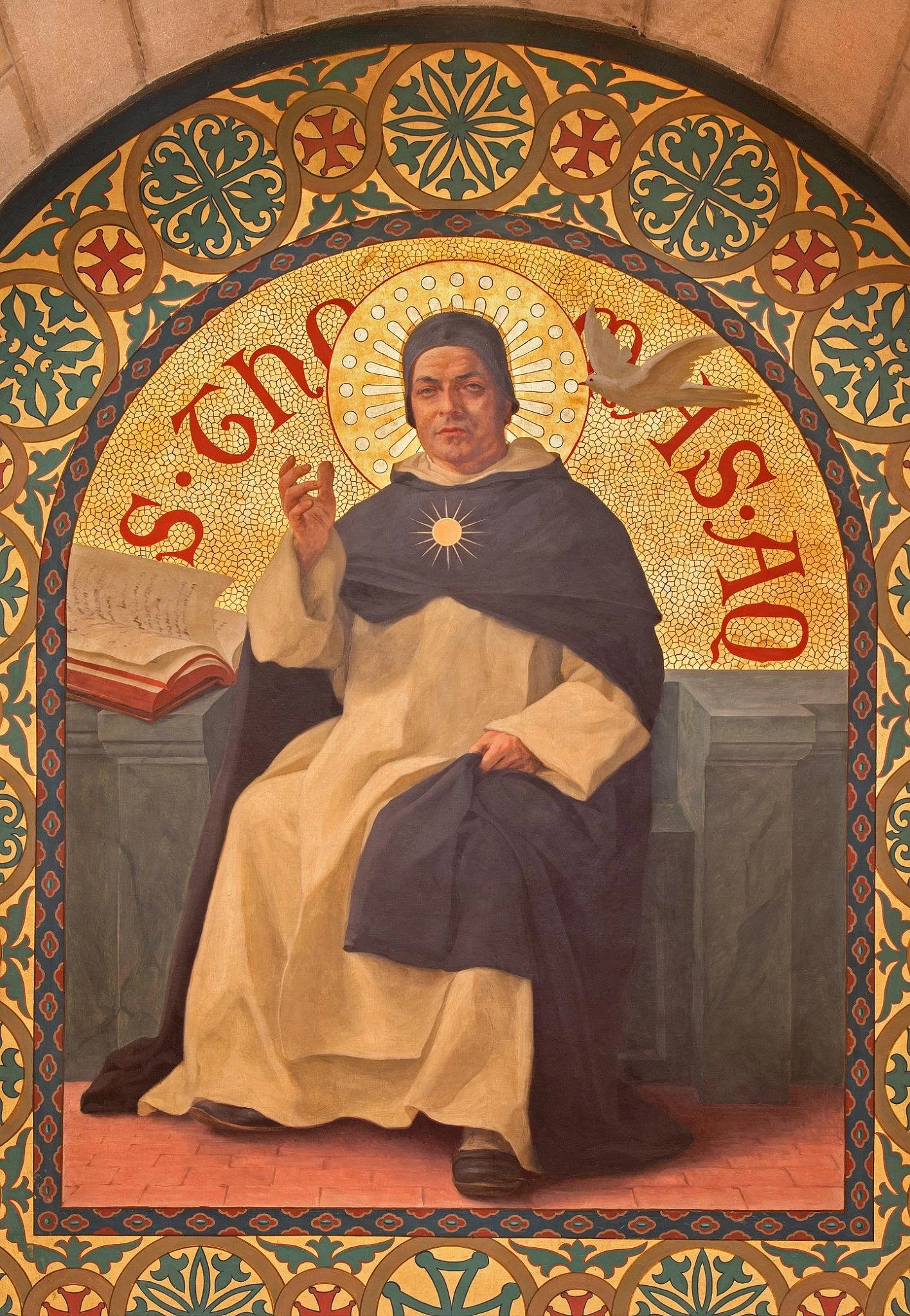
Aquinas - Bartolomeo degli Erri (attributed), Thomas Aquinas, c. 1470. Public domain. Wikimedia Commons.
Thomas Aquinas died on March 7, 1274, leaving behind one of the most influential theological legacies in Christian history. A Dominican friar and scholar, Aquinas sought to demonstrate that faith and reason were not adversaries but allies. His intellectual project helped shape medieval scholasticism and continues to influence Catholic theology today.
His most famous work, Summa Theologiae, was designed as a comprehensive summary of Christian doctrine. Structured in a question-and-answer format, it addressed subjects ranging from the nature of God and creation to ethics, law, Christology, and the sacraments. Drawing heavily from Scripture, the Church Fathers, and Aristotle, Aquinas argued that reason could lead one toward theological truth, though revelation ultimately completed what reason began.
Aquinas lived during a period when newly translated works of Aristotle were reshaping European intellectual life. Rather than rejecting classical philosophy, he integrated it into Christian theology. His articulation of natural law theory would later shape Western political and legal thought.
Though he died before completing the Summa, Aquinas’ synthesis of biblical theology and philosophical rigor left a lasting imprint on Western Christianity. His influence extends far beyond the medieval university, continuing to inform discussions of ethics, metaphysics, and the relationship between church and society.
