
May 12, 403 - Saint Epiphanius Buried
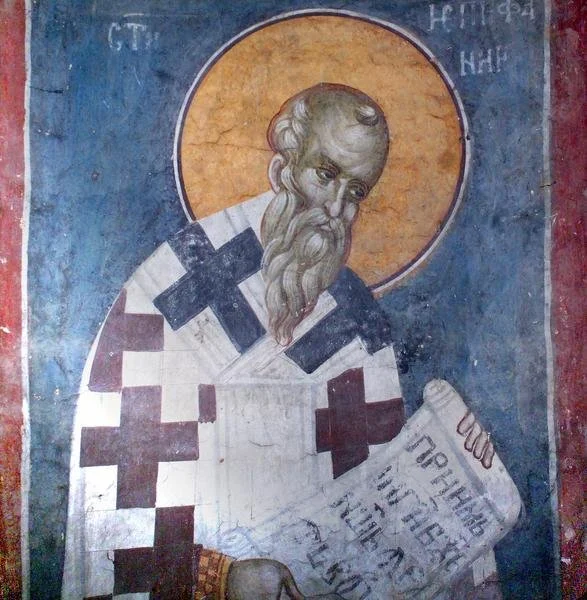
“Epiphanius of Salamis,” fresco at Gračanica Monastery near Lipljan, Kosovo, via Wikimedia Commons. Public Domain / PD-Art.
Epiphanius of Salamis served as bishop in Salamis, Cyprus during a time of intense doctrinal conflict following the council of Nicaea. He converted to Christianity after he witnessed a monk’s act of compassion. Later, he became a disciple of Saint Hilarion. He was widely known for his miracles, avoidance of indulgence, and commitment to Orthodox teachings, and he was chosen as Bishop of Salamis in 367. His most famous work was the Panarion. Cataloging over 80 heresies, it was one of the most detailed records of early Christian doctrinal disputes. His work entitled Ancoratus dwelt on orthodox teachings about the Trinity and salvation. Epiphanius was an opponent of movements like Arianism and Gnosticism as they challenged core Christian beliefs. Hilarion influenced Epiphanius's ascetic lifestyle, which emphasized simplicity and devotion. His strict stance on orthodoxy sometimes brought him into conflict with other church leaders. Even still, his writings remain a valuable historical source for understanding early church heresies and theological development. He was buried on May 12, 403.
The life of Epiphanius emphasizes the importance of defending sound doctrine in the face of false teachings. His work displays the need for discernment and theological clarity, which is still crucial today. Modern Christians can look to his ascetic lifestyle and be challenged to consider simplicity and spiritual discipline. Additionally, his writings serve as a reminder to believers that heresy and doctrinal confusion are not new issues. His example encourages Christians to balance truth with humility, especially in theological disagreements. Through his story, believers see the lasting importance of preserving and understanding church history.