
May 2, 373 - Alexandrian Bishop Athanasius Dies
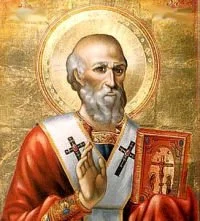
Icon of St. Athanasius of Alexandria (4th century bishop). Public domain.
The former bishop of Alexandria, Egypt, Athanasius, was the first person to use the term “canon” when referring to Scripture and its authority, and he opposed a major heresy known as Arianism. Named for Alexandrian churchman Arius, Arianism stated that Jesus was not in full agreement with God the Father, and therefore the concept of the Trinity could not be correct. This led to the formation of the Council of Nicea, where Athanasius would be exiled several times and ultimately flee for his life. Despite this, his faith and his positions about the total authority of Scripture never wavered. He died on May 2, 373.
Athanasius of Alexandria, key defender of Orthodox Christianity, served as Bishop of Alexandria, Egypt for forty years. Much of this time, however, was spent in exile. Famously known as the first person to use the term “canon” in reference to Scripture and its authority, he first used the term in his 39th Festal Letter (written in 367 AD) where he listed the 27 New Testament Books still recognized today. He was opposed to Arianism, which was widespread across the Roman Empire. The heresy originated with Alexandrian churchman Arius, and it stated that Jesus was not in full agreement with God the Father, and therefore the concept of the Trinity could not be correct. In opposition to Arianism, the Council of Nicea was formed. Between 335 and 366 AD Athanasius was exiled five times for his relentless defiance of Arianism, ultimately fleeing for his life, earning the name Athanasius Contra Mundum (Athanasius against the world). He authored On the Incarnation to explain why Christ had to be fully God and fully man. Athanasius died on May 2, 373.
Athanasius’s life is still relevant to Christians today. His life explains the importance of defending core doctrines like the Trinity, and it shows that false teachings like Arianism can spread widely, even within the church. Because of this, Christians see the need for biblical authority and a defined canon of Scripture. Furthermore, his life is an encouragement to Christians to stand firm in truth despite political pressure and shows that faithfulness may come with persecution and isolation. Through his life, Christians can understand why the New Testament includes the books it does, and it connects modern doctrine to early church decisions and sacrifices. Athanasius of alexandra provides Christians with an example of courageous leadership rooted in truth and shows that unity in the church must be based on correct doctrine, not compromise.