
May 25, 1805 - William Paley, Anglican Scholar, Dies
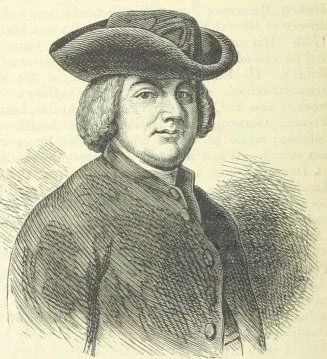
William Paley (1743–1805), public domain engraving via Wikimedia Commons.
One of the greatest Christian apologists was an Anglican scholar named William Paley. He argued against the deists of his day by claiming that divine revelation for the existence of God was as valid an argument as their appeals to logic and reason. He is best known for his teleological (design) argument, which is frequently illustrated through the famed watchmaker analogy. In his book Natural Theology, he argues that complexity in nature points to an intelligent designer. Another one of his works, A View of the Evidences of Christianity was a highly influential piece of literature in 18th-19th century education, particularly at the University of Cambridge where Paley himself was a graduate and taught philosophy and Greek. His work responded to Deism, an ideology that accepted God’s existence but rejected divine revelation and miracles. Paley influenced many thinkers, including Charles Darwin, who studied Paley’s writing while he attended Cambridge. Paley believed and taught that Christianity is historically and evidentially grounded, not only based on blind faith. His arguments aided in shaping early conversations about science and religion, especially before Darwin’s theory of evolution. Paley died on May 25, 1805
William Paley’s work is representative of defending faith with reason and evidence. Even today, his arguments are referenced in discussions about intelligent design and the existence of God. Additionally, he showed that Christianity can engage seriously with intellectual and philosophical challenges, and his influence on Darwin shows that Christian thought even shapes those who do not ultimately accept it. Following his example, Christians can consider how faith and science interact. Apologetics are a powerful tool for strengthening belief and answering skepticism, which are integral for knowing how to confidently defend Christian beliefs against skeptical arguments.