
May 29, 1453 - Constantinople Falls to the Ottoman Turks
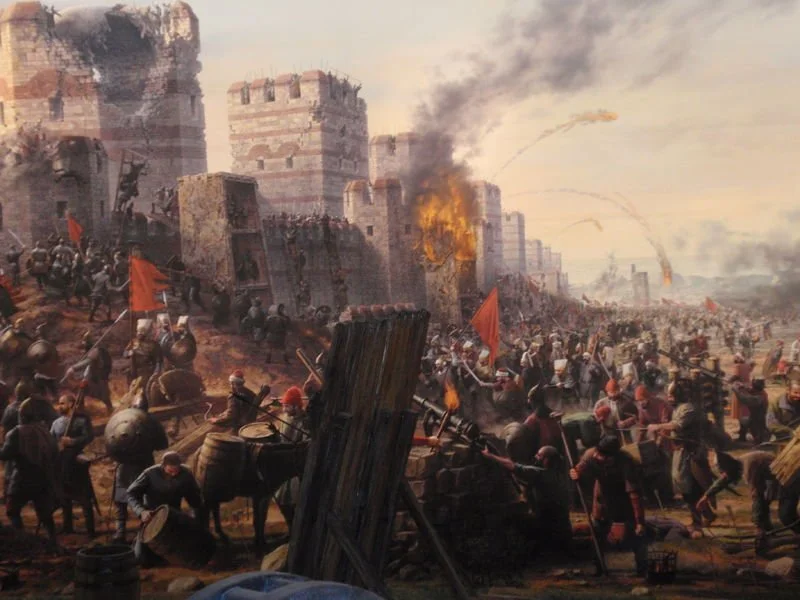
The Fall of Constantinople (1453). Painting, 19th century. Public domain. Courtesy of Wikimedia Commons.
With the fall of Constantinople, marking the end of the Byzantine Empire, came a shift in political and religious power. Until that point, Constantinople had been a hub of Eastern Orthodox Christianity. Following the fall, many Greek scholars fled to the west, which brought many ancient manuscripts and knowledge, helping to fuel the Renaissance. This brought a growing emphasis on humanism and returning to original texts. It encouraged a deeper study of Scripture in its original languages. Division between the East and West had begun during the Great Schism before 1453. Although it is widely believed that the Protestant Reformation began the day Martin Luther reportedly nailed his 95 Theses to the Castle Church doors in 1517, the Fall of Constantinople contributed to the Reformation by accelerating scholarly and cultural changes. The fall also increased the separation between the two branches of Catholicism and led to people questioning the traditions of the church, sparking the tension that led to the Protestant Reformation
This event shows that historical and cultural shifts can influence theological movements. Despite the inconsistency of the world, it is imperative that believers cling to and consult Scripture. Unity is important, but not at the expense of doctrinal truth. Oftentimes culture and faith interact with one another, and God often uses major world events to shape the direction of Church history.