
May 5, 533 - Fifth Ecumenical Council Convenes
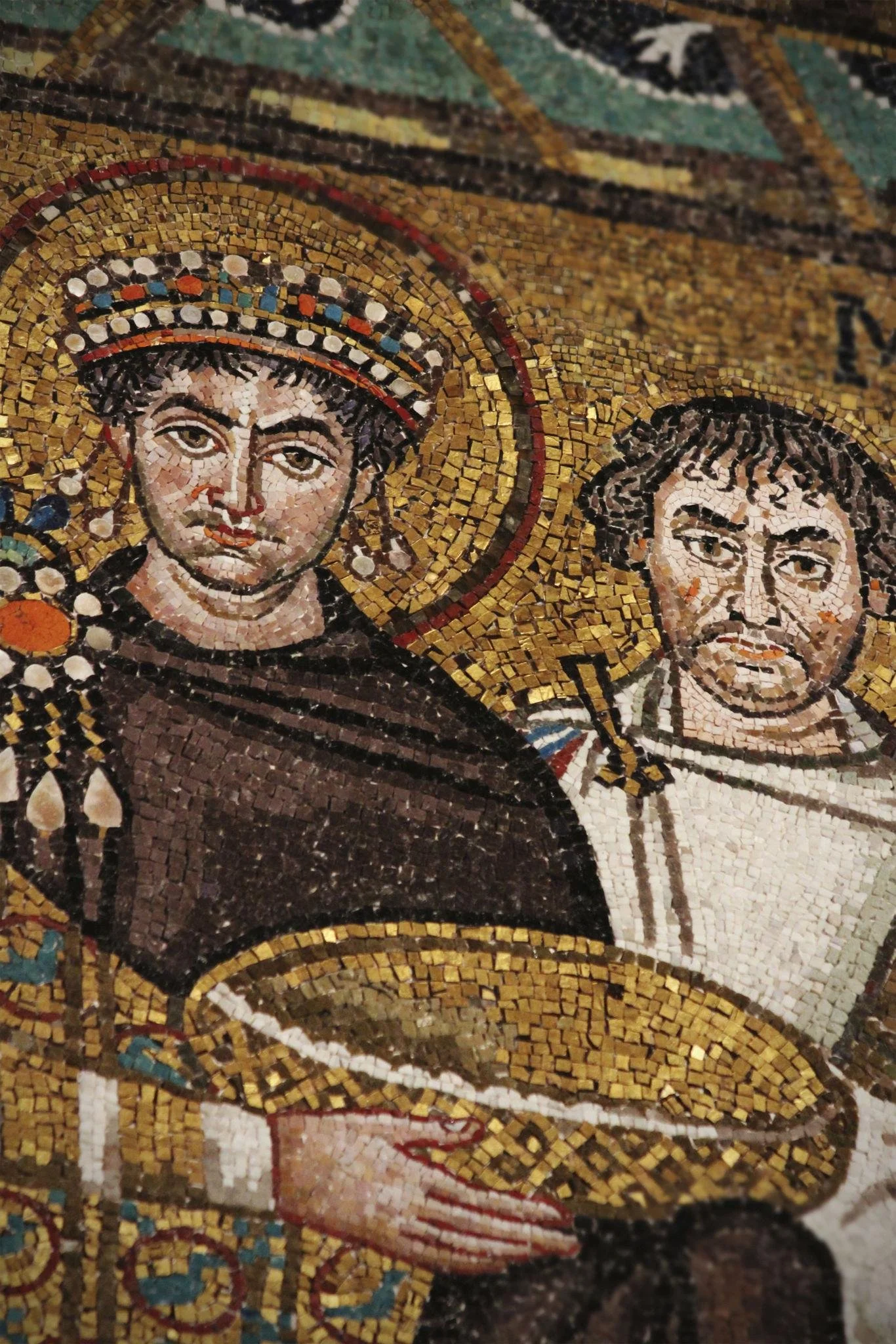
“Emperor Justinian and His Court,” Basilica of San Vitale, Ravenna. Public domain, via Wikimedia Commons.
May 5, 533 held the Fifth Ecumencial Council, also known as the Second Council of Constantinople. It was one of the seven Ecumencial councils recognized by many Christian traditions, and it was held with the purpose of doctrinal clarification. It convened under Justinian I who exercised a direct and controversial role in theological conversations. The Council was held in Constantinople (modern day Istanbul). The council strengthened the Orthodox position against both Nestorianism (the belief that the divine Christ and human Christ were different entities), which had previously been addressed at the Council of Ephesus (431 AD), and Monophysitism (the brief that Christ was not fully human), which held strong following in Egypt and Syria. The “Three Chapters” were a controversial group of writings associated with Theodore of Mopsuestia and others, and they were viewed as too sympathetic to Nestoria ideas. Justinian hoped that condemning the “Three Chapters” would help to reconcile Monophysite Christians, but the division persisted. Ultimately the council reaffirmed the decisions of the Council of Chalcedon, especially that Christ is fully God and fully man in one person. The council also highlighted the tensions between the Eastern (Byzantine) and Western (Roman) churches. The council contributed to ongoing divisions within Christianity, particularly within Oriental Orthodox churches.
Theological clarity frequently develops through debate and controversy. It is important for Christians to understand the historical foundation of core beliefs about Jesus. Learning about the Fifth Ecumencial Council shows modern Christians the danger of misunderstanding Christ’s nature, and it demonstrates how political power can influence church doctrine. Sound doctrine and careful biblical interpretation are core values for believers that directly impact faith and worship. This event and others like it emphasize the importance of unity grounded in truth, not compromise, and encourage discernment when external authorities influence spiritual matters.