
September 30, 1770 - George Whitefield Dies
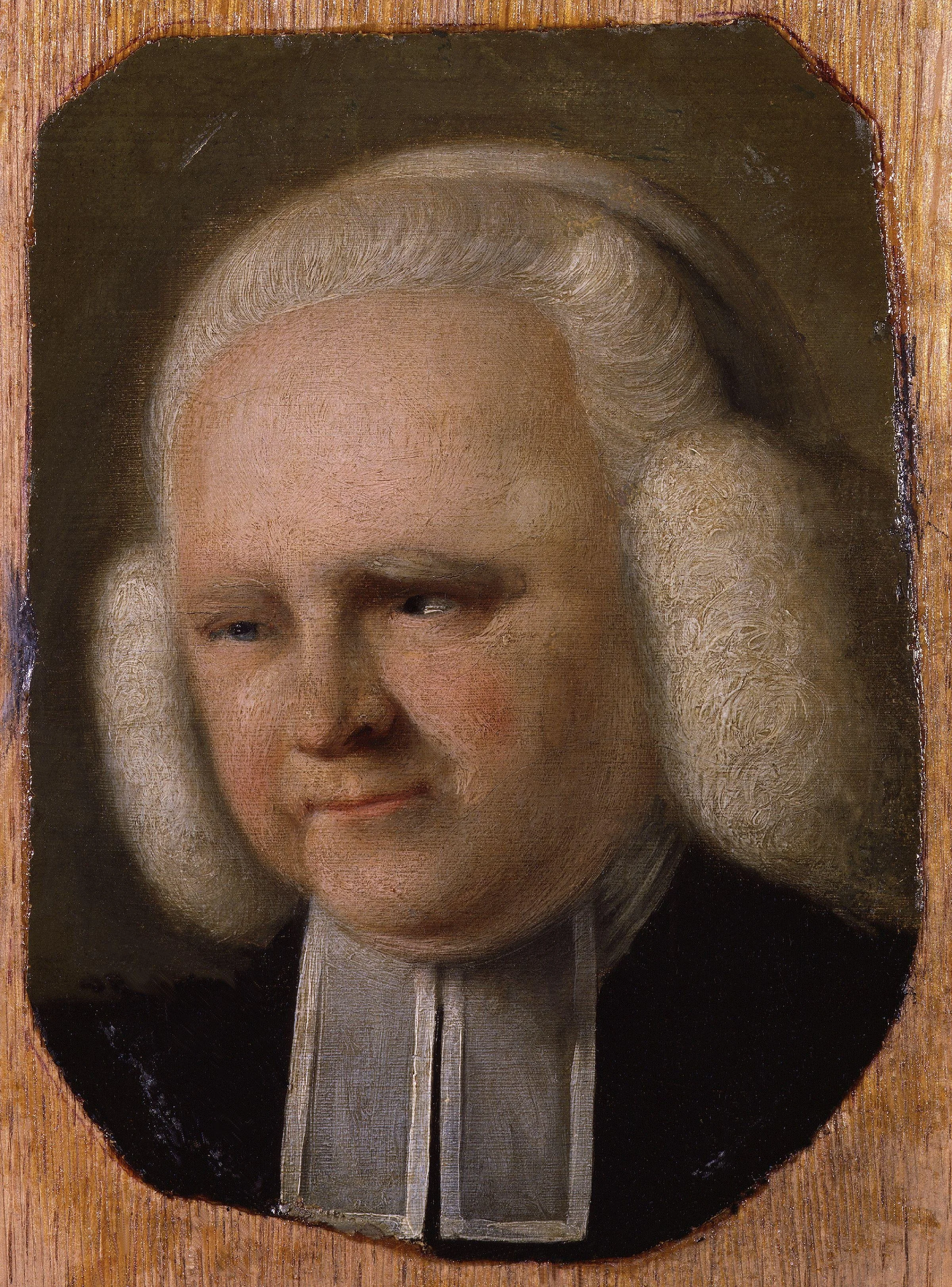
George Whitefield, portrait by John Russell, circa 1770. National Portrait Gallery, London. Public domain image via Wikimedia Commons.
George Whitefield, one of the most influential evangelists of the eighteenth century, died on September 30, 1770, in Newburyport, Massachusetts. The Anglican minister had spent more than three decades traveling throughout Britain and colonial America, preaching to enormous crowds and helping establish the evangelical movement that became known as the First Great Awakening. Historians estimate that he delivered approximately 18,000 sermons during his lifetime, reaching a cumulative audience of perhaps ten million listeners.
Born in Gloucester, England, in 1714, Whitefield grew up in modest circumstances. His father died when he was young, and he helped his mother operate the family inn. In 1732, he entered Pembroke College at Oxford University, where he supported himself partly by serving wealthier students.
At Oxford, Whitefield became associated with a small group of students committed to prayer, Bible study, fasting, and disciplined Christian living. Among its members were John and Charles Wesley, who would become leading figures in the Methodist movement. Other students mockingly called the group the “Holy Club” because of its methodical approach to religion.
Whitefield experienced a profound religious conversion during his university years. He became convinced that genuine Christianity required more than outward religious observance or membership in the established church. Central to his preaching was the necessity of the new birth, or personal spiritual regeneration through faith in Jesus Christ.
Ordained a deacon in the Church of England in 1736 and a priest in 1739, Whitefield quickly attracted attention for his preaching. His emotional delivery, dramatic use of language, and ability to communicate with ordinary people distinguished him from many contemporary Anglican ministers.
His growing popularity also created controversy. Some Anglican clergy objected to his emphasis on conversion and his willingness to preach outside traditional parish structures. When churches began closing their pulpits to him, Whitefield increasingly preached outdoors, addressing crowds in fields, marketplaces, and other public spaces.
In 1738, Whitefield made his first voyage to colonial America, traveling to Georgia, where he developed plans to establish an orphanage. His subsequent visits would take him throughout the British colonies, from Georgia to New England.
Whitefield's American preaching tours helped transform a series of regional religious revivals into a broader movement that historians call the First Great Awakening. Although revival preaching had already appeared in several colonies, Whitefield's extensive travels connected communities that otherwise had relatively little contact with one another.
He preached across denominational boundaries, attracting Anglicans, Presbyterians, Congregationalists, Baptists, and others. His sermons emphasized repentance, conversion, and the importance of a personal relationship with Christ.
One of Whitefield's most significant American relationships was with Benjamin Franklin. Although Franklin did not share Whitefield's evangelical convictions, he admired the preacher's extraordinary ability to communicate with large audiences.
Franklin famously tested Whitefield's vocal reach by walking away from an outdoor gathering in Philadelphia while listening to him preach. Based on how far he could still hear the sermon, Franklin calculated that Whitefield could plausibly address a crowd of more than 30,000 people under favorable conditions.
Franklin also printed Whitefield's sermons and other writings, helping extend the preacher's influence beyond those who heard him personally.
Whitefield's preaching contributed to a changing religious culture in colonial America. Revival meetings encouraged ordinary people to examine their spiritual condition rather than rely exclusively on inherited religious traditions or the authority of established clergy.
The movement also produced divisions. Some ministers welcomed the revivals, while others questioned their emotional intensity and challenged the authority of itinerant preachers who entered communities without the approval of local churches.
Whitefield himself became involved in theological disagreements with John Wesley. Although both men emphasized conversion and evangelism, Whitefield embraced Calvinist teachings concerning salvation, while Wesley defended an Arminian understanding of human response to divine grace.
Despite these disagreements, both remained important figures in the development of eighteenth-century evangelical Christianity.
Whitefield's legacy also included significant contradictions. His Bethesda Orphan House, established near Savannah in 1740, provided care for children in colonial Georgia. However, Whitefield later advocated the legalization of slavery in Georgia, arguing that enslaved labor would help sustain the orphanage and the colony's economy.
He subsequently owned enslaved people, and his estate included 49 enslaved individuals. His participation in slavery remains an important part of the historical assessment of his life alongside his preaching and charitable work.
By 1770, Whitefield's health had deteriorated considerably, but he continued preaching during his seventh visit to America.
On September 29, he preached at Exeter, New Hampshire, before traveling to Newburyport, Massachusetts. He died early the following morning, September 30, at the age of 55.
Whitefield was buried beneath the pulpit of the First Presbyterian Church in Newburyport, where his remains remain today.
Why It Matters
George Whitefield helped establish itinerant evangelism and large-scale outdoor preaching as enduring features of Protestant Christianity. His extensive travels connected religious communities throughout the British Atlantic world, while his emphasis on personal conversion influenced subsequent evangelical movements, including Methodism and the revivals of the nineteenth century. His ministry also demonstrates how religious influence, colonial society, charitable institutions, and slavery intersected in eighteenth-century America.
