
Podcast Episode 77
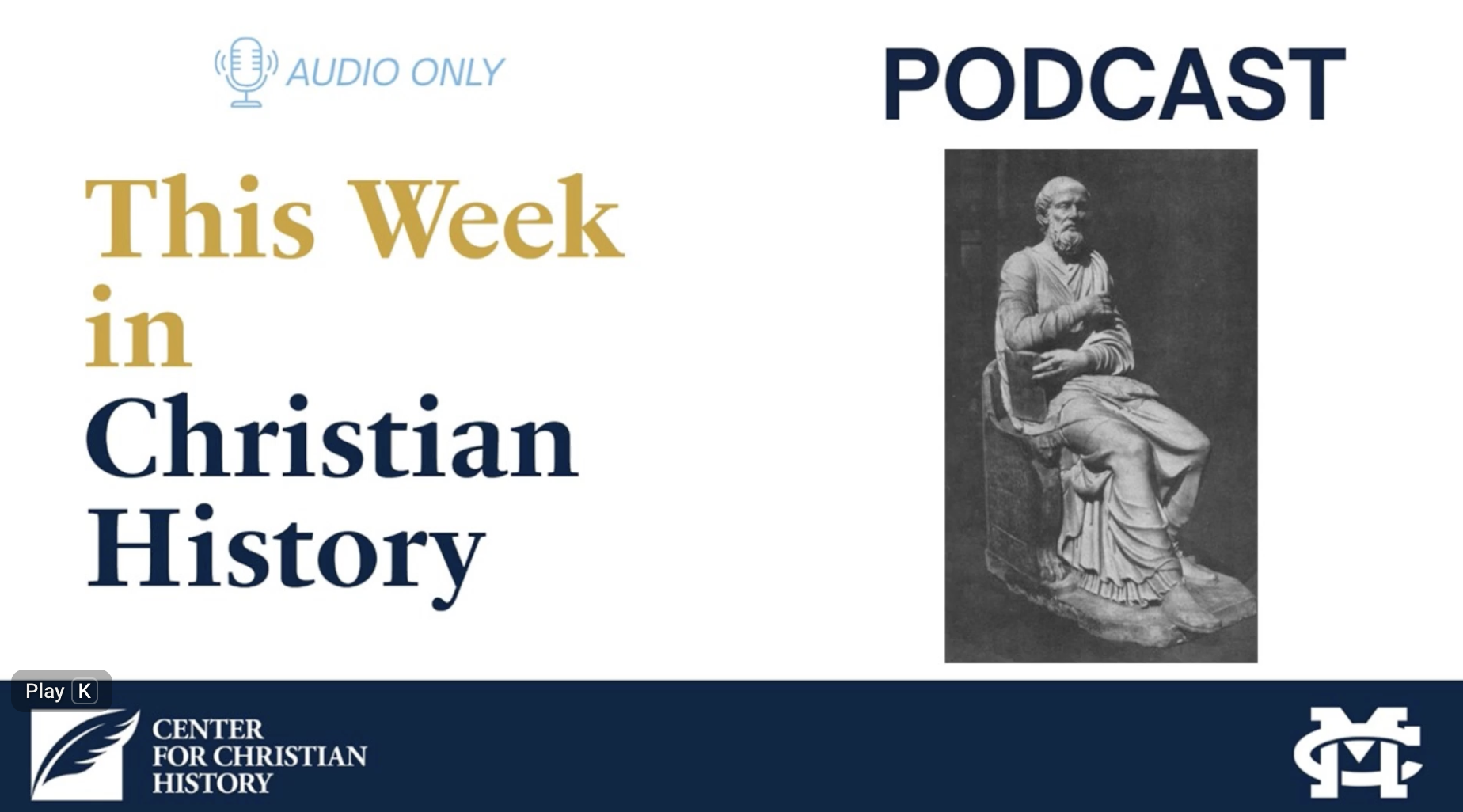
Hippolytus
with Rev. Dr. Alistair Stewart & host Nick Walters
Subscribe on YouTube, Spotify, or Apple
52+ Episodes a Year.
100% Listener Supported.
We are committed to bringing you fresh historical insights every single Monday, completely ad-free. This work is only possible through the generosity of our listeners. If our weekly episodes have enriched your faith or your understanding of history, consider a gift to help us keep this mission moving forward.
Hippolytus of Rome is remembered as one of the most important defenders of Christian orthodoxy during the early third century. Living at a time when the church faced both Roman persecution and theological challenges from within, Hippolytus devoted much of his life to defending what he understood to be the apostolic Christian faith.
In this episode of the Center for Christian History podcast, founder and host Nick Walters explores the life, writings, and complicated legacy of Hippolytus of Rome.
Hippolytus became particularly known for opposing Gnostic and other teachings that he believed contradicted Scripture and the faith handed down from the apostles. His most famous work, Refutation of All Heresies, examined numerous competing religious and philosophical systems and challenged teachings that Hippolytus believed threatened Christian doctrine.
His connection to the earliest generations of Christianity is also significant. Hippolytus has traditionally been associated with Irenaeus of Lyons, who had known Polycarp of Smyrna. Polycarp, in turn, was connected by early Christian tradition to the Apostle John. Hippolytus therefore lived remarkably close to the generations responsible for carrying Christianity from the apostolic era into the developing church of the second and third centuries.
But Hippolytus was also a controversial figure. He strongly opposed several bishops of Rome whom he believed had compromised important doctrines or improperly exercised church authority. His disputes became serious enough to contribute to division within the Roman church. Despite those conflicts, tradition records that Hippolytus was eventually reconciled with the church.
Hippolytus died during the persecution associated with the Roman Emperor Maximinus Thrax and came to be honored as a Christian martyr. His life provides an important window into a church attempting to define and defend Christian teaching while confronting difficult questions about doctrine, authority, leadership, and unity.
Joining Nick for the deep dive is the Rev. Dr. Alistair C. Stewart, Principal of Codrington College in Barbados and a scholar of early Christianity. Dr. Stewart has written extensively on early Christian worship, ministry, church order, and the complex writings and traditions associated with Hippolytus. Together, they examine what historians can know about Hippolytus, his theological battles, his relationship with the Roman church, and what his writings reveal about Christianity during this formative period.
Hippolytus reminds us that theological disagreements are hardly new to Christianity. From its earliest centuries, Christians wrestled with how to identify false teaching, preserve apostolic doctrine, exercise church authority, and maintain unity when serious disagreements emerged.
THIS WEEK IN CHRISTIAN HISTORY
Samuel Leigh
We also remember Samuel Leigh, an early Methodist missionary who helped carry the movement beyond Britain. Leigh became the first Wesleyan Methodist missionary to Australia and later participated in Methodist missionary work in New Zealand. His ministry represents the expanding global missionary movement that carried Christianity across enormous geographic and cultural boundaries during the nineteenth century.
Cologne Cathedral
The episode also visits the remarkable history of Cologne Cathedral in Germany. Construction of the Gothic cathedral began in the thirteenth century but remained unfinished for centuries before work resumed in the nineteenth century. Its eventual completion created one of the most recognizable Christian landmarks in Europe and a remarkable testament to generations of Christians who built, preserved, and completed a sacred space that far outlived those who began it.
From Hippolytus defending Christian doctrine in the third century to Samuel Leigh carrying Methodism across the world and generations completing Cologne Cathedral, Episode 77 explores the many ways Christians have preserved and passed on their faith throughout history.