
Podcast Episode 78
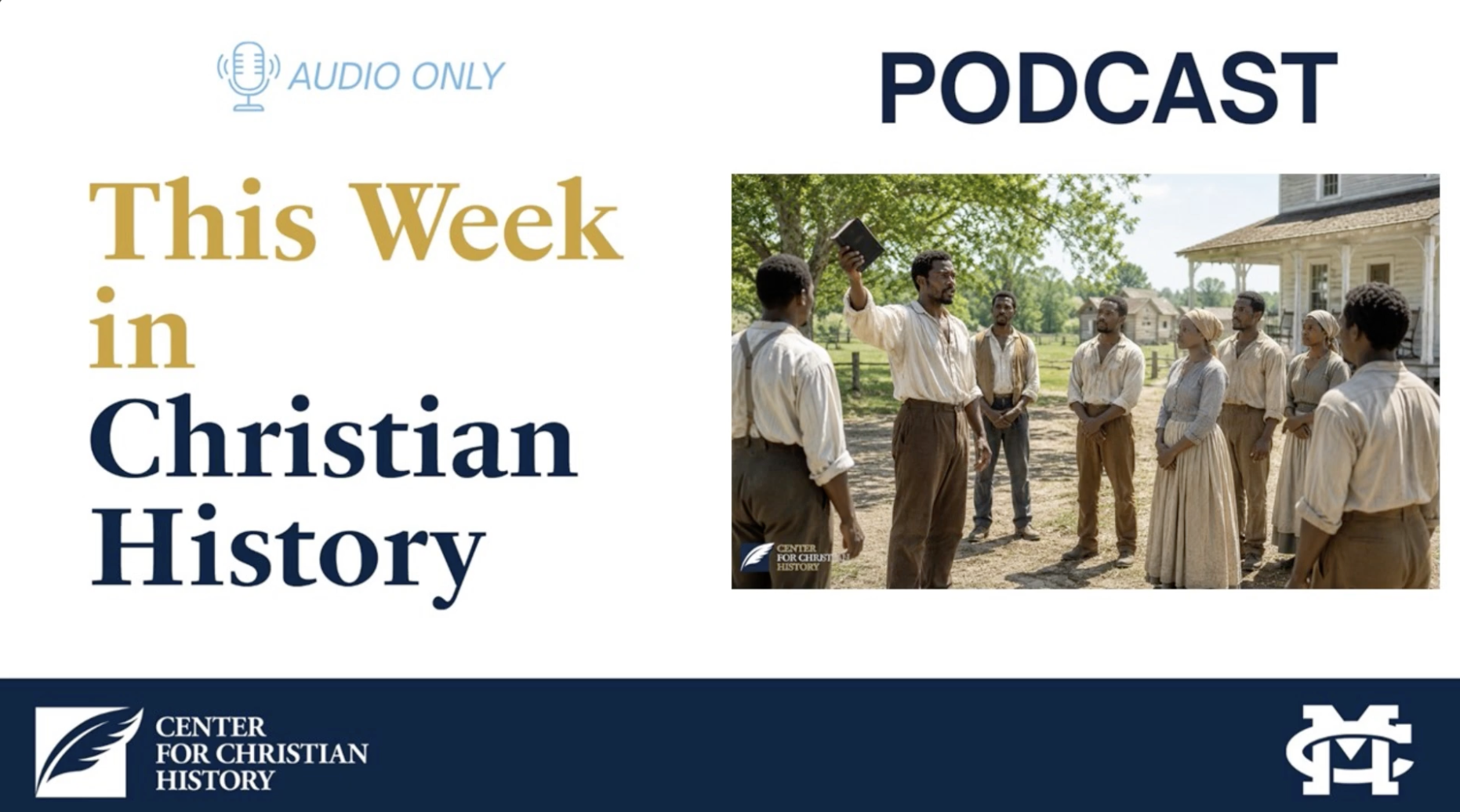
Rev. Nat Turner's Slave Rebellion
with Dr. Patrick Breen & host Nick Walters
Subscribe on YouTube, Spotify, or Apple
52+ Episodes a Year.
100% Listener Supported.
We are committed to bringing you fresh historical insights every single Monday, completely ad-free. This work is only possible through the generosity of our listeners. If our weekly episodes have enriched your faith or your understanding of history, consider a gift to help us keep this mission moving forward.
On August 21, 1831, an enslaved Baptist preacher named Nat Turner gathered a small group of followers in Southampton County, Virginia, and launched what became the deadliest slave rebellion in United States history.
Turner believed that God had called him to bring judgment against slavery. Deeply religious from childhood, he preached among other enslaved people and interpreted visions, signs in nature, and biblical imagery as evidence that he had been chosen for a divine mission. Eventually, Turner became convinced that he was being called not simply to preach, but to act.
Over the next two days, Turner and his followers moved through the Virginia countryside, killing approximately 55 white men, women, and children. Local forces and militia suppressed the uprising, but Turner escaped and remained hidden for more than two months. He was eventually captured, tried, convicted, and executed on November 11, 1831.
The consequences extended far beyond Southampton County. In the aftermath, more than 100 African Americans—many of whom had no connection to the rebellion—were killed in retaliatory violence. Southern legislatures also imposed increasingly restrictive laws governing enslaved and free African Americans, including restrictions on education, movement, assembly, and religious gatherings.
The rebellion also intensified the national debate over slavery. Abolitionists pointed to the violence and oppression inherent in slavery, while white Southerners increasingly feared additional uprisings. The growing sectional divide over slavery would continue to shape American politics, churches, and society in the decades leading to the Civil War.
For Christians, Nat Turner's story presents particularly difficult historical and theological questions. Turner understood his actions through a biblical framework and claimed divine sanction for the rebellion. At the same time, his uprising deliberately took the lives of men, women, and children. How should we understand Turner's religious beliefs and his interpretation of Scripture? How did Christianity function both within the institution of American slavery and among those who resisted it? And how should Christians think about questions of justice, oppression, violence, and obedience to God?
To explore Nat Turner and the rebellion of 1831, Nick Walters is joined by Dr. Patrick H. Breen, Associate Professor of History at Providence College. Dr. Breen is the author of The Land Shall Be Deluged in Blood: A New History of the Nat Turner Revolt, a detailed study of Turner, the uprising, the Southampton County community, and its violent aftermath.
Learn more about Dr. Patrick H. Breen and his work at Providence College:
[https://faculty.providence.edu/en/per...](https://faculty.providence.edu/en/per...)
HISTORICAL HIGHLIGHTS
The Diet of Odense
We also travel to sixteenth-century Denmark for the Diet of Odense and the growing influence of the Protestant Reformation in Scandinavia. As Lutheran ideas spread, disputes over church authority, doctrine, and religious practice increasingly became intertwined with the political future of Denmark.
The Thomasites
Our second highlight examines the Thomasites and the ancient Christian traditions of India. According to longstanding tradition, the Apostle Thomas carried the Gospel eastward to India. The Christian communities associated with Thomas became part of one of Christianity's oldest traditions outside the Mediterranean world and remind us of the remarkably broad geographical reach of early Christianity.
WHY IT MATTERS
Nat Turner's rebellion remains one of the most challenging episodes in American Christian history. Turner was a preacher who believed his actions were commanded by God, while slaveholders also frequently appealed to Christianity within a society built upon human bondage.
Join us for Episode 78 of This Week in Christian History as we examine Nat Turner, the Southampton rebellion, and the religious world surrounding one of the most controversial uprisings in American history.
This Week in Christian History is produced by the Center for Christian History and hosted by Nick Walters.
Center for Christian History:
[https://www.centerforchristianhistory...](https://www.centerforchristianhistory...)
IMAGE CITATIONAI-generated historical reconstruction for the Center for Christian History (2026), depicting Nat Turner addressing fellow enslaved people in Southampton County, Virginia, shortly before the 1831 rebellion. Created for educational purposes based on historical accounts from Encyclopaedia Britannica and the Encyclopedia of Virginia. Copyright © 2026 Center for Christian History.