
July 21, 1900 - Albert Schweitzer Licensed for Ministry
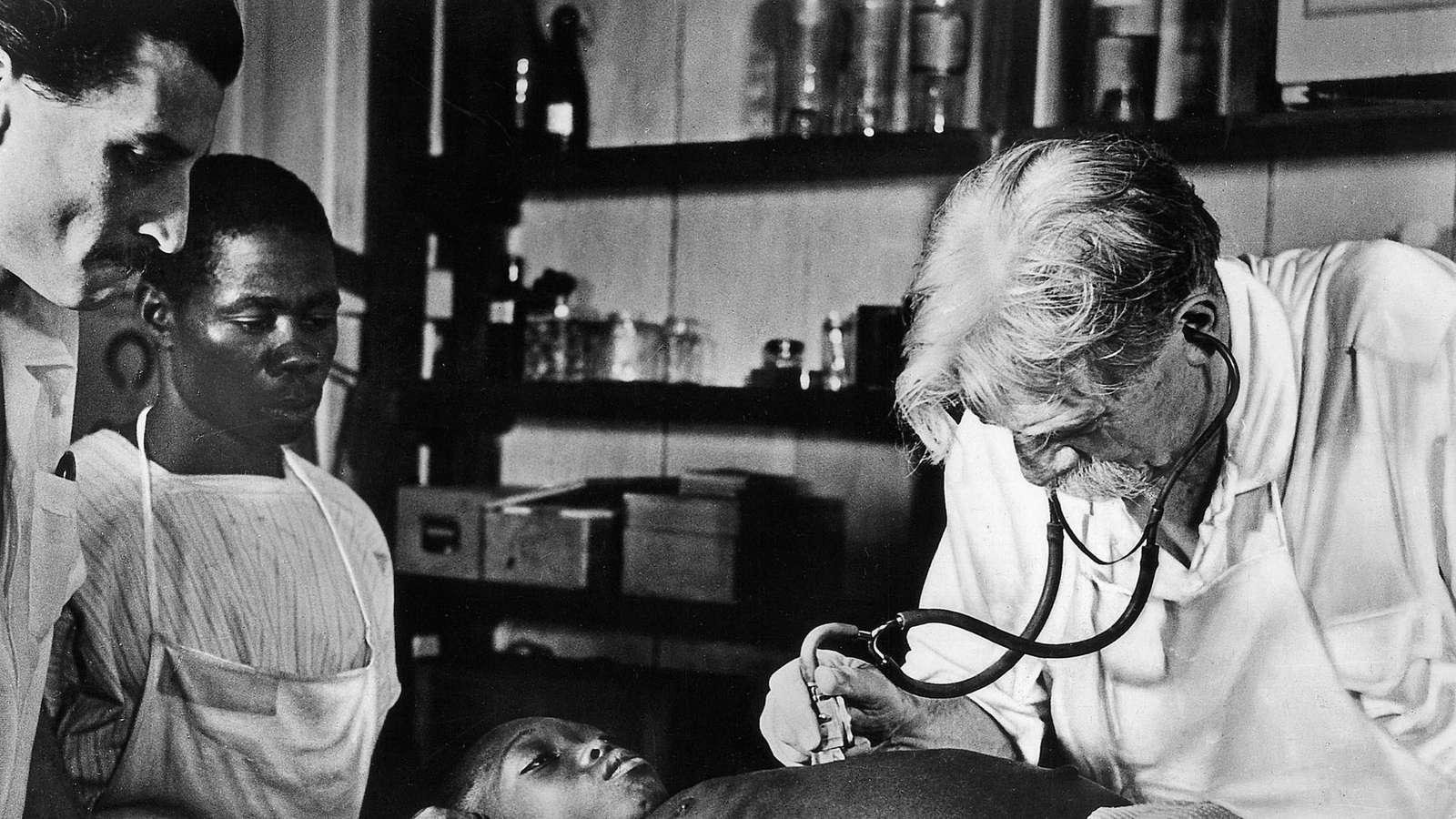
Image Citation: Albert Schweitzer portrait and photographs at Lambaréné Hospital, public domain via the Library of Congress and Wikimedia Commons.
Few Christian figures of the twentieth century are as admired—or as debated—as Albert Schweitzer. On this day, Schweitzer was officially licensed for ministry in the Lutheran Church after completing his theological education. At the time, he was already recognized as an exceptionally gifted scholar, musician, and pastor.
Schweitzer later became world-famous for founding a hospital in Lambaréné, Gabon, where he devoted much of his life to caring for patients in difficult conditions. His humanitarian work earned him the 1952 Nobel Peace Prize and inspired generations to pursue lives of sacrificial service.
At the same time, Schweitzer's theology placed him outside historic Christian orthodoxy. In works such as The Quest of the Historical Jesus, he rejected the traditional doctrine that Jesus Christ is fully God and fully man. Instead, he viewed Jesus primarily as an apocalyptic Jewish teacher whose expectations about the end of the world were mistaken. Schweitzer also denied Christ's bodily resurrection and rejected many of the supernatural claims found in Scripture. While he remained associated with liberal Protestantism for most of his life and emphasized a broad ethic of reverence for life, his theological conclusions have been widely rejected by evangelical, Catholic, and Orthodox Christians.
Why This Matters
Albert Schweitzer's life reminds us that admirable humanitarian service and sound biblical theology are not always found together. Christians are called to care for the sick, love their neighbors, and serve sacrificially, but they are also called to "contend for the faith that was once for all delivered to the saints" (Jude 3). Schweitzer's legacy challenges believers to hold both compassion and doctrinal truth together.