
July 22, 1620 - Pilgrims Board The Mayflower
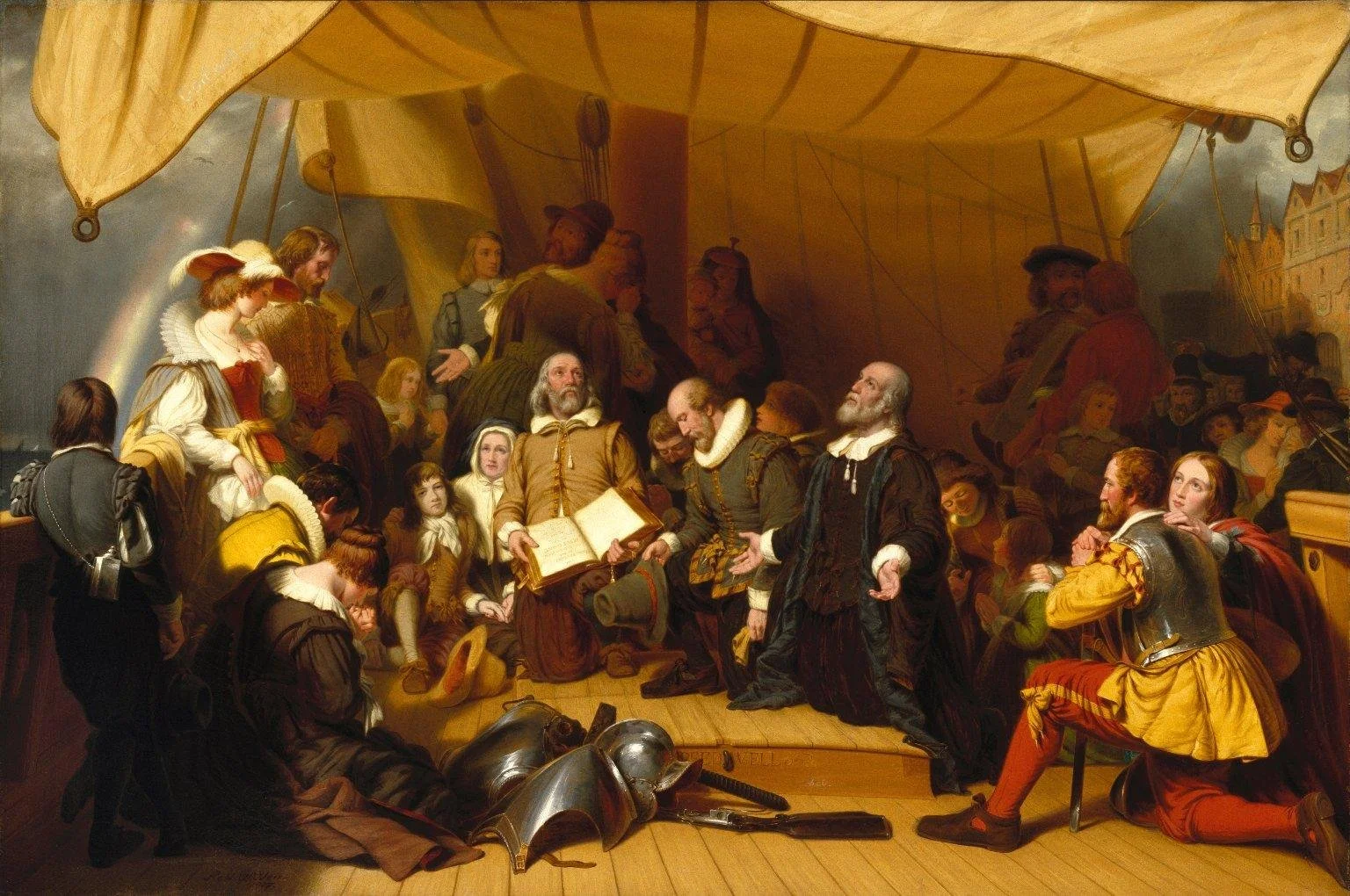
Image Citation: Embarkation of the Pilgrims by Robert Walter Weir (1843), public domain, U.S. Capitol Collection. Alternative images include the public-domain painting The Departure of the Pilgrims from Delft Haven by Charles Lucy and photographs of the Mayflower II at Plymouth, Massachusetts.
Many Americans learn that the Pilgrims came to the New World seeking “religious freedom,” but the reasons behind their journey are often simplified. The group that would become known as the Pilgrims were English Separatists who believed the Church of England had drifted too far from the teachings of Scripture. They objected to what they viewed as unscriptural ceremonies, hierarchical church government, and traditions that had been retained from the Roman Catholic Church after the English Reformation.
Because they refused to conform to the established church, Separatists faced fines, imprisonment, and other legal penalties under English law. Many first fled to the Dutch Republic, where they enjoyed greater religious liberty. However, concerned about preserving their English identity and raising their children in a distinctly Christian community, they decided to establish a new settlement across the Atlantic.
On July 22, 1620 (Old Style calendar), the Mayflower departed from Southampton, England, carrying the Pilgrims and other passengers toward North America. After a difficult voyage of more than two months, the ship reached Cape Cod in November 1620, where the settlers signed the Mayflower Compact before establishing Plymouth Colony.
Why This Matters
The Pilgrims' story reminds us that questions of religious conviction, conscience, and the authority of Scripture have profoundly shaped both church history and the development of the United States. While the Pilgrims were not advocates of modern religious pluralism as it is understood today, their pursuit of the freedom to worship according to their convictions became one of the many historical threads that eventually contributed to America's broader tradition of religious liberty.