
July 27, 1099 - Pope Urban II Dies
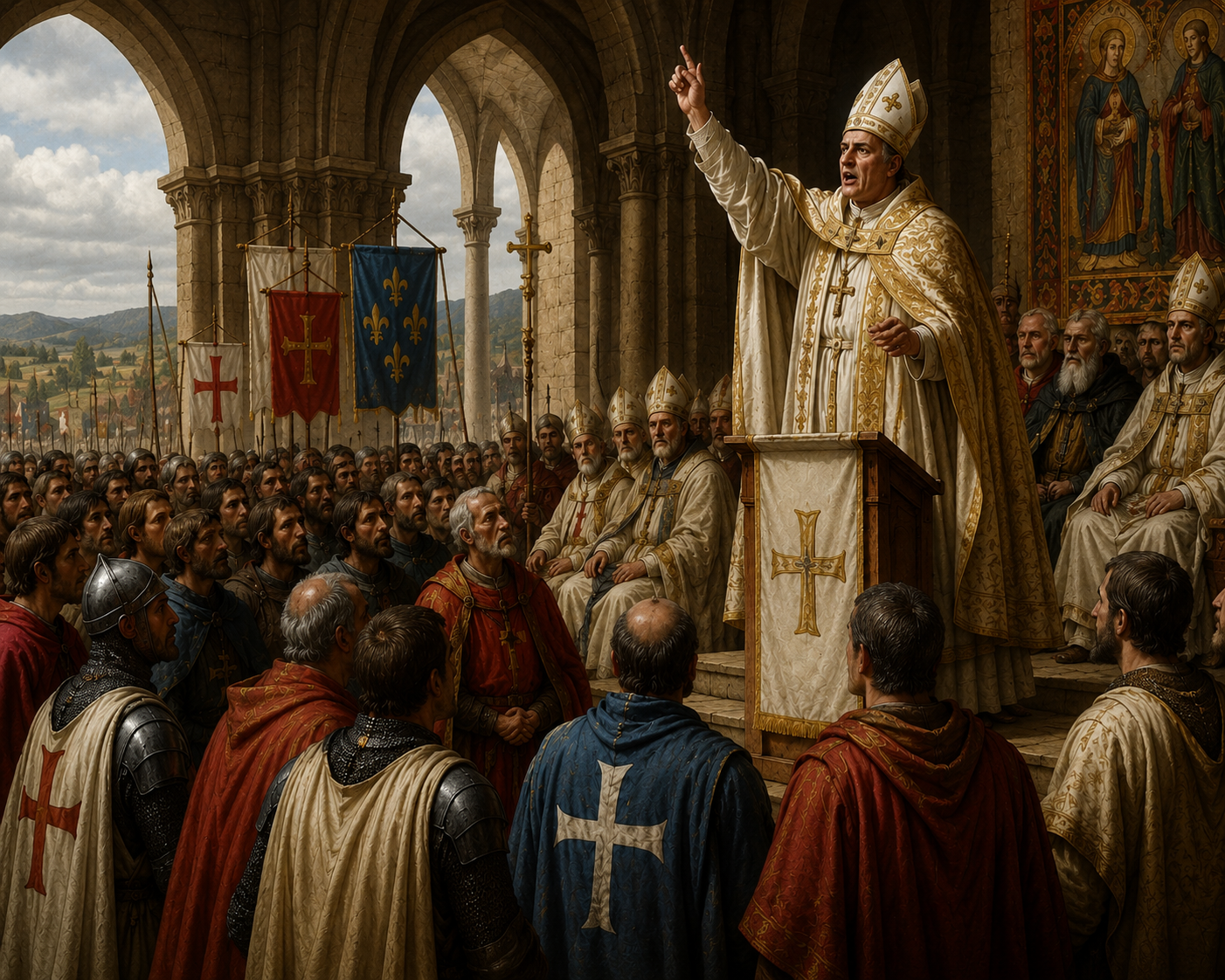
Image Citation: AI-generated illustration created with ChatGPT (OpenAI), 2026. Depicts Pope Urban II preaching at the Council of Clermont in 1095, where he called upon Western Christians to join what became the First Crusade. Created for educational purposes.
Pope Urban II is remembered as one of the most consequential—and controversial—figures of the Middle Ages. In November 1095, at the Council of Clermont in France, he called upon the rulers and knights of Western Europe to aid the Byzantine Empire against the advancing Seljuk Turks and to reclaim Jerusalem and other holy sites from Muslim control. His famous appeal urged Christians to take up the cross, setting in motion what became known as the First Crusade.
Urban's call was motivated by several factors. The Byzantine emperor had requested military assistance after suffering defeats at the hands of the Seljuk Turks, and Urban also saw an opportunity to strengthen the authority of the papacy while encouraging rival European nobles to unite against a common enemy rather than wage war against one another. His appeal inspired thousands of nobles, knights, and ordinary people to journey east. After years of campaigning, crusaders captured Jerusalem in July 1099 in a bloody siege that resulted in the deaths of many of the city's Muslim and Jewish inhabitants. Urban II, however, never learned of the crusaders' victory. He died on July 27, 1099, in Rome just two weeks before news of Jerusalem's capture reached him.
The First Crusade reshaped relations between Christians and Muslims for centuries. While many medieval Christians viewed the crusade as a sacred mission, historians today recognize that it also intensified religious hostility, fueled cycles of violence, and left a legacy that continues to influence Christian-Muslim relations. Urban II remains a complex historical figure whose actions helped redefine the political and religious landscape of medieval Europe.
Why It Matters
The death of Pope Urban II marks the end of the life of the man whose preaching launched the Crusades. His legacy reminds us how deeply religious conviction, political ambition, and international conflict can become intertwined. The First Crusade permanently altered the history of Europe, the Middle East, and the Christian church, illustrating both the power of religious leadership and the long-lasting consequences of decisions made in times of conflict.
