
July 26, 1603 - King James Becomes King of England
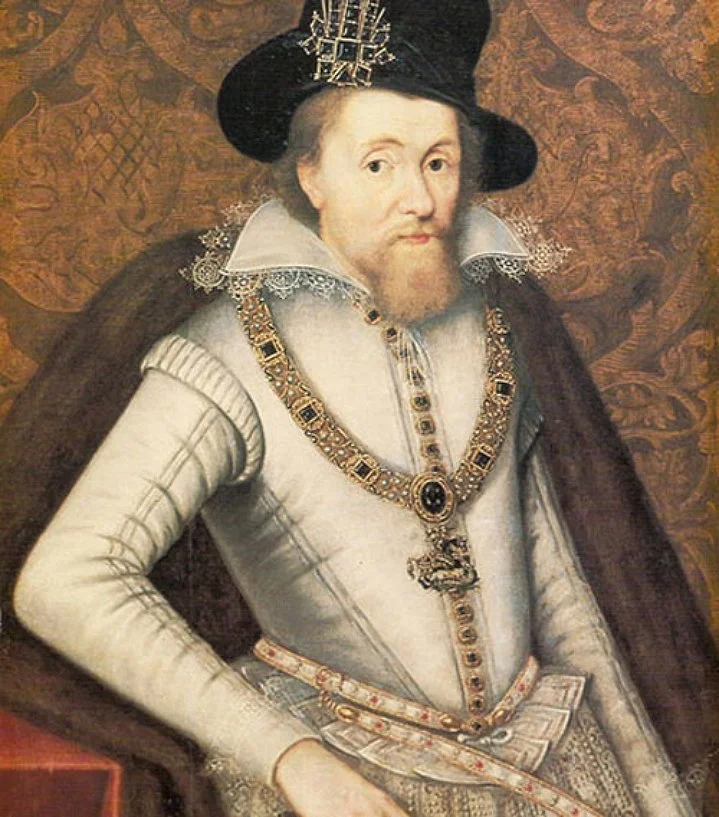
Image Citation: King James I of England (1566–1625), attributed to John de Critz the Elder, public domain, via Wikimedia Commons.
When James VI of Scotland inherited the English throne on July 26, 1603, becoming King James I of England, he inherited a church deeply divided over doctrine, worship, and the Bible itself. The Geneva Bible was widely popular among English Protestants, but its notes were sharply critical of monarchy. The Bishops’ Bible, favored by the Church of England, had never gained widespread acceptance. Hoping to unify the nation around a single authorized translation, James approved the creation of a new English Bible.
The idea emerged at the Hampton Court Conference in 1604, where Puritan leader John Rainolds proposed a fresh translation. James enthusiastically embraced the suggestion, appointing approximately fifty scholars and theologians, organized into six companies at Westminster, Oxford, and Cambridge, to undertake the work. Drawing primarily from the original Hebrew and Greek texts while consulting earlier English translations, including William Tyndale’s pioneering work, the translators spent seven years producing what became known as the Authorized Version.
First published in 1611, the King James Version did far more than standardize Scripture for the Church of England. Its majestic language shaped English literature, influenced generations of preachers and writers, and became the dominant English Bible for more than three centuries. Although many modern translations have since appeared, the King James Version remains one of the most influential books ever published and continues to be treasured by millions of Christians around the world.
Why it matters:
The King James Bible was not merely another translation—it became one of the most significant literary and religious works in the English language. Its enduring influence can be seen in countless sermons, hymns, books, and everyday expressions that remain part of English-speaking culture today.