
April 25, 1800 - William Cowper
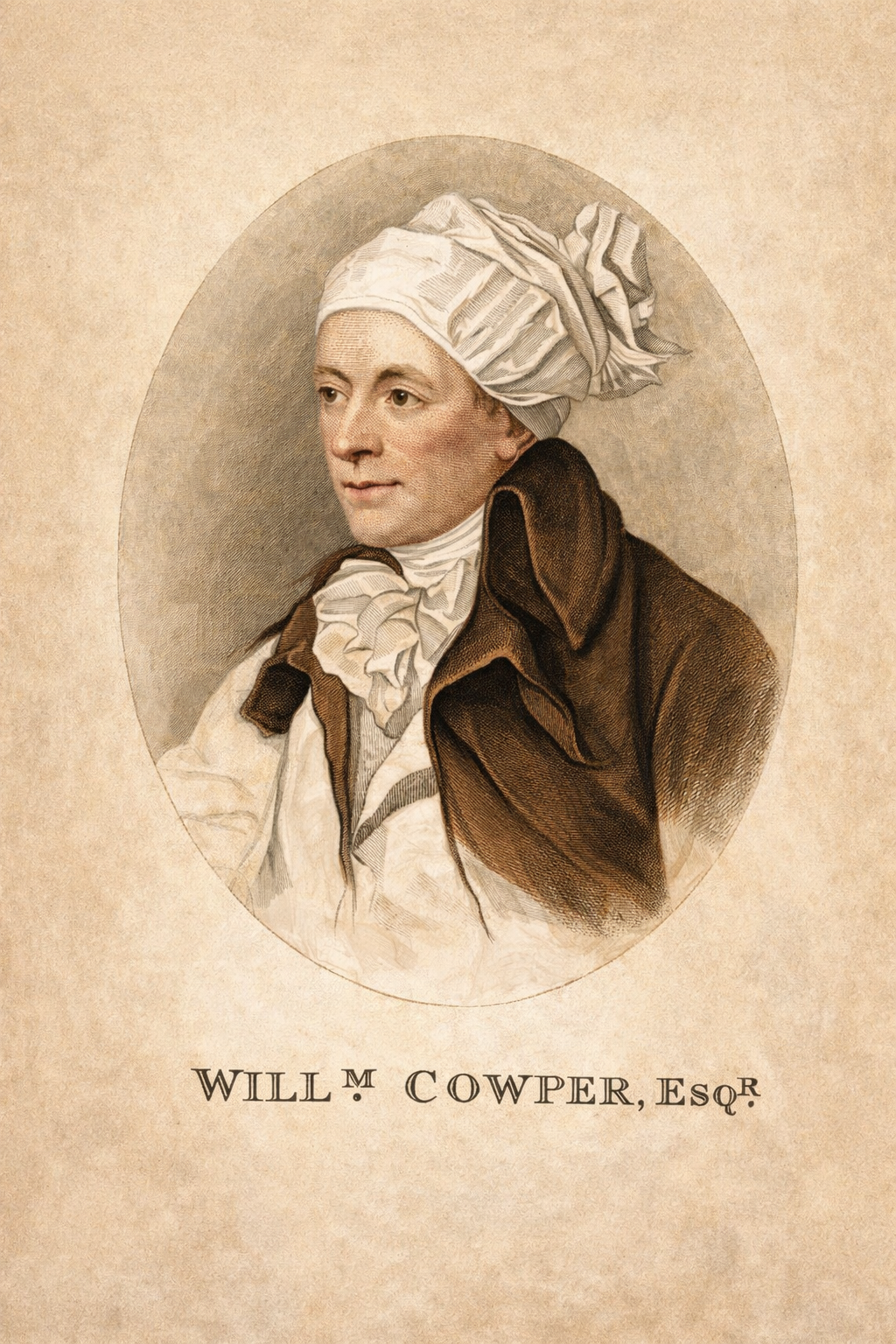
Portrait of William Cowper (1731–1800), public domain. Wikimedia Commons.
William Cowper (pronounced Cooper) was a British poet closely associated with the Evangelical Revival in eighteenth century England. He composed over sixty hymns, which are known for their deep emotional honesty regarding suffering, grace, and redemption. During his life, Cowper suffered from severe mental illness, ultimately leading to multiple suicide attempts, and his suffering developed the tone of his writing. The theological focus of his hymns centers on God’s mercy and atonement with his most famous hymn being “There is a Fountain Filled with Blood.” This hymn is rooted in the doctrine of Christ’s sacrificial atonement, referencing imagery from Zechariah 13:1. Living in Olney, England he co-authored a hymn book titled The Olney Hymns with a local pastor John Newton who was a former slave trader. The Olney Hymns contained over 300 hundred hymns and was the first place that “Amazing Grace” was published. In his old age, he developed dementia and depression, and he believed that this was God’s way of punishing his sins. He died on April 25, 1800.
Cowper’s life is highly relevant to Christians today. It shows that God can powerfully use people in spite of their suffering or struggle. Additionally it shows that strong faith can coexist with mental health struggles. His story encourages Christians to extend compassion to people battling poor mental health. Through his hymns, he reminds believers of the centrality of Christ’s sacrifice and grace, even in times of doubt or suffering. Through his collaboration with Newton, Christians see the importance of Christian community and accountability. Although Cowper endured much tribulation, God has used his story and his writing to impact generations of believers.
