
September 7, 1807 - Robert Morrison Lands in China
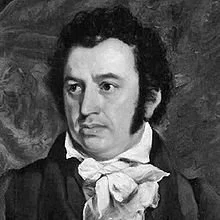
Robert Morrison, possibly by George Chinnery, c. 1834. Public domain. Courtesy of Wikimedia Commons; original portrait, National Portrait Gallery, London.
When Robert Morrison reached Canton on September 7, 1807, he entered a country where the work he had come to accomplish was officially forbidden. The 25-year-old English missionary had been sent by the London Missionary Society with an ambitious assignment: learn Chinese, translate the Scriptures, and establish a Protestant missionary presence among the Chinese people. Morrison would see relatively few converts during his lifetime, but his work in translation, printing, education, and language study helped establish a foundation for the Protestant missionary movement in China.
Born near Morpeth in Northumberland, England, in 1782, Morrison grew up in Newcastle-upon-Tyne and was apprenticed in his father's trade as a maker of wooden forms used by shoemakers. He joined a Presbyterian church as a teenager and later decided to pursue missionary service. After studying at Hoxton Academy in London and the Missionary Academy at Gosport, he was accepted by the London Missionary Society. Because China was his intended destination, he also studied medicine, astronomy, and what Chinese he could learn before leaving Britain.
Getting there proved complicated. The British East India Company, which dominated British trade with China, was reluctant to transport missionaries whose activities might endanger its commercial relationship with Chinese authorities. Morrison therefore traveled first to the United States and continued across the Pacific. His ship reached Portuguese-controlled Macao on September 4, 1807, and three days later he arrived at Canton, now Guangzhou. Thus, September 7 commemorates his arrival in Canton rather than his first landing in China.
Morrison faced formidable obstacles. Under the Qing dynasty, foreign trade was tightly regulated, foreigners were restricted in where they could live and travel, and Christian missionary activity was prohibited. He could not simply travel through China preaching and establishing churches. Even learning Chinese presented difficulties because Chinese teachers who assisted foreigners could expose themselves to official scrutiny.
Much of Morrison's early missionary work consequently took place through language and the printed word. He devoted enormous effort to mastering written and spoken Chinese and began translating Christian texts. In 1809, he accepted employment as a Chinese translator for the East India Company's factory at Canton. The position gave him an income and, importantly, a legitimate reason to remain in the restricted foreign trading community while continuing his missionary and linguistic work.
His accomplishments soon extended well beyond evangelism. Morrison completed his Chinese translation of the New Testament in 1813, and it was printed the following year. He also produced a Chinese grammar and undertook the enormous task of compiling a Chinese-English dictionary. Published in several volumes between 1815 and 1823, his dictionary became an important tool for Western students of Chinese and represented a significant early contribution to the developing European study of the language.
Morrison did not work entirely alone. Chinese teachers and assistants were essential to his language study, translation, and printing efforts. He was also joined by another London Missionary Society missionary, William Milne, who arrived in 1813. Milne became Morrison's most important missionary colleague and assisted in translating the Old Testament. Together they completed a Chinese translation of the entire Bible in 1819; the complete work was subsequently published at Malacca.
The restrictions inside China encouraged Morrison and Milne to look elsewhere for places from which Protestant missions among Chinese-speaking populations could operate. Malacca, then under British influence, became particularly important. In 1818 they established the Anglo-Chinese College there as a center for education, language study, printing, and missionary preparation. Such institutions helped create a network for Protestant work among Chinese communities beyond the immediate reach of Qing authorities.
The number of converts directly associated with Morrison remained small. In 1814 he baptized Cai Gao, generally recognized as the first Chinese Protestant convert. By the end of Morrison's career, only a small number of Chinese had received baptism through his work. Judged simply by conversions, his mission might have appeared to have accomplished little.
Its longer-term significance was different. Morrison demonstrated that sustained Protestant work directed toward China was possible even under severe restrictions. His translations supplied later missionaries with Chinese Christian texts, his linguistic scholarship helped Westerners study Chinese, and his educational and printing projects provided models that later Protestant missions expanded. He also accumulated an extraordinary collection of Chinese books, reflecting an interest in understanding Chinese language and culture that extended beyond the immediate requirements of missionary work.
Morrison spent most of the remainder of his life between Canton and Macao, apart from a period in Britain during the 1820s. He died at Canton on August 1, 1834, at age 52 and was buried in the Protestant Cemetery at Macao. Less than a decade later, the First Opium War and the treaties that followed began transforming relations between China and Western nations, creating opportunities for foreign missionaries that Morrison had never possessed.
Why It Matters
Robert Morrison's arrival marked the beginning of sustained Protestant missionary activity directed toward China. His greatest immediate influence came not from the number of people he converted but from the infrastructure he helped create: a Chinese Bible, linguistic resources, printing operations, educational institutions, and trained Chinese Christians. Those foundations became important to the much larger Protestant missionary movement that developed in China during the nineteenth century.