
July 12, 1213 – Frederick II Signs the Golden Bull of Eger
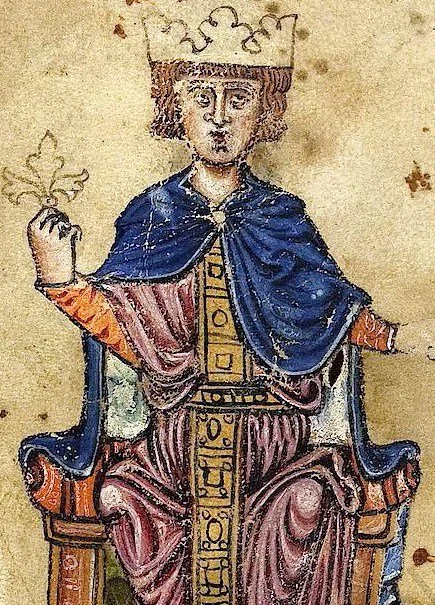
Unknown artist. Frederick II, Holy Roman Emperor. Wikimedia Commons. Public domain. https://commons.wikimedia.org/wiki/File:Frederick_II_(HRE).jpg
As he sought election as Holy Roman Emperor, King Frederick II of Germany and Sicily faced a significant obstacle: winning the support of the powerful German bishops and clergy. On July 12, 1213, he addressed that challenge by issuing the Golden Bull of Eger, a charter that formally renounced many royal claims over the German Church and granted sweeping privileges to the clergy.
The agreement confirmed that bishops and abbots would be freely elected according to canon law, with only limited royal involvement. It also recognized the Church's authority over many of its own lands and legal matters, reducing the ability of secular rulers to interfere in ecclesiastical affairs. In return, Frederick secured the political backing of influential church leaders for his imperial ambitions.
The Golden Bull of Eger reflected the changing balance of power that had emerged after the long Investiture Controversy of the eleventh and twelfth centuries. That conflict had centered on whether kings or popes possessed the authority to appoint bishops. Although the Concordat of Worms (1122) had settled much of the dispute, Frederick's charter went even further by acknowledging the Church's independence within the German kingdom.
Ironically, Frederick II would later become one of the papacy's fiercest opponents. Despite the concessions he made in 1213, his reign was marked by repeated conflicts with Popes Gregory IX and Innocent IV, who excommunicated him multiple times. The cooperation symbolized by the Golden Bull of Eger ultimately gave way to decades of bitter struggle between emperor and pope over authority in medieval Europe.
Why It Matters
The Golden Bull of Eger illustrates one of the defining tensions of medieval Christianity: the relationship between church and state. Frederick's willingness to surrender secular authority over the clergy demonstrated just how influential the medieval Church had become. The document also reminds us that political alliances between rulers and church leaders were often temporary, shaped by immediate needs rather than lasting harmony. The struggle between spiritual and temporal authority would continue to influence European history for centuries.

.jpg)