
June 13, 313 - The Edict of Milan Issued
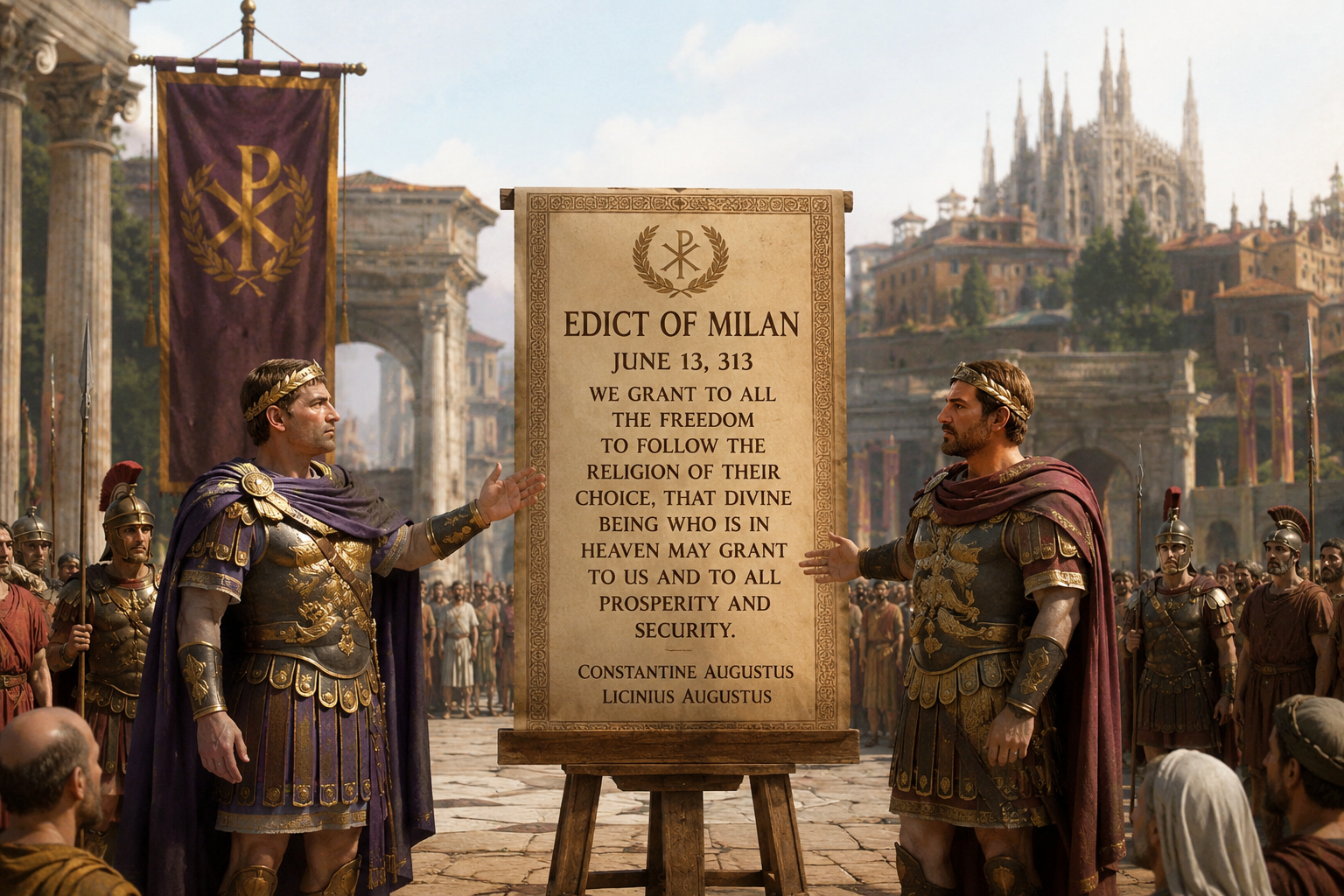
AI-generated artistic depiction of Constantine I and Licinius announcing the Edict of Milan, which established religious toleration within the Roman Empire in A.D. 313. Created with OpenAI ChatGPT (DALL·E), 2026.
In 313, Constantine I and Licinius issued a proclamation that established religious tolerance throughout the Roman Empire. For Christians, this was an enormous change. For generations, many believers had faced suspicion, legal pressure, imprisonment, property seizure, and at times violent persecution. The Edict of Milan did not make Christianity the official religion of Rome, but it did give Christians legal protection and the freedom to worship openly.
The edict also ordered that confiscated Christian property be returned. Churches, meeting places, and other possessions taken during earlier persecutions were restored. This mattered because Christianity was no longer treated as an illegal or dangerous movement. Christians could gather, worship, organize, and serve without the same fear of imperial punishment.
Constantine’s own relationship with Christianity remains one of the most debated subjects in church history, but the importance of the Edict of Milan is clear. It changed the public status of Christianity in the Roman world. A faith that had once grown largely under pressure now had space to expand in the open.
The story did not end in 313. Later emperors would go further, and Christianity would eventually become the official religion of the Roman Empire. But the Edict of Milan was one of the decisive steps in that transformation. It helped move Christianity from the margins of Roman society toward the center of imperial life.
Why This Matters
The Edict of Milan reminds us that religious liberty has deep historical importance. For early Christians, freedom to worship was not abstract. It meant the ability to gather, teach, serve, and live faithfully without fear of punishment. June 13 marks one of the great turning points in the history of Christianity and the Roman Empire.
