
June 14, 1936 - Prolific Author G. K. Chesterton Dies
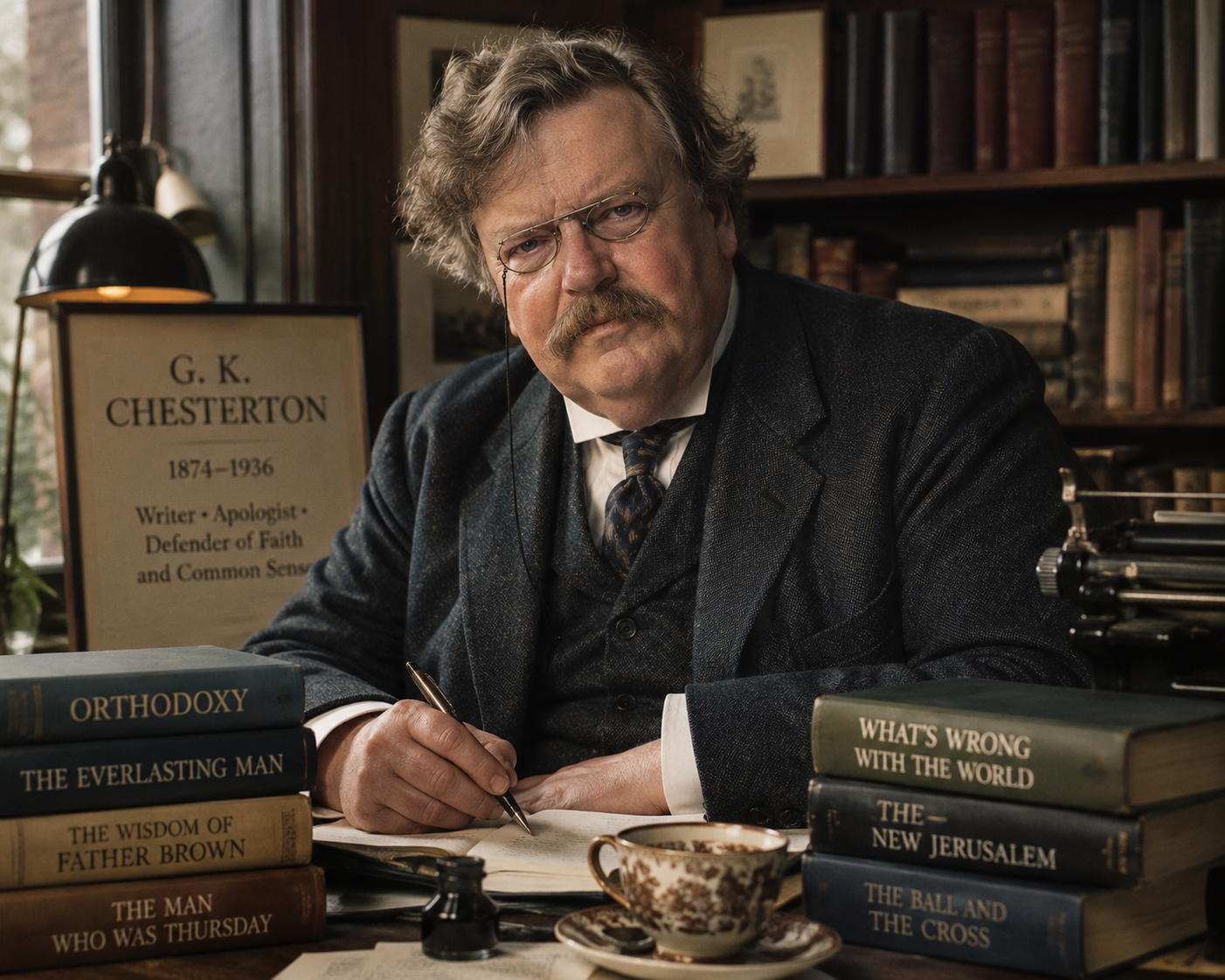
AI-generated artistic representation of G. K. Chesterton (1874–1936) with several of his best-known works, including Orthodoxy, The Everlasting Man, The Ball and the Cross, and The Man Who Was Thursday. Created with OpenAI ChatGPT, 2026.
One of the most influential Christian writers of the twentieth century was G. K. Chesterton. A master of wit, paradox, and clear thinking, Chesterton produced an astonishing body of work that included more than one hundred books, hundreds of short stories, and thousands of essays. His writings ranged from theology and philosophy to literary criticism and detective fiction, making him one of the most versatile authors of his age.
Chesterton is perhaps best known today for creating the beloved Father Brown mysteries, featuring a humble Catholic priest whose understanding of human nature helps him solve crimes. Beyond fiction, his books such as Orthodoxy and The Everlasting Man shaped generations of Christian thinkers. Among those influenced by his work were Mahatma Gandhi and C. S. Lewis, the latter of whom credited Chesterton with helping prepare him intellectually for Christianity.
Known for his sharp observations and memorable quotations, Chesterton once remarked, “Impartiality is a pompous name for indifference, which is an elegant name for ignorance.” His ability to challenge conventional wisdom with humor and insight made him a formidable defender of the Christian faith and a compelling commentator on society.
Although he died in London on June 14, 1936, Chesterton’s influence continues to endure. His books remain widely read, his arguments are still debated, and his distinctive voice continues to inspire Christians seeking to engage both faith and culture with intelligence, conviction, and joy.
Why This Matters:
Chesterton demonstrated that Christian faith need not retreat from intellectual debate or cultural engagement. Through wit, reason, and imagination, he showed that timeless truths can be communicated in ways that are both persuasive and memorable.
