
June 27, 1638 - Patriarch Cyril Lucaris Martyred
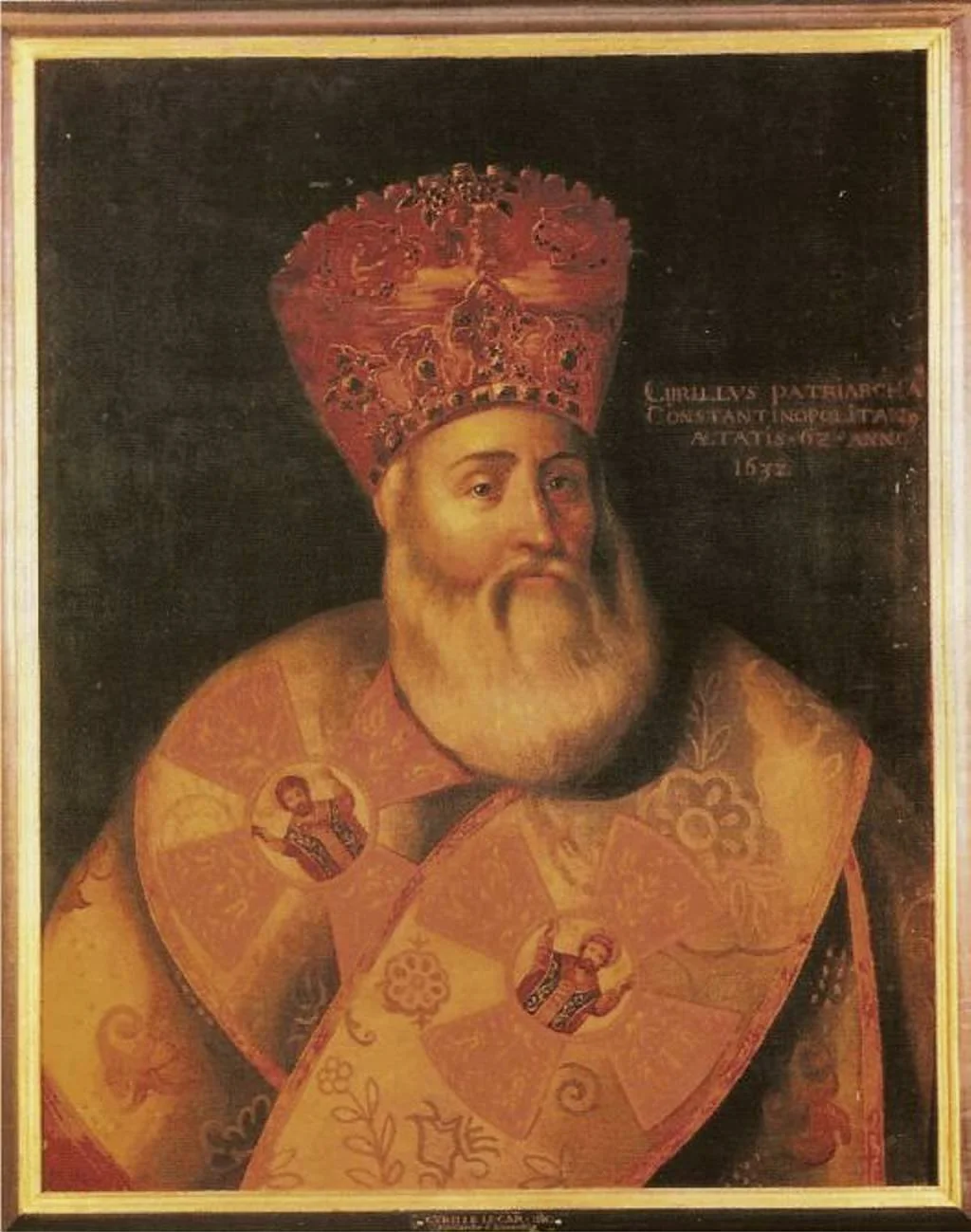
Cyril Lucaris, 1632 Geneva Portrait, 1632. Wikimedia Commons. Public domain. Accessed June 16, 2026.
Few figures in the history of Eastern Christianity have generated as much debate as Cyril Lucaris, the Patriarch of Constantinople whose life stood at the intersection of Orthodoxy, Protestantism, and Ottoman politics. Revered by some as a reformer and defender of the Orthodox Church, and criticized by others for adopting foreign theological ideas, Lucaris remains one of the most intriguing church leaders of the seventeenth century.
Born in Crete in 1572, Lucaris received an extensive education and developed connections with both Eastern and Western Christians. He first served as Patriarch of Alexandria before ascending to the patriarchal throne of Constantinople. His years of leadership unfolded during a period when the Ottoman Empire ruled much of the Orthodox world and when Christian Europe remained divided by the aftershocks of the Protestant Reformation.
Lucaris sought to strengthen the Orthodox Church intellectually and institutionally, but his engagement with Protestant theologians proved deeply controversial. In 1629, a confession bearing his name was published that expressed views resembling Calvinist doctrines, including teachings on predestination and justification by faith. Historians continue to debate the extent of Lucaris’s personal authorship and beliefs, yet the document sparked fierce opposition from both Roman Catholic and Orthodox leaders.
Political tensions eventually caught up with him. On June 27, 1638, Ottoman Sultan Murad IV ordered the arrest and execution of the patriarch. Cyril Lucaris was strangled and his body thrown into the Bosporus, though Christians later recovered his remains and provided a proper burial.
The theological disputes surrounding Lucaris did not end with his death. In 1672, the Synod of Jerusalem formally rejected Calvinist teachings and reaffirmed traditional Orthodox doctrine, effectively repudiating many of the ideas associated with him. Yet his influence endured, especially in efforts to promote learning and engage with broader Christian scholarship.
Why It Matters:
The life of Cyril Lucaris highlights the complex relationship between theology, politics, and ecclesiastical authority in the early modern world. His story demonstrates how Christian leaders often navigated competing pressures from governments, rival churches, and emerging ideas. More than three centuries later, the debates surrounding Lucaris continue to shape conversations about Orthodox identity and the boundaries of reform within the Christian tradition.
