
June 28, 1770 - Anthony Benezet Opens School for African American Children
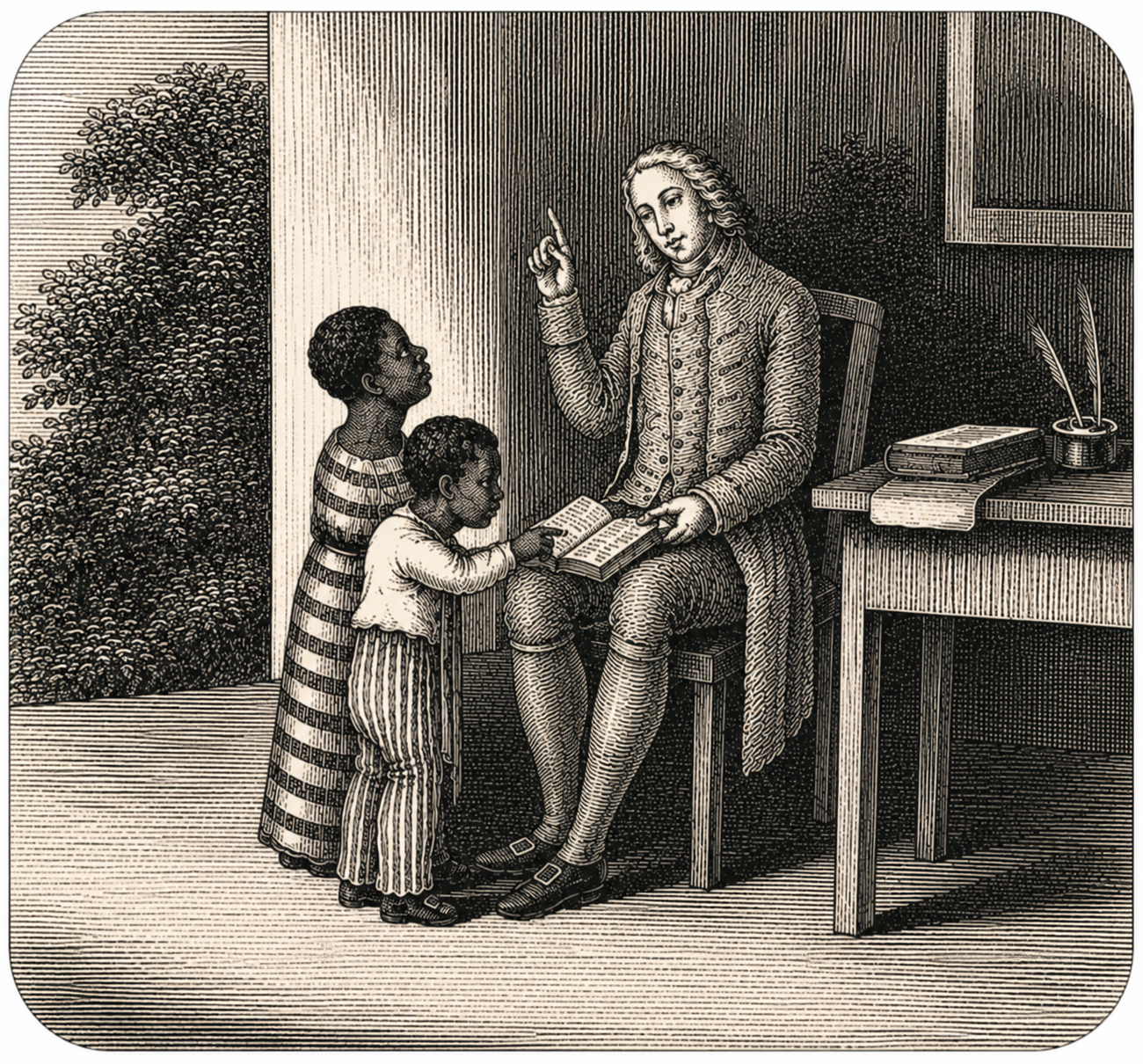
Original source image: “Benezet Instructing Colored Children,” nineteenth-century illustration (ca. 1850), public domain, via PICRYL, derived from Library of Congress materials. AI-enhanced adaptation created for educational purposes.
Few figures in colonial America did more to challenge racial prejudice than the Quaker educator and reformer Anthony Benezet. Although slavery remained firmly entrenched throughout much of the British Atlantic world, Benezet spent his life arguing that all people were created equal in the sight of God.
His convictions took tangible form on June 28, 1770, when he opened a school in Philadelphia specifically for Black children—both free and enslaved. At a time when many colonists denied that African Americans possessed the same intellectual abilities as whites, Benezet vigorously rejected such ideas. He insisted that educational opportunity should not be determined by race and believed that every child bore the image of God.
Benezet did far more than advocate from a distance. He personally taught classes, purchased supplies with his own money, and devoted much of his life to educating those whom society had marginalized. His school became one of the earliest institutions in America dedicated to the education of Black children and represented a remarkable challenge to prevailing racial attitudes in the eighteenth century.
Benezet’s influence extended far beyond Philadelphia. Through writings such as Some Historical Account of Guinea (1771), he exposed the horrors of the transatlantic slave trade and inspired later abolitionists in both America and Britain. Figures including John Wesley and Thomas Clarkson drew upon his work, while his ideas helped shape the broader antislavery movement that would grow in the decades before the Civil War.
Why It Matters
Anthony Benezet’s school represented more than an educational experiment—it was a declaration that Christian faith demanded recognition of the dignity and equality of all people. Long before abolition became a widespread cause, Benezet challenged his society’s assumptions through both word and deed. His legacy reminds us that social reform often begins when individuals act courageously on deeply held convictions, even when those convictions run against the prevailing culture.
