
June 29, 1864 - Samuel Ajayi Crowther Consecrated as First African Anglican Bishop
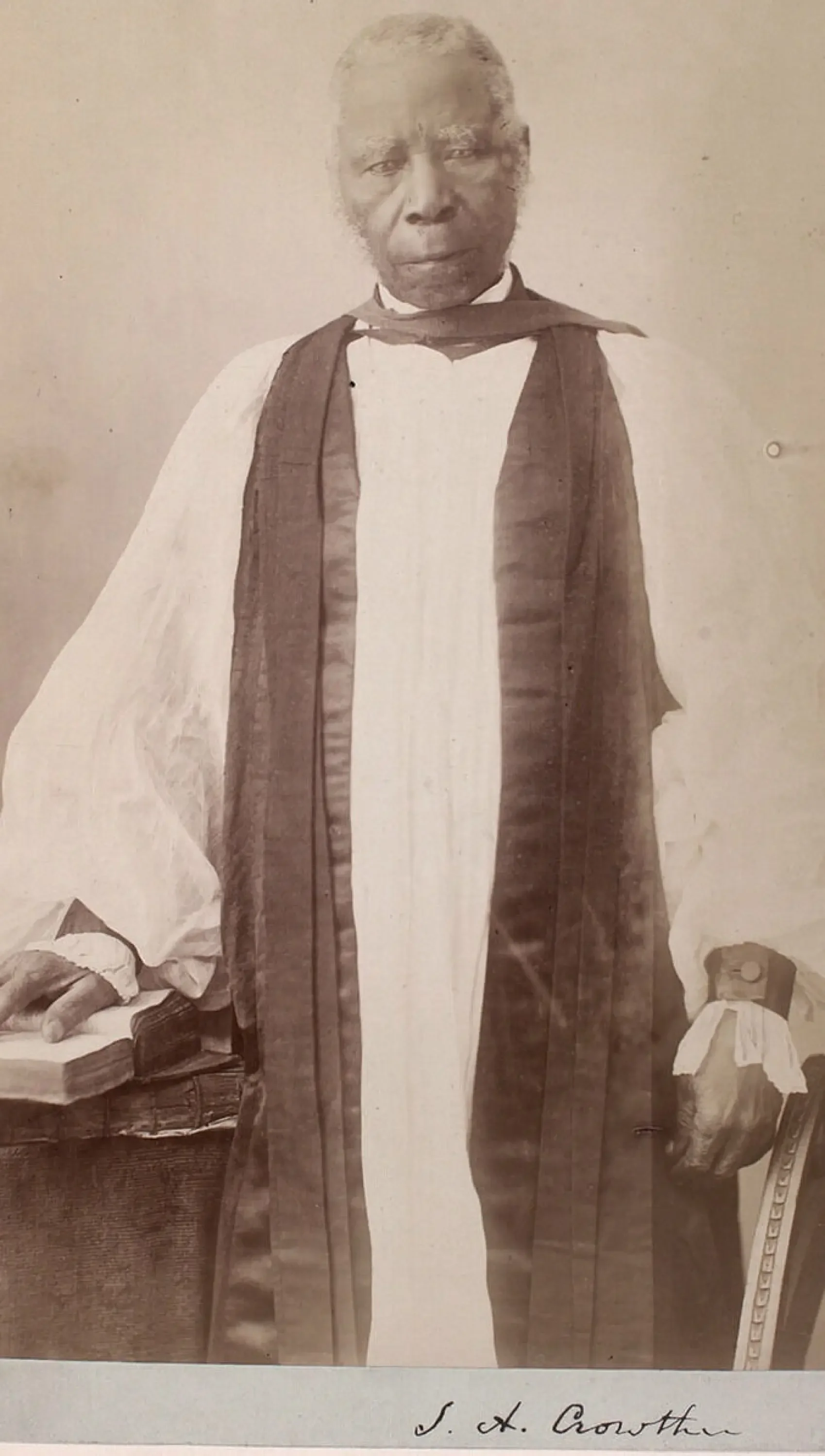
Unknown photographer, Portrait of Bishop Samuel Ajayi Crowther, c. 1880s–1890s. Public domain. Via Wikimedia Commons.
Samuel Ajayi Crowther’s life is one of the most remarkable stories in Christian history. Born among the Yoruba people in present-day Nigeria around 1809, he was captured by slave raiders as a child and sold into slavery. His fate changed dramatically when a British naval vessel intercepted the slave ship carrying him, leading to his liberation in Sierra Leone. There, he embraced Christianity, received an education, and began a journey that would make him one of the most influential African Christians of the nineteenth century.
Gifted in languages and scholarship, Crowther became a pioneering missionary, educator, and translator. He translated portions of the Bible and the Book of Common Prayer into Yoruba, helping make Christianity accessible to people in their own language. His work not only advanced the spread of the gospel in West Africa but also preserved local languages and promoted literacy throughout the region.
A historic milestone came on June 29, 1864, when Crowther was consecrated at Canterbury Cathedral as the first African bishop in the Anglican Communion, becoming Bishop of the Niger under Archbishop Charles Longley. On that same day, the University of Oxford awarded him an honorary Doctor of Divinity degree in recognition of his extraordinary scholarship and ministry. His consecration represented a significant moment for the Anglican Church, affirming that Christian leadership extended beyond Europe and could flourish under indigenous African leadership.
Crowther’s later years were not without challenges. Despite his accomplishments, he encountered resistance from some European missionaries who questioned African leadership within the church. Yet his legacy endured, and the churches he helped establish laid foundations for the rapid growth of Christianity across Africa in the twentieth and twenty-first centuries.
Why does this matter?
Samuel Ajayi Crowther’s life stands as a testimony to perseverance, redemption, and the universal nature of the Christian faith. Rising from enslavement to become a bishop, scholar, and translator, he demonstrated that the gospel transcends barriers of race, culture, and nationality. As Christianity’s center of gravity increasingly shifts toward Africa, Crowther’s vision of indigenous Christian leadership remains more relevant than ever.
