
June 23, 1941 - Father Walter Ciszek Arrested
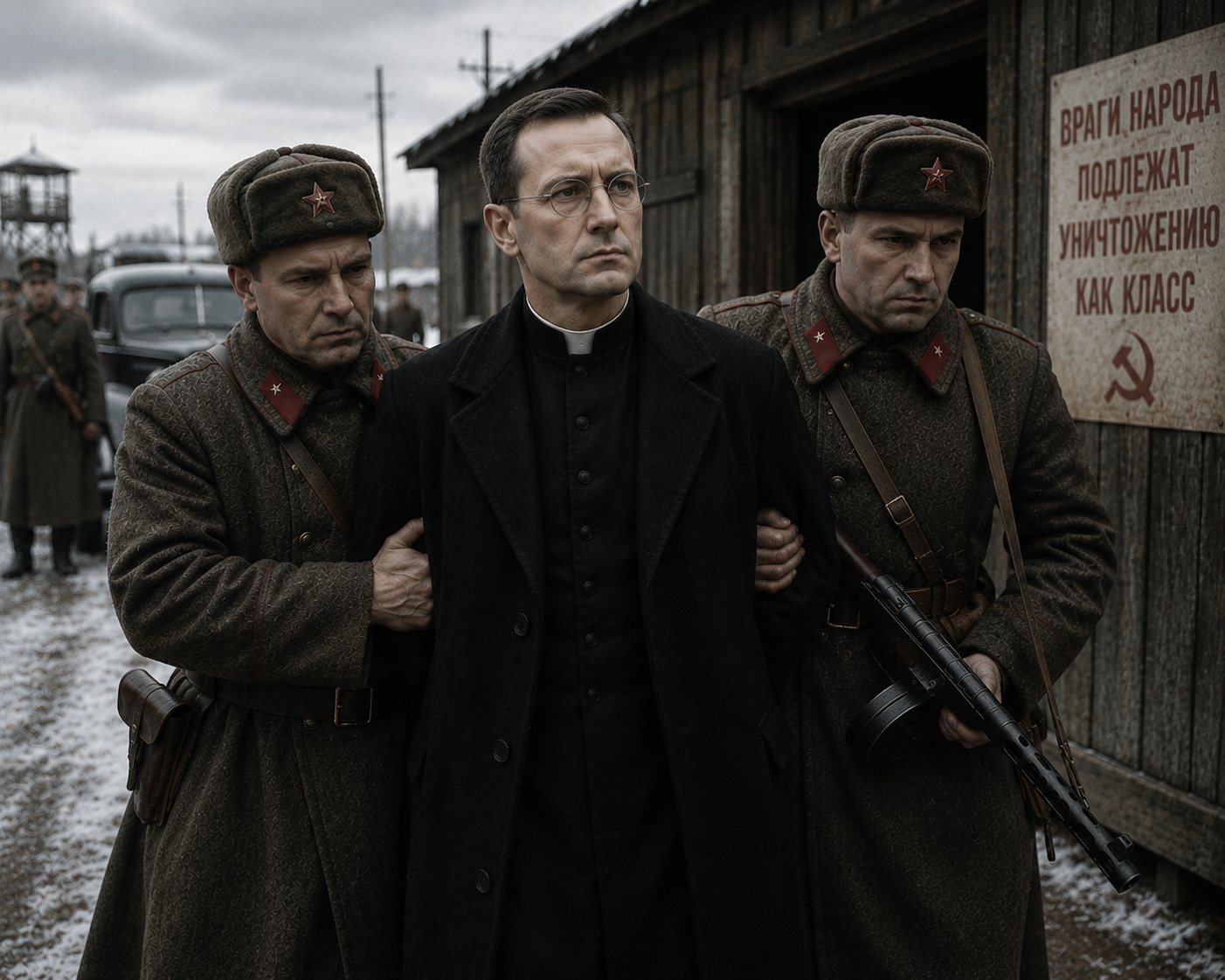
AI-generated illustration of Father Walter J. Ciszek following his 1941 arrest by Soviet authorities. Created for educational purposes.
On June 23, 1941, just one day after Nazi Germany launched its invasion of the Soviet Union, Jesuit priest Father Walter J. Ciszek was arrested by Soviet authorities in eastern Russia. The arrest marked the beginning of one of the most remarkable stories of Christian perseverance under Communist persecution in the twentieth century.
Born in Pennsylvania to Polish immigrant parents, Ciszek entered the Society of Jesus with a desire to serve in Russia, where militant atheism had become official state policy following the Bolshevik Revolution. Because Soviet authorities prohibited missionary work, he entered the USSR secretly in 1940 under the guise of a laborer. While working among Polish refugees and laborers in Siberia, he quietly celebrated Mass, administered the sacraments, and ministered to fellow believers despite the severe risks.
Following the German invasion, Soviet security forces grew increasingly suspicious of foreigners. Ciszek was arrested by the NKVD—the Soviet secret police—and accused of being a Vatican spy. He spent years in solitary confinement, endured harsh interrogations, and was pressured to confess to crimes he had not committed. After sentencing, he was sent to labor camps in Siberia, where he remained imprisoned for many years.
Yet imprisonment did not end his ministry. Even in labor camps, Ciszek secretly celebrated the Eucharist, heard confessions, and encouraged fellow prisoners. Through suffering, he came to a deeper understanding of God’s providence and learned to entrust every circumstance to Christ.
After twenty-three years in Soviet prisons and labor camps, Ciszek was finally released in 1963 in a prisoner exchange between the United States and the Soviet Union. He later recounted his experiences in the spiritual classic He Leadeth Me, a memoir that continues to inspire Christians facing trials and uncertainty.
Why It Matters
Walter Ciszek’s story reminds believers that faithfulness to Christ often requires courage in difficult circumstances. His witness demonstrates that governments may restrict religious expression, but they cannot extinguish faith rooted in God’s grace. His life remains a powerful testimony to endurance, forgiveness, and trust in divine providence even amid suffering.
