
June 4, 1639 - Fundamental Orders of New Haven Created
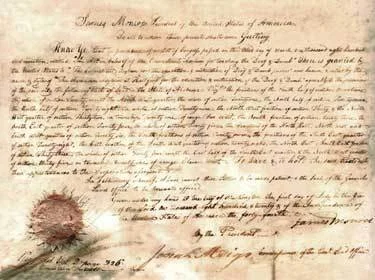
Fundamental Orders of Connecticut (1639). Public domain document image. Courtesy of Wikimedia Commons.
Long before the United States Constitution was written, many early colonial settlements in North America were already wrestling with a major question: what should a Christian society actually look like in practice? Some colonies emphasized commerce, others survival, and others religious liberty. In seventeenth-century New England, however, certain communities attempted to build civil governments directly shaped by their understanding of Scripture.
One of the most influential voices behind this movement was Thomas Hooker, a Puritan minister whose preaching helped shape early Connecticut political thought. Hooker believed government ultimately rested under the authority of God and that civil leaders were accountable to biblical principles. Through sermons preached to settlers and political leaders alike, he argued that communities should establish governments rooted in moral order, covenant responsibility, and the consent of the governed. Many historians have pointed to Hooker’s preaching as an important influence on Connecticut’s early governing documents.
That influence became especially visible in New Haven. On June 4, 1639, the colony established what became known as the Fundamental Agreement, sometimes associated with the broader governing framework later called the Fundamental Orders of New Haven. The settlers believed the Bible should serve as the central guide not only for church life but also for civil society.
The founders of New Haven outlined several core principles that would shape the colony. They affirmed that Scripture was authoritative and trustworthy, believed the colony should operate according to biblical principles, established a church-centered community structure, and sought to create a stable civil order capable of enforcing these ideals in everyday life. Unlike some modern understandings of church and state separation, many early Puritan settlers viewed civil government as a tool for encouraging moral order and religious faithfulness within society.
The New Haven experiment reflected the broader Puritan vision of building what some described as a “godly commonwealth.” Leaders hoped the colony would become a visible example of a properly ordered Christian society in the New World. Yet these efforts also revealed tensions that would continue throughout American history, including debates over religious authority, political power, and the relationship between faith and government.
The independent New Haven Colony eventually came to an end in 1660 when it was absorbed into the larger Connecticut Colony under a unified government. Nevertheless, its founding principles remain an important window into the religious worldview of many early English settlers in America.
Why This Matters
The story of New Haven and Thomas Hooker reminds modern readers how deeply Christianity influenced many early American colonies and their political thinking. Whether one agrees or disagrees with their approach, these settlers believed faith should shape public life, morality, and government. Understanding these early experiments helps explain ongoing American debates about religion, law, liberty, and the role of biblical values in society.