
May 19, 1536 - Anne Boleyn, Mother of Queen Elizabeth I, Beheaded
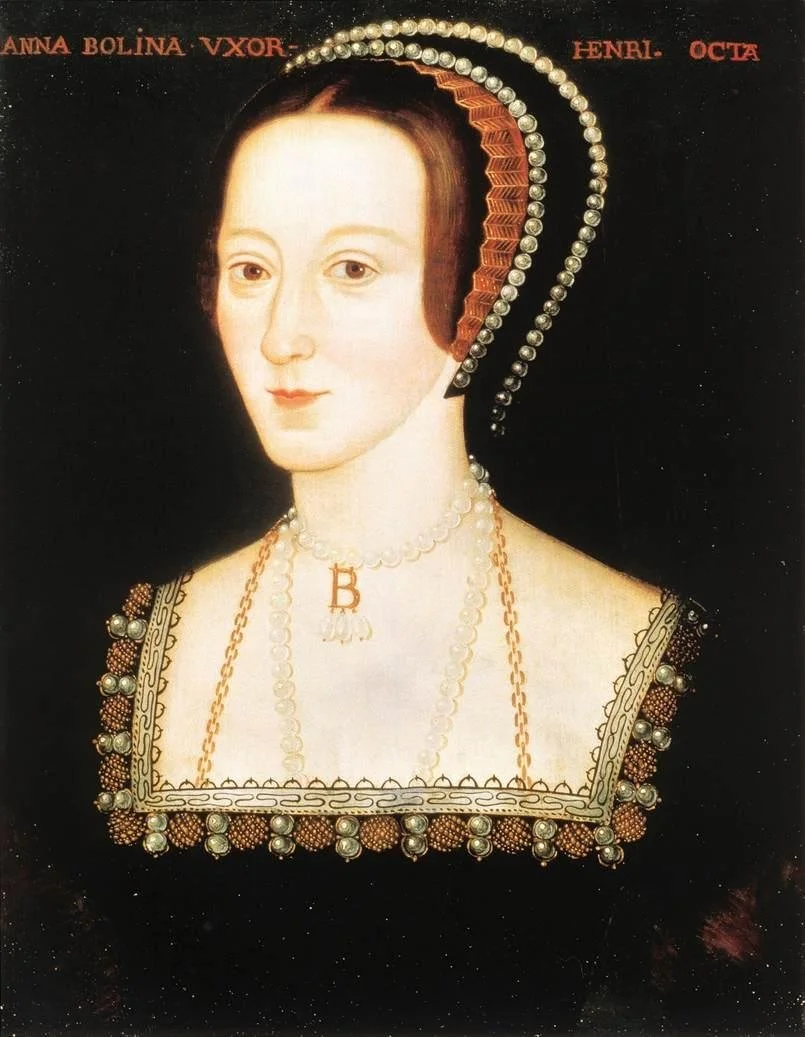
“A Lady, called Anne Boleyn,” attributed to Hans Holbein the Younger, via Wikimedia Commons, public domain.
King Henry VIII is commonly known for forming the Church of England so that he could be divorced from his wife Catherine. Many do not know, however, that he originally defended Catholicism and was titled “Defender of the Faith” by the Pope. His love affair with Anne Boleyn (the future mother of Queen Elizabeth I) led him to request a divorce, but when Pope Clement VII denied him, in part to political pressure from Charles V, Henry created the Church of England so that he could be granted separation from Catherine. The break with Rome was formalized through the Act of Supremacy, which declared Henry the Supreme Head of the Church of England. While at court, Anne Boleyn helped to encourage reform-minded ideas, including access to English translations of Scripture. She never gave birth to a male heir during her marriage to Henry, which led Henry to execute her on account of treason, though many historians consider these charges to be politically motivated. She was beheaded on May 19, 1536. Later, their daughter, Elizabeth I, established a more stable Protestant identity in England. Henry’s separation from Rome led to the dissolution of monasteries, which redistributed wealth across England. This moment was an integral turning point of the Protestant Reformation.
This moment of history points to how political power can distort religious institutions, and there are many instances of this throughout history. Looking to history, Christians are reminded of the importance of integrity in leadership. However, history also proves that God works through flawed situations, which can also be seen in the reign of Queen Elizabeth I. This encourages believers to reflect on the relationship between church authority and state power so that they know their beliefs when faced with modern circumstances.