
May 20, 325 - Council of Nicaea Begins
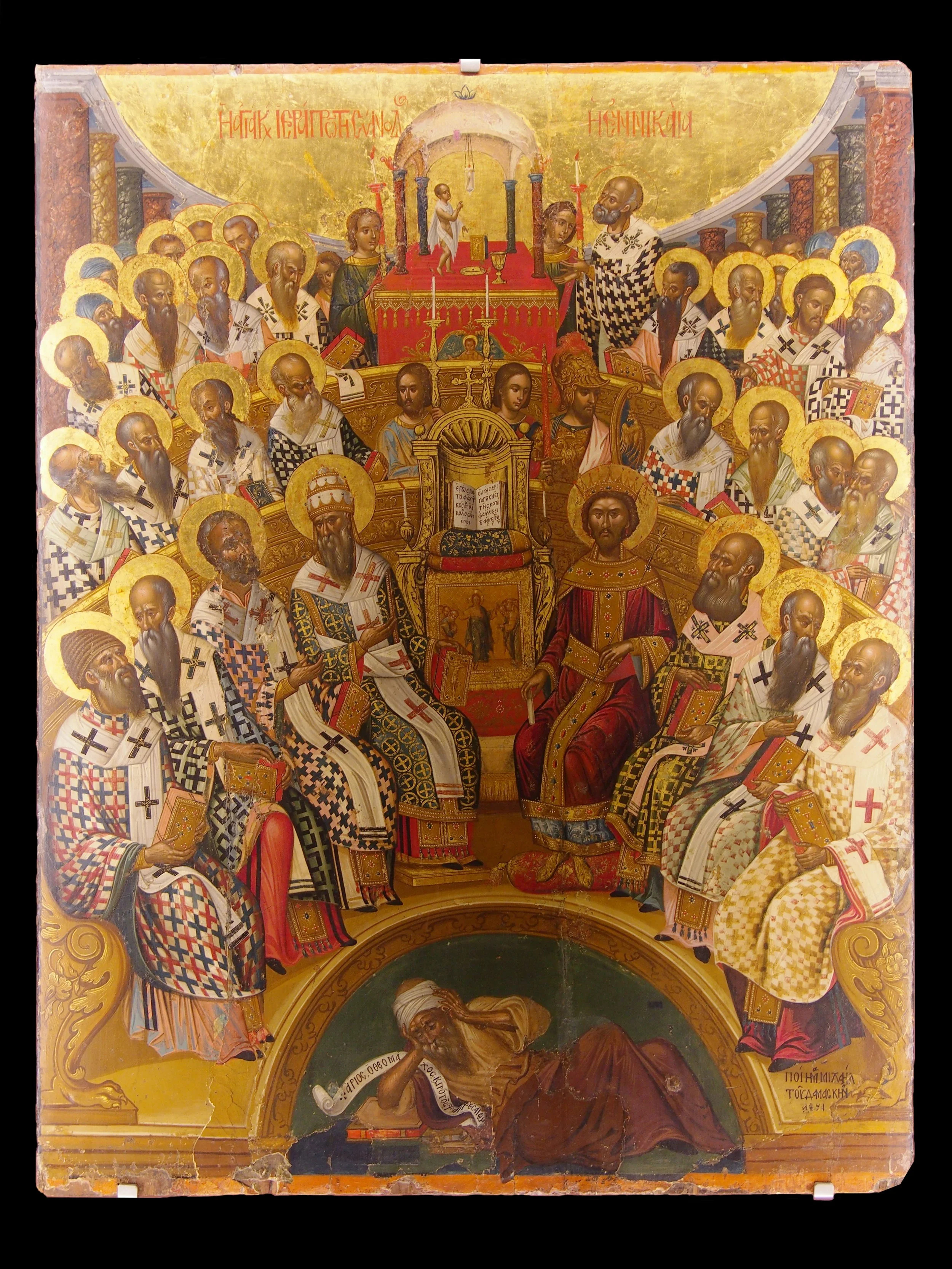
First Council of Nicaea (icon, public domain), via Wikimedia Commons.
The Council of Nicea, the first ecumenical council, gathered together bishops from across the Roman Empire. This was the first meeting of delegates that represented most areas of the Christian world. Constantine the Great called the council on May 20, 325 to settle divisions that had blossomed as a result of the Arian controversy. This controversy arose from the teachings of Arius who taught that Jesus was created and not co-eternal with the Father. From this council came the Nicene Creed- a foundational statement of Christian belief that is still used today. This declared that Jesus Christ is fully divine and the eternal Son of God. The council also established a unified date for Easter. Even though this council resolved many issues, the Arian controversy persisted for decades.
These core beliefs surrounding the divinity of God are still central to Christianity today. The Council reflects the importance of defining and defending sound doctrine, and the Nicene Creed still unifies believers today. Scripture is complex and sometimes difficult to understand. As a result, theological truth often requires careful discussion and clarification to interpret. Even then, false teachings sometimes arise, calling for vigilance amongst believers.
