
May 22, 337 - Roman Emperor Constantine Dies
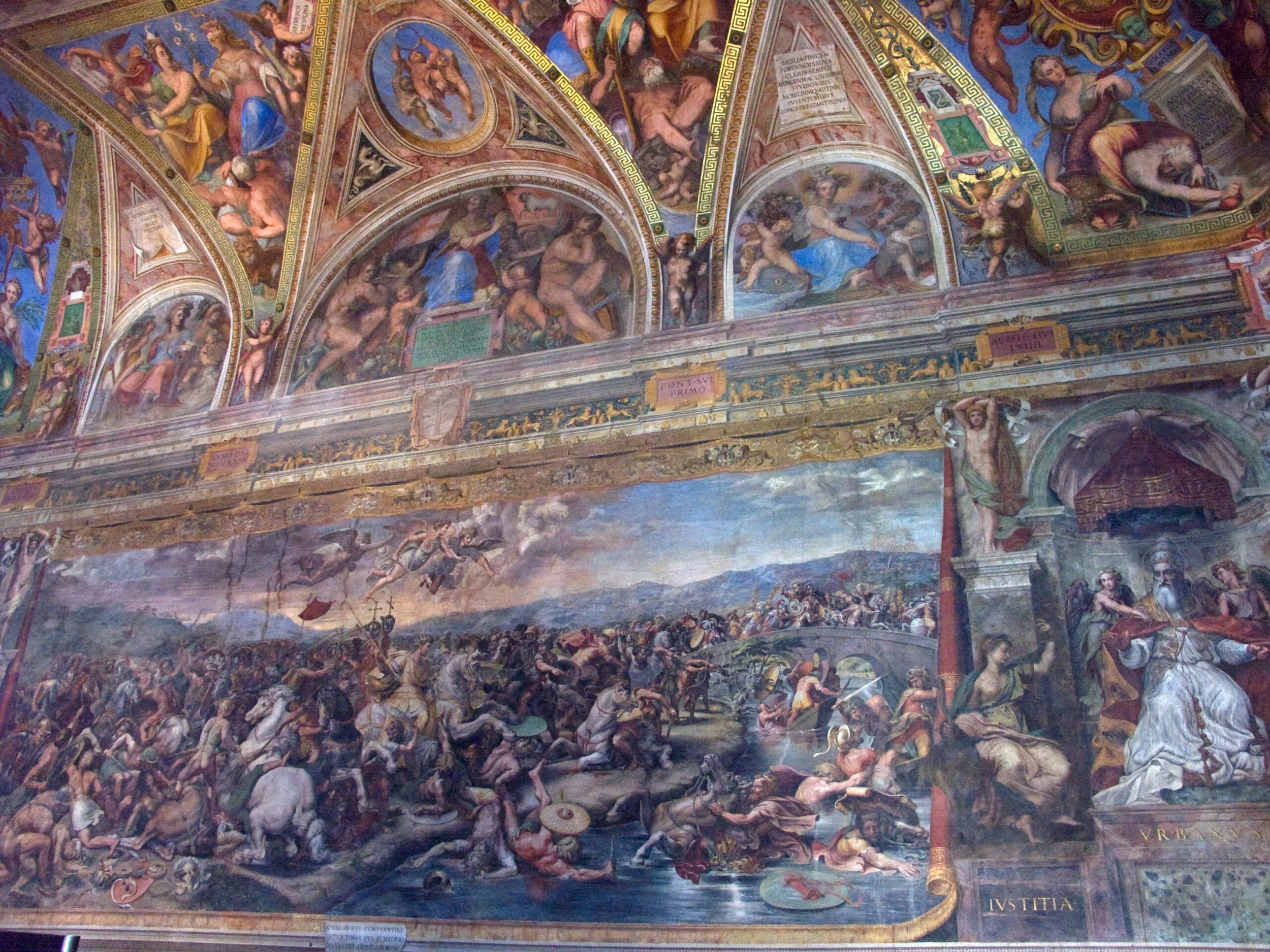
The Battle of the Milvian Bridge, Raphael workshop, early 16th century, Vatican City (public domain).
Constantine the Great ruled from 306-337 AD, and was considered the first “Christian Roman Emperor” as he made it legal to practice Christianity in the Roman Empire. Christianity was legalized through the Edict of Milan, granting religious tolerance across the empire. Although it is unclear whether Constantine was actually a Christian, he aided the spread of Christianity throughout the Roman Empire. It is said that he had a conversion experience following a battle at the Milvian Bridge. Constantine attributed the victory to the Christian God, claiming that he saw a vision of a cross in the sky. Later, he called the Council of Nicea, defining core Christian doctrines. Constantinople became the new capital of the Roman Empire and a center for Christianity. His personal baptism took place shortly before his death, which contributes to the debate over the depth of his faith. His reign established the beginning of a close relationship between church and state in Christian history.
Considering Constantine’s life, encourages believers to reflect on the differences between authentic faith versus political alignment with Christianity. However, it also shows that there can be benefits that come with government support for religion. Constantine’s reign marks a turning point where the government's attitude toward Christianity shifted away from persecution. This view is shared in some places in the world but not all. Constantine is a beautiful example of how God works through imperfect leaders to advance his purposes, but it also encourages believers to reflect on whether or not their faith is personal conviction or cultural identity.