
May 6, 1536 - Great Bible Mandate Issued
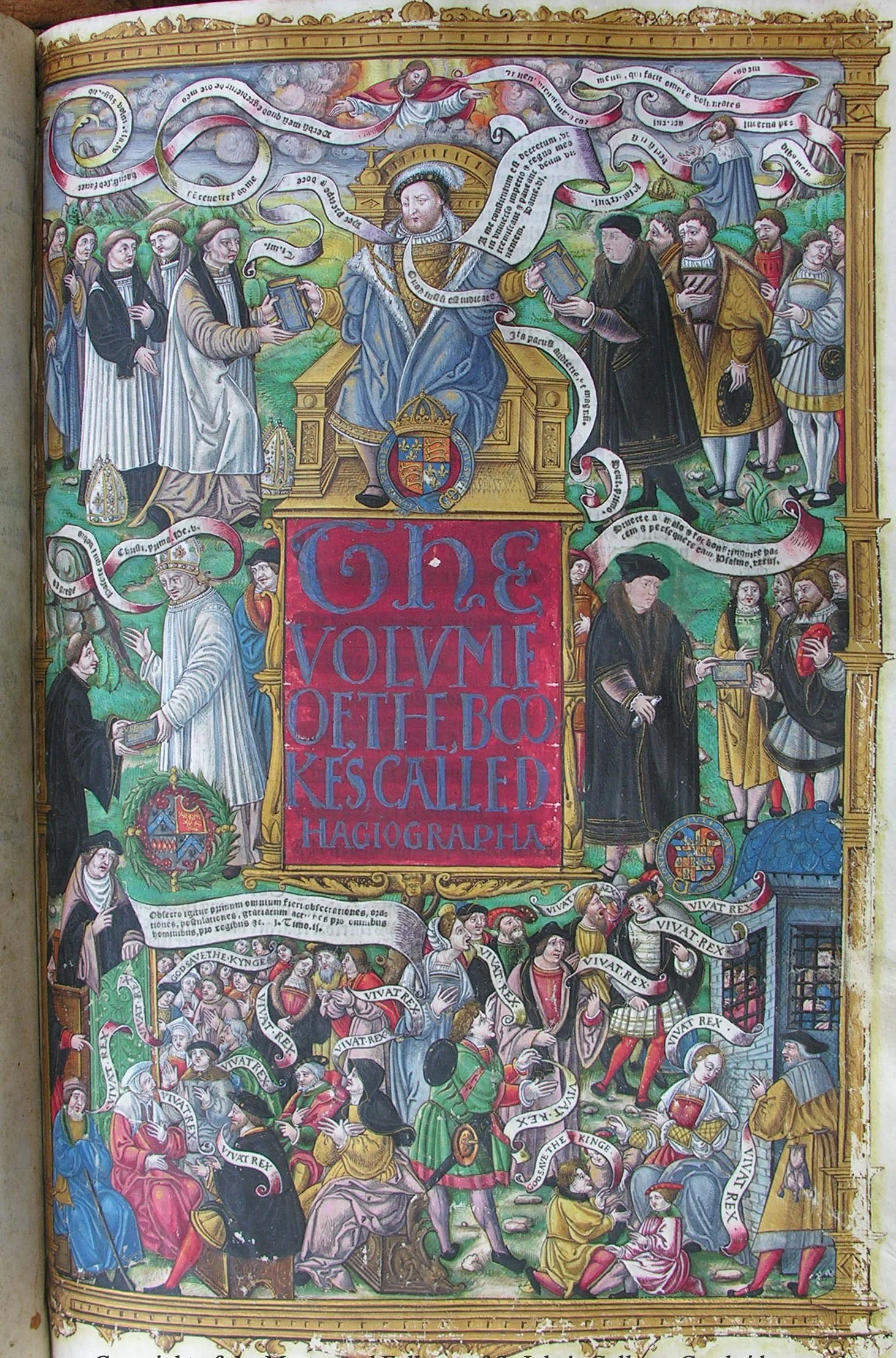
“Title page of the Great Bible (1539).” Public domain, via Wikimedia Commons
On May 6, 1536, King Henry VIII, the monarch who initiated the English Reformation and broke away from the Roman Catholic Church, mandated that a Bible be chained to every church in England in order to prevent theft. This led to the birth of the term “chained Bible.” These Bibles were known as Great Bibles and were the first officially authorized English Bibles for public use in churches. The Great Bible was largely based on earlier translations, specifically the work of William Tyndale. Tyndale translated the Scriptures from Hebrew and Greek, making them more accurate than those translated from Latin. King Henry’s mandate was not wholly indicative of his character, though, as Tyndale was burned to the stake in the Holy Roman Empire for heresy.
This event speaks to modern Christians in a couple of ways. One way being to inspire gratitude within the modern Church for widespread accessibility to Scripture. Although access to Scripture is still restricted in some areas, millions of Christians across the world have access to and own Bibles. Instead of having to go to the church building to have access to the Bible, Christians are able to own multiple Bibles of their own. Another prominent lesson that Christians can apply from this event is that God can work through imperfect leaders and complex situations. King Henry VIII was flawed, yet God still used aspects of his leadership to advance his Kingdom. This is important to remember in modern society. God remains sovereign even over political power, and he can and will work all things for his glory.