
September 20, 1884 - Dr. Horace Newton Allen Arrives in Korea
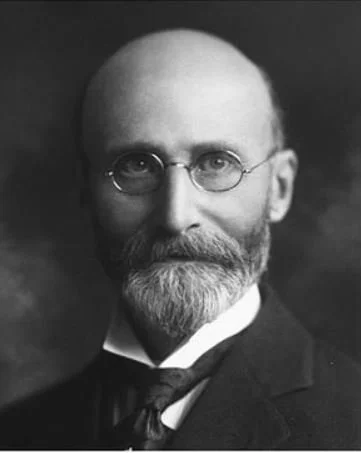
Dr. Horace Newton Allen (1885). Photographer unknown. Wikimedia Commons. Public Domain.
On September 20, 1884, Dr. Horace Newton Allen arrived at Chemulpo (modern-day Incheon), Korea, hoping to establish a Protestant missionary presence in a country where public Christian evangelism was not yet permitted. The 26-year-old American physician had traveled from China, leaving his wife and infant son in Shanghai while he investigated opportunities in Korea. Within three months, a violent political uprising would place Allen at the bedside of a critically wounded member of the Korean royal family, creating an unexpected opportunity for Protestant medical missions.
Born in Delaware, Ohio, on April 23, 1858, Allen graduated from Ohio Wesleyan University and completed his medical training at Miami Medical College in Cincinnati. He and his wife, Frances, initially traveled to China as missionaries of the Presbyterian Church in the United States of America. Difficulties with the climate and missionary work in China eventually led Allen to consider Korea, where American Protestant churches were beginning to explore opportunities for establishing missions.
Korea, then governed by the Joseon dynasty, had experienced centuries of relative isolation from much of the Western world. Although Catholic Christianity had entered Korea during the eighteenth century, Catholic believers had suffered repeated persecution. Protestant Christianity was a more recent arrival, with Korean converts and evangelists already establishing small Christian communities before American missionaries began residing in the country.
Allen arrived at a politically sensitive moment. Korea was struggling with competing pressures from China and Japan, while reform-minded Koreans sought to introduce Western technology, education, and governmental institutions. The government had begun establishing diplomatic relationships with Western countries but remained cautious about foreign religious activities.
After reaching Seoul on September 22, Allen established himself as a physician associated with the American diplomatic mission. His medical credentials allowed him to work in Korea without openly presenting himself as a missionary.
On December 4, 1884, a political crisis erupted in Seoul.
A group of Korean reformers attempted to overthrow the existing government in what became known as the Gapsin Coup. During the violence, Min Yong-ik, an influential royal relative and close associate of King Gojong, suffered severe sword wounds. His injuries were considered life-threatening.
Allen was summoned to treat him.
Using Western surgical techniques, Allen cleaned and dressed the wounds, controlled bleeding, and continued treating the injured official during his lengthy recovery. His medical methods differed considerably from those practiced by traditional Korean physicians, and his success attracted attention within the royal court.
Min Yong-ik survived.
The recovery established Allen's reputation among influential Korean officials and earned him the confidence of King Gojong. The king subsequently permitted Allen to establish a Western-style hospital that would introduce modern medical practices to Korea.
On April 10, 1885, Gwanghyewon, commonly translated as the House of Extended Grace, opened in Seoul. Within weeks, it was renamed Chejungwon, meaning the House of Universal Helpfulness.
The hospital represented a cooperative undertaking between the Korean government and American Presbyterian missionaries. Korean authorities provided institutional support, while Allen and other missionary physicians supplied medical expertise. Patients received treatments that included surgery, vaccinations, and other forms of Western medicine.
The hospital also became an important center for medical education. In 1886, it began training Korean students in Western medical practices, helping establish a foundation for modern medical education in Korea.
Meanwhile, other Protestant missionaries were arriving.
On April 5, 1885, Presbyterian missionary Horace Grant Underwood and Methodist missionary Henry Gerhard Appenzeller reached Chemulpo. Underwood soon traveled to Seoul, where he assisted with medical work while developing educational and evangelistic activities. Appenzeller and his wife temporarily returned to Japan because of political instability but subsequently established themselves in Korea.
These missionaries helped develop churches, schools, hospitals, and educational institutions that became central to the growth of Korean Protestantism.
Medical missions proved particularly important because they offered services that Korean authorities could recognize as beneficial even while public evangelism remained restricted. Hospitals provided missionaries with opportunities to learn Korean, establish relationships, and introduce Christianity through personal contact and educational activities.
Allen's career eventually moved beyond medicine and missionary work. His familiarity with Korean politics and his relationships with the royal court led him into American diplomatic service. He later served as United States minister to Korea, a position he held until 1905.
His diplomatic career coincided with Korea's increasing vulnerability to Japanese expansion, culminating in Japan's establishment of a protectorate over Korea in 1905.
Allen returned to the United States and died on December 11, 1932.
The medical institution he helped establish continued developing long after his departure. Chejungwon eventually became associated with Severance Hospital and Severance Medical College, institutions that contributed to the formation of Yonsei University in 1957.
Today, Yonsei University recognizes the establishment of Allen's hospital in 1885 as the beginning of its institutional history.
Why It Matters
Horace Newton Allen's arrival on September 20, 1884, marked an important stage in the establishment of American Protestant missions in Korea. His treatment of Min Yong-ik helped secure royal support for Western medicine and contributed to the development of institutions through which Protestant missionaries could expand their activities. The hospital Allen founded became part of the institutional foundation of Yonsei University, connecting the history of Korean Protestantism with the development of modern medicine and higher education.
