
September 24, 1934 - Greek Scholar A T Robertson Died
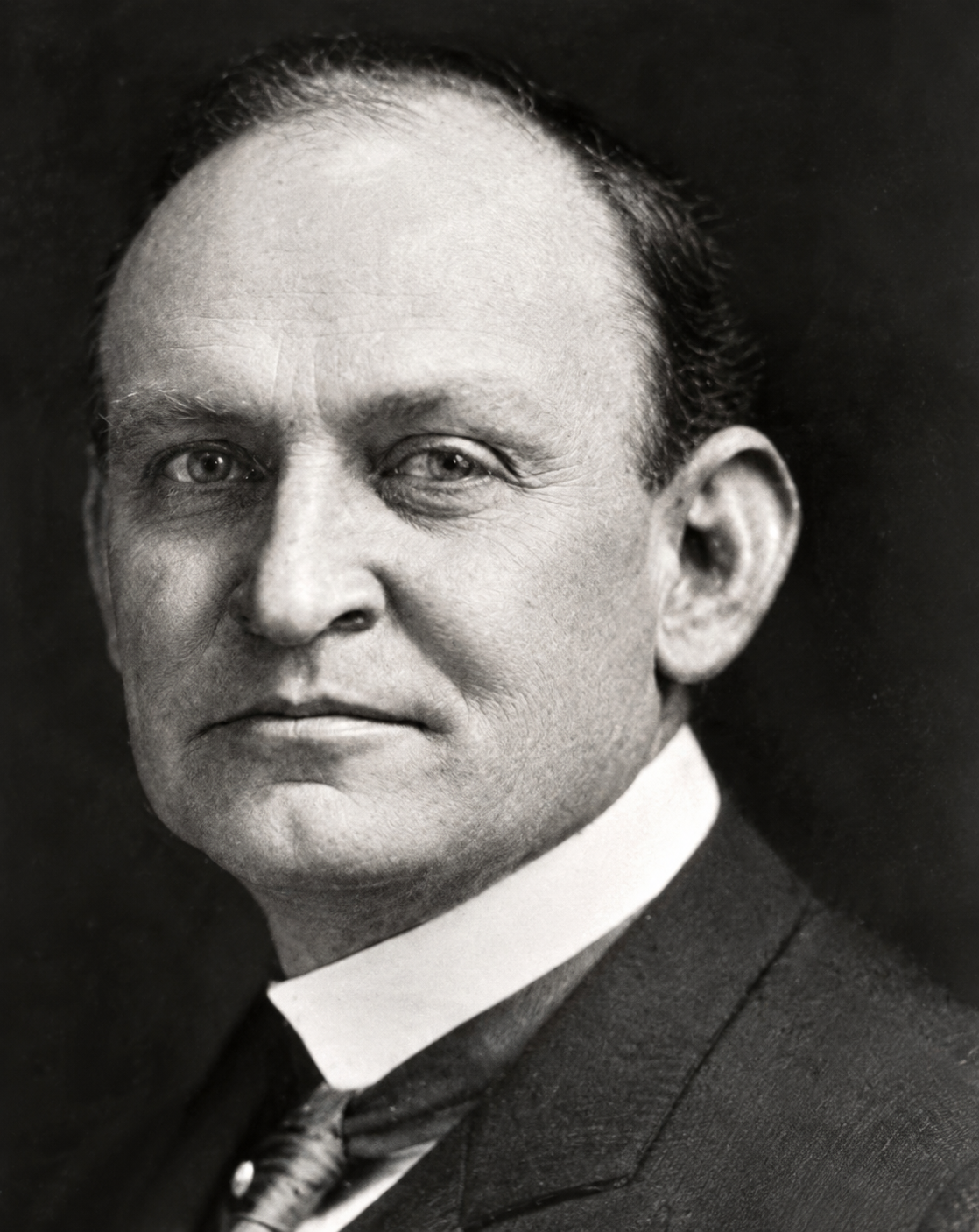
Archibald Thomas Robertson (1863–1934). Original historical photograph, Wikimedia Commons (Public Domain). Digitally enhanced and reconstructed using OpenAI artificial intelligence for the Center for Christian History, 2026.
Archibald Thomas Robertson spent nearly half a century teaching ministers to understand the New Testament in its original language. By the time of his death on September 24, 1934, the Southern Baptist professor had become one of the most widely respected Greek scholars of his generation, producing a body of work that extended far beyond his denomination.
Robertson's final day was remarkably consistent with the life he had led. That afternoon, the seventy-year-old professor was working in his office at Southern Baptist Theological Seminary in Louisville, Kentucky, examining a passage in the Greek New Testament. He left his office to teach his senior Greek class but began feeling ill during the session. After dismissing his students early, he returned home, where he died of a stroke with his wife, Ella, beside him.
His death ended a teaching career that had begun in 1888 and produced some of the most influential works on New Testament Greek published during the twentieth century.
Born November 6, 1863, in Pittsylvania County, Virginia, Robertson grew up in North Carolina. He entered Wake Forest College in 1879 without having completed a conventional high school education. Nevertheless, he demonstrated considerable academic ability, particularly in languages, and completed both undergraduate and graduate studies before leaving Wake Forest in 1885.
He subsequently enrolled at Southern Baptist Theological Seminary, then located in Louisville. There he studied under John Albert Broadus, one of the seminary's founding professors and an influential Baptist preacher and biblical scholar.
Broadus recognized Robertson's abilities and invited him to become his teaching assistant after graduation in 1888. Robertson became an assistant professor in 1890 and succeeded Broadus as professor of New Testament interpretation following his mentor's death in 1895.
The relationship between the two men also became a family connection. In November 1894, Robertson married Broadus's daughter, Ella. The couple eventually had five children.
Robertson's principal academic interest was Koine Greek, the form of Greek in which the New Testament was written. Understanding that language required more than memorizing vocabulary and grammatical rules. It involved studying how Greek developed over time, how ordinary people used it, and how its expressions differed from those of modern languages.
During Robertson's lifetime, scholars were gaining access to increasing numbers of ancient Greek papyri discovered in Egypt. These documents included personal letters, business records, contracts, and other materials written by ordinary people during the centuries surrounding the New Testament.
Their discovery helped scholars understand that New Testament Greek was closely connected to the language of everyday life in the eastern Mediterranean world.
Robertson incorporated this expanding historical knowledge into his research.
His greatest achievement was A Grammar of the Greek New Testament in the Light of Historical Research, published in 1914.
The enormous volume, containing more than 1,400 pages, represented approximately twenty-six years of work. Rather than simply cataloging grammatical rules, Robertson examined New Testament Greek within the broader development of the language, drawing upon classical literature, ancient inscriptions, papyri, and contemporary linguistic scholarship.
Producing the book also became a substantial financial undertaking.
Robertson's handwritten manuscript was so difficult to read that the publisher required him to help pay the typesetting expenses. As costs increased, he borrowed against his life insurance and took out a second mortgage on his home. Southern Seminary president E. Y. Mullins and trustee George W. Norton eventually helped establish a fund to meet the remaining expenses.
When the grammar appeared in 1914, it received international recognition. By 1923, Robertson had completed a fourth edition.
The book's influence extended well beyond Southern Baptists. Protestant and Roman Catholic scholars alike consulted it, and its reputation continued long after Robertson's death.
An account preserved by Southern Seminary describes Lutheran theologian Oscar Cullmann visiting Pope John XXIII and noticing Robertson's grammar beside the pope's Greek New Testament. When Cullmann asked why the pope was using an English-language grammar, John reportedly replied that it was the best one available.
Robertson's scholarship was not limited to technical works intended for specialists.
He also produced the six-volume Word Pictures in the New Testament, published between 1930 and 1933. This series explained Greek words, expressions, and grammatical constructions for pastors, teachers, and readers seeking a deeper understanding of biblical passages.
Over his lifetime, Robertson published approximately forty-five books, including commentaries, grammatical studies, histories, and examinations of New Testament figures.
He was also an active participant in Baptist denominational life, contributing to religious publications, preaching, lecturing, and helping establish the Baptist World Alliance during the early twentieth century.
For Robertson, the classroom and the church were closely connected. His scholarship was intended not simply to advance academic knowledge but also to equip ministers to interpret and communicate the New Testament with greater precision.
His sudden death in September 1934 brought an end to forty-six years of service at Southern Seminary. Yet the books he left behind continued to introduce generations of students to the language of the earliest Christian writings.
Why It Matters
A. T. Robertson helped establish New Testament Greek as a major field of historical and linguistic research within American Protestant scholarship. His 1914 grammar became an internationally recognized reference work, while Word Pictures in the New Testament made Greek-language scholarship accessible to a broader Christian readership. His career also demonstrated the growing influence of Southern Baptist theological education beyond the denomination's own institutions.
