
September 25, 1929 - Westminster Seminary Opens
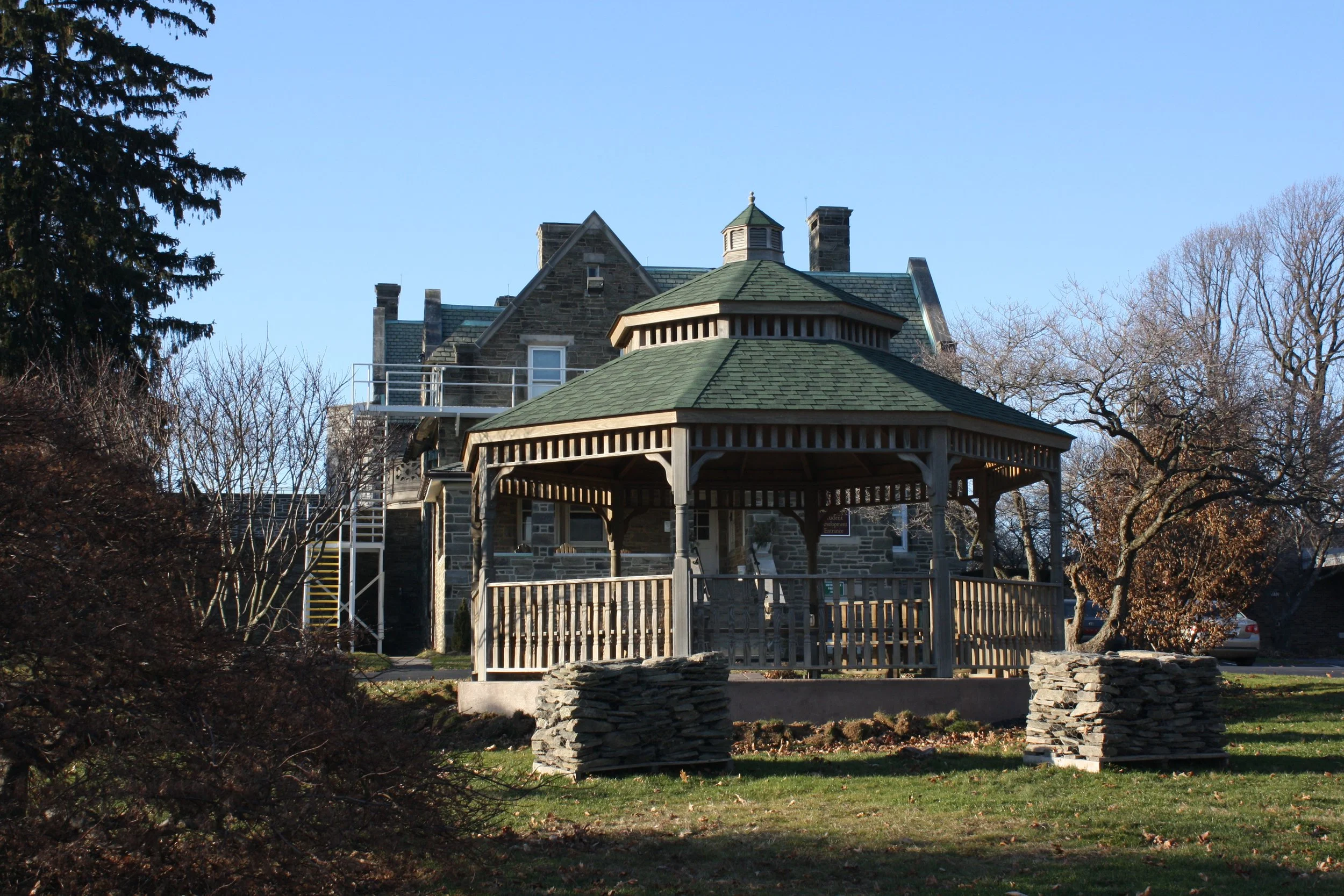
Westminster Theological Seminary, Machen Hall, Glenside, Pennsylvania. Photograph by Shuvaev, 2013. Wikimedia Commons, CC BY-SA 3.0.
On September 25, 1929, fifty students gathered in Philadelphia, Pennsylvania, for the opening of Westminster Theological Seminary, an institution established amid one of the most consequential theological controversies in twentieth-century American Presbyterianism. Its principal founder, J. Gresham Machen, had resigned from Princeton Theological Seminary after years of opposing changes that he believed threatened the institution’s historic commitment to biblical authority and Reformed theology. Addressing the new students and assembled guests, Machen declared:
“No, my friends, though Princeton Seminary is dead, the noble tradition of Princeton Seminary is alive. Westminster Seminary will endeavor by God’s grace to continue that tradition unimpaired.”
To understand why Machen considered Princeton dead, despite its continued existence, requires examining a theological dispute that had divided American Protestantism for decades.
Founded in 1812, Princeton Theological Seminary had become an influential center of Presbyterian theological education. Its professors included Charles Hodge and Benjamin Breckinridge Warfield, scholars who defended traditional Reformed doctrines while insisting that Christian theology deserved rigorous academic study. Princeton graduates served as ministers, missionaries, professors, and denominational leaders throughout the United States and beyond.
Machen entered this environment as a student in 1902 and joined Princeton’s faculty in 1906. Born in Baltimore in 1881, he had studied at Johns Hopkins University before pursuing theological education at Princeton and further study in Germany. He became a respected New Testament scholar whose academic interests included the historical foundations of Christianity and the relationship between Christian faith and modern intellectual movements.
By the early twentieth century, Protestant denominations were increasingly divided over theological modernism. Modernist theologians sought to interpret Christianity in light of contemporary scholarship, scientific developments, and changing understandings of religious experience. Their approaches varied, but some questioned traditional interpretations of biblical miracles, the virgin birth, the bodily resurrection of Jesus, and the historical reliability of Scripture.
Machen believed these differences went beyond competing interpretations of individual doctrines. In his influential 1923 book, Christianity and Liberalism, he argued that theological liberalism represented a fundamentally different understanding of Christianity rather than simply a modern expression of the historic faith.
The controversy became especially pronounced within the Presbyterian Church in the U.S.A., the denomination responsible for Princeton Seminary.
In 1924, the Auburn Affirmation, signed by more than 1,200 Presbyterian ministers, challenged efforts to require agreement with particular interpretations of several disputed doctrines as a condition of ministerial standing. Its supporters defended the document as an expression of Presbyterian liberty of conscience and resistance to excessive doctrinal restrictions. Machen and other conservatives believed the controversy concerned doctrines essential to Christianity itself.
The disagreement eventually reached Princeton’s governing structure.
For generations, Princeton had operated under separate governing boards that helped maintain its established theological identity. In 1929, the Presbyterian General Assembly approved a reorganization that combined the seminary’s governing bodies into a new board.
Supporters of the reorganization sought to resolve longstanding institutional disputes and bring Princeton’s administration into closer alignment with denominational oversight. Machen and his colleagues believed the changes weakened the safeguards that had preserved Princeton’s theological commitments.
Machen resigned rather than continue under the new arrangement.
He was joined by several other scholars associated with Princeton, including Robert Dick Wilson, Oswald T. Allis, and Cornelius Van Til. Together with additional faculty members and Presbyterian supporters, they began organizing an independent theological seminary that would continue the academic and doctrinal tradition they believed Princeton was abandoning.
The undertaking moved quickly.
During the summer of 1929, supporters secured financial commitments, recruited faculty, organized a curriculum, and arranged facilities in Philadelphia. The new institution was named Westminster Theological Seminary, reflecting its commitment to the Westminster Confession of Faith and the broader Reformed theological tradition.
Its first home was a building at 1528 Pine Street in Philadelphia.
The founding faculty included Machen, Wilson, Allis, Van Til, R. B. Kuiper, Ned B. Stonehouse, Paul Woolley, and Allan A. MacRae. Each brought academic or ministerial experience to the new institution, and several had sacrificed established positions to participate in its founding.
When Westminster opened on September 25, 1929, its enrollment of fifty students was modest compared with the established seminaries of the period.
Machen delivered an inaugural address titled Westminster Theological Seminary: Its Purpose and Plan. He explained that the institution would combine commitment to historic Presbyterian doctrine with serious biblical scholarship and the preparation of ministers.
The new seminary opened only weeks before the October 1929 stock market crash, which ushered in the Great Depression and created additional financial difficulties for American educational institutions.
Westminster nevertheless continued operating and gradually established itself as an important institution within conservative Reformed Protestantism.
Machen’s disagreements with the Presbyterian Church did not end with his departure from Princeton. Further controversies over foreign missions and denominational authority eventually led to his suspension from the Presbyterian ministry. In 1936, he helped establish the denomination that became known as the Orthodox Presbyterian Church.
He died on January 1, 1937, less than eight years after Westminster opened.
Princeton Theological Seminary continued its own institutional history, while Westminster developed as an independent center of Reformed theological education. Their divergent paths reflected the broader theological realignment occurring across American Protestantism during the twentieth century.
Why It Matters
Westminster Theological Seminary’s founding illustrates how theological disagreements within American Protestantism produced new educational institutions and denominations during the early twentieth century. The seminary became an influential center of Reformed scholarship and ministerial training, particularly within conservative Presbyterian and evangelical circles. Its establishment also demonstrated the lasting institutional consequences of the fundamentalist-modernist controversy, which reshaped American Protestant Christianity for generations.
