
September 27, 1604 - Colegio Mayor de San Bartolomé Founded
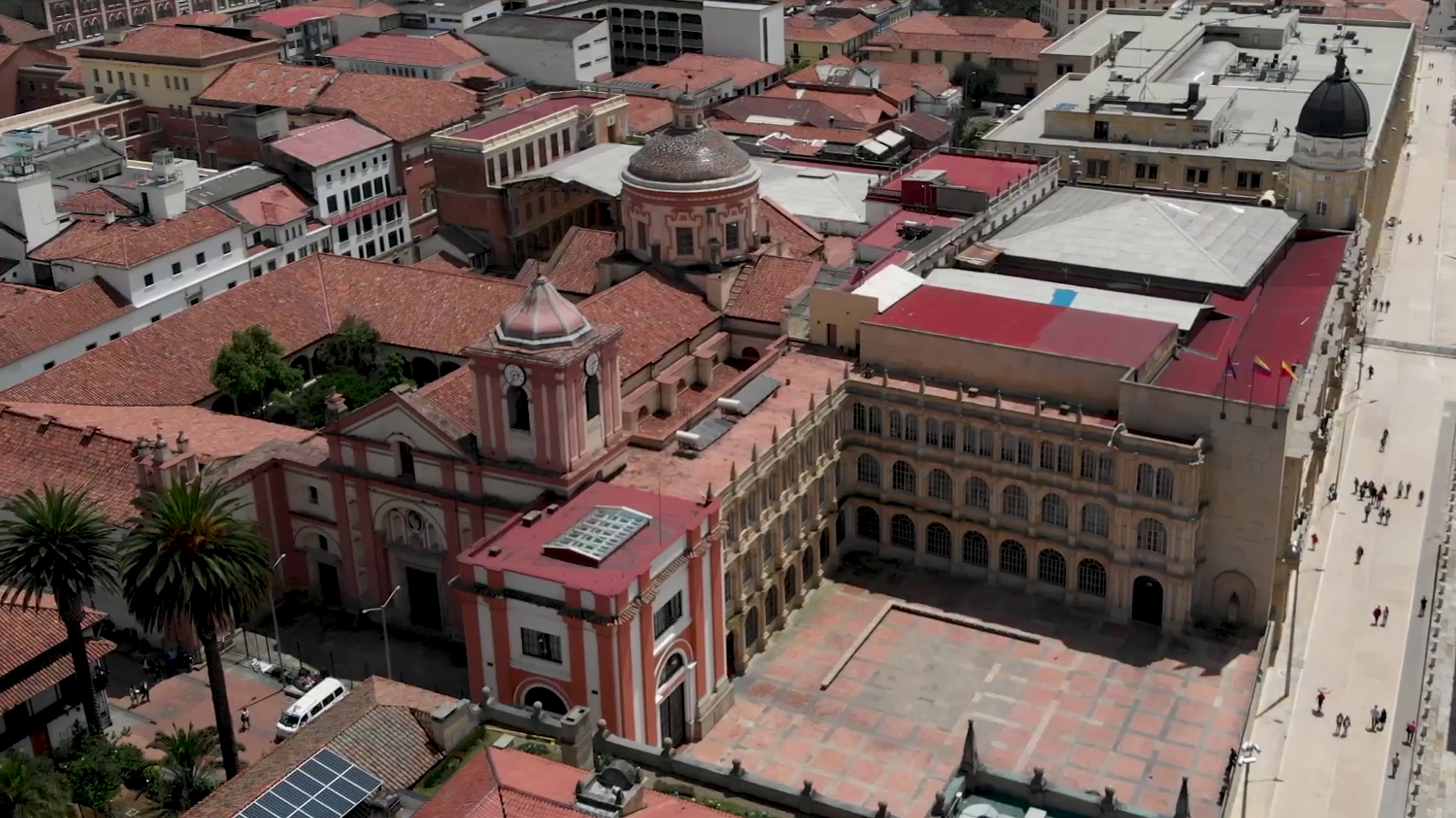
Colegio Mayor de San Bartolomé, Bogotá, Colombia. Photograph by Seferaz, 2023. Wikimedia Commons, CC BY-SA 4.0.
The history of formal education in Colombia is closely connected to the missionary work of the Society of Jesus. On September 27, 1604, Jesuit missionaries formally established a college in Santafé de Bogotá, then part of Spain’s colonial territories in South America. Known initially as the Colegio de la Compañía de Jesús, the institution would eventually become the Colegio Mayor de San Bartolomé, one of the most enduring educational institutions in Latin America.
The founding of the college was part of a larger Jesuit effort to establish schools throughout the Spanish Empire. Founded by Ignatius of Loyola and formally approved by Pope Paul III in 1540, the Society of Jesus had made education a central part of its religious mission. Jesuit schools combined instruction in classical subjects with Catholic theology, philosophy, and moral formation. By the beginning of the seventeenth century, the order had developed an extensive educational network stretching across Europe, Asia, and the Americas.
The Jesuits arrived in Santafé at a time when Spanish colonial authorities and Catholic church leaders were working to expand religious and educational institutions in the New World. The city, founded in 1538, served as an important administrative and ecclesiastical center in the New Kingdom of Granada, a territory encompassing much of present-day Colombia.
Six Jesuits arrived in Santafé from Cartagena on September 23, 1604, with the support of Archbishop Bartolomé Lobo Guerrero. Among the founding missionaries were José Dadey, Martín de Funes, Juan Bautista Coluccini, Martín de Torres, Bernabé de Rojas, and Diego Sánchez.
Four days later, on September 27, the Jesuits formally presented the royal authorization permitting the establishment of their college. The new institution occupied two houses near the city's principal square that had been purchased several years earlier in preparation for the educational undertaking.
Classes began on January 1, 1605, with approximately seventy students.
The college was intended to provide religious and intellectual training within the Spanish colonial system. Its curriculum developed around the educational principles of the Society of Jesus, emphasizing Latin, philosophy, theology, and other subjects considered essential for preparing clergy and educated members of colonial society.
The institution's identity developed further on October 18, 1605, when Archbishop Lobo Guerrero formally established the Colegio Seminario de San Bartolomé. The seminary was placed under Jesuit direction, and its students attended classes at the existing Jesuit college. The close relationship between the two institutions eventually produced the name Colegio Mayor y Seminario de San Bartolomé.
This distinction is important to the anniversary: the Jesuit college was established on September 27, 1604, while the seminary bearing the name San Bartolomé was formally established the following year.
One of the college's notable early students was Pedro Claver, who arrived in Santafé in 1610. Claver would eventually become a Jesuit missionary in Cartagena, where he ministered to enslaved Africans arriving through one of the Spanish Empire's principal slave-trading ports. His work among enslaved people became central to his historical reputation, and the Catholic Church canonized him in 1888.
The Jesuits also expanded their religious presence in Santafé through the construction of the Church of San Ignacio. Its foundation stone was laid in 1610, and the church became an important part of the religious and architectural complex surrounding the college.
The institution's educational influence increased considerably during the following decades. In 1621, Pope Gregory XV authorized Jesuit colleges in the Spanish Americas to confer academic degrees under specified conditions. Royal authorization followed in 1622.
On June 13, 1623, the necessary documents were formally presented to the authorities in Santafé, establishing the legal foundation for the Academia Javeriana, named in honor of the Jesuit missionary Francis Xavier.
The academy developed into the colonial Universidad Javeriana, an important predecessor of today's Pontificia Universidad Javeriana in Bogotá.
The college's history was not without interruption and controversy. In 1767, King Charles III ordered the expulsion of the Jesuits from Spanish territories, removing the religious order from the institutions it had established throughout the empire.
Although Jesuit administration ended, San Bartolomé continued operating under other authorities. Its educational mission survived the expulsion, the struggles for Colombian independence, and subsequent conflicts over the relationship between church and state.
During the nineteenth century, the institution experienced repeated changes in administration as Colombian governments alternately welcomed and expelled the Jesuits. These developments reflected broader disputes over the place of Catholic education in the emerging republic.
Despite these changes, the college remained an important part of Colombia's educational system. Its historic buildings near Bogotá's Plaza de Bolívar continue to testify to the Jesuits' early presence in the city.
Today, the Colegio Mayor de San Bartolomé traces its institutional history to that September day in 1604, when a small group of Jesuits received authorization to establish a school in colonial Santafé.
Why It Matters
The establishment of the Colegio Mayor de San Bartolomé illustrates the significant role Catholic religious orders played in developing formal education in colonial Latin America. The institution helped establish the foundations for university education in Colombia, contributed to the formation of generations of religious and civic leaders, and survived major political and ecclesiastical changes across more than four centuries.
