
September 12, 1803 - Stone-Campbell Movement Begins
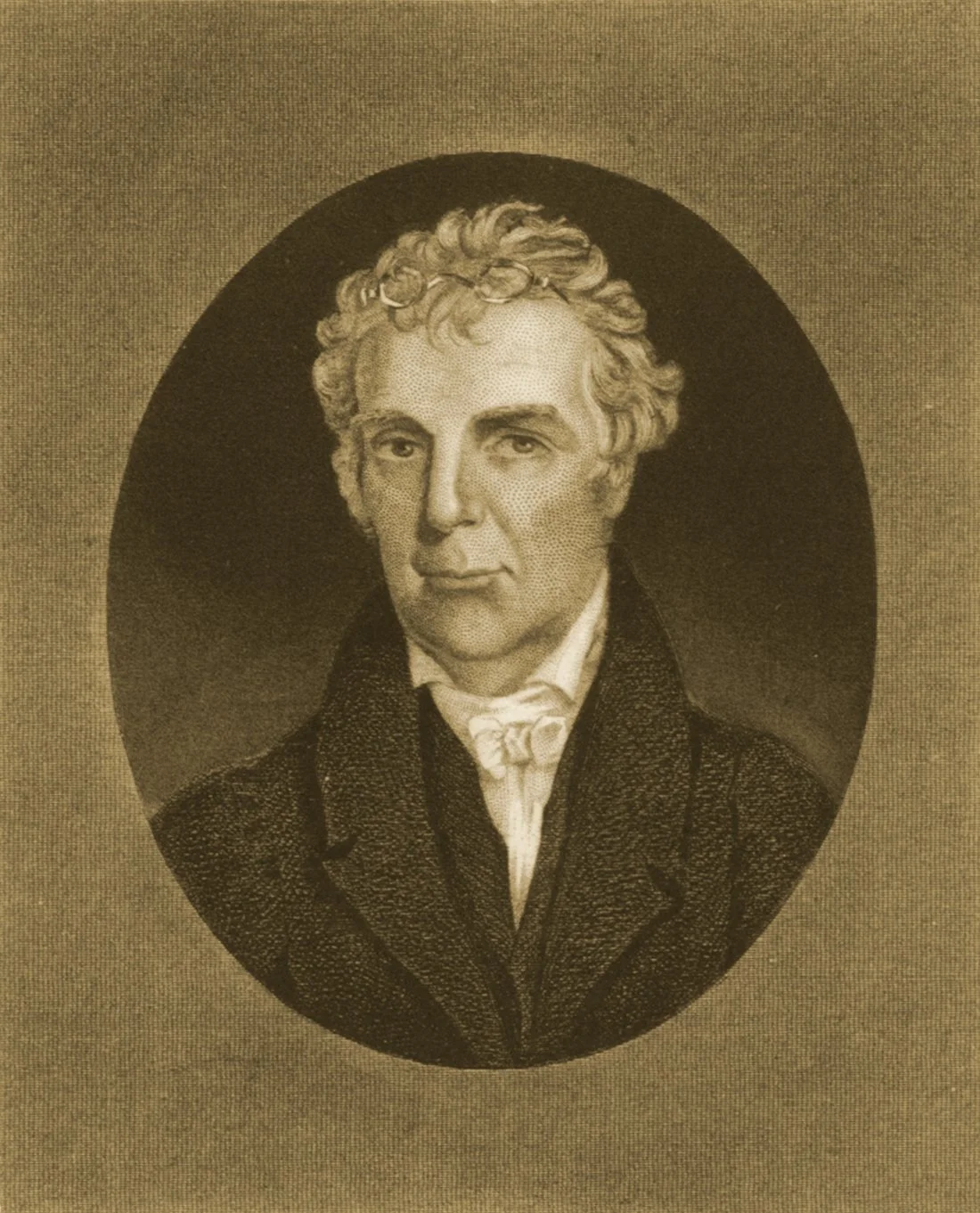
Engraving of Barton W. Stone from a portrait by Alexander Bradford who lived in Georgetown, Kentucky, in the 1820s. It appeared in the Biography of Elder Barton Warren Stone Written by Himself, With Additions and Reflections by Elder John Rogers, published in 1847.
On September 13, 1844, Barton Warren Stone died at the home of his daughter in Hannibal, Missouri. By then, the seventy-one-year-old preacher had spent more than four decades challenging the denominational divisions of American Christianity. What began amid the revivals of the Kentucky frontier eventually helped produce one of the largest religious movements to emerge from the early United States.
Stone was born near Port Tobacco, Maryland, on December 24, 1772. His father died when Barton was young, and the family eventually moved to North Carolina. As a young man, Stone encountered the religious ferment of the Second Great Awakening. He studied at David Caldwell’s academy in North Carolina, where he was exposed to Presbyterian theology, and eventually entered the ministry.
By the late 1790s, Stone had moved west to Kentucky and became minister of Presbyterian congregations at Cane Ridge and Concord. Kentucky was then a rapidly growing frontier society, and its churches were being transformed by an extraordinary wave of religious revival.
Stone became closely associated with the most famous of these gatherings: the Cane Ridge Revival of August 1801. Thousands of people traveled to Cane Ridge for days of preaching, prayer, communion, and religious excitement. Ministers from several Protestant traditions participated, and the crowds became so large that multiple preachers sometimes addressed different groups simultaneously. Reports described worshipers crying out, collapsing, trembling, and displaying other intense physical responses associated with frontier revivalism.
The experience also reinforced Stone’s growing dissatisfaction with denominational boundaries. At Cane Ridge, Christians from different traditions had worshiped together despite the theological and institutional divisions separating their churches. Stone increasingly questioned whether those divisions were compatible with the unity he believed the New Testament described.
Conflict with Presbyterian authorities soon followed. Stone and several other ministers objected to aspects of the Westminster Confession of Faith and resisted attempts to discipline ministers associated with the revival. In 1803, Stone and four colleagues withdrew and organized the independent Springfield Presbytery.
They soon concluded that creating another ecclesiastical organization merely perpetuated the problem they were attempting to solve.
In 1804, the ministers issued one of the most memorable documents in early American religious history, The Last Will and Testament of the Springfield Presbytery. Written in the language of a legal will, it announced that the presbytery should “die, be dissolved, and sink into union with the Body of Christ at large.” The document rejected centralized ecclesiastical authority and emphasized the ability of local Christians to study Scripture for themselves.
Stone and his associates increasingly abandoned denominational labels altogether. Rather than Presbyterians, Baptists, Methodists, or members of another named denomination, they preferred simply to be called “Christians.” Congregations associated with Stone spread across Kentucky and other parts of the expanding American West.
Stone’s movement was only one expression of a broader restorationist impulse developing in the early nineteenth century. In Pennsylvania and Virginia, Thomas Campbell and his son Alexander Campbell were pursuing a remarkably similar effort. The Campbells also came from Presbyterian backgrounds and became convinced that inherited denominational divisions obstructed Christian unity. They advocated returning to the New Testament as the foundation for Christian belief and practice rather than requiring adherence to denominational creeds.
The Stone and Campbell movements developed independently and were not identical. Stone was deeply shaped by frontier revivalism, while Alexander Campbell generally favored a more rational and systematic approach to restoring what he called the “ancient order” of Christianity. They also differed on important theological questions, including the nature of Christ and aspects of baptism and salvation.
Yet their similarities increasingly outweighed their differences. Both rejected denominationalism, emphasized Scripture over human creeds, sought the restoration of New Testament Christianity, and believed Christian unity should be possible without requiring agreement on every theological question.
In late 1831, representatives of the two movements met in Kentucky. On January 1, 1832, members of the Stone and Campbell groups in Lexington worshiped and shared communion together. The union spread through other congregations, aided especially by leaders such as John “Raccoon” Smith, who helped communicate the agreement among churches.
The resulting fellowship became known historically as the Stone-Campbell Movement or Restoration Movement. Stone continued preaching and publishing the Christian Messenger until near the end of his life. His relationship with Campbell did not eliminate their disagreements, but both men considered Christian unity more important than complete theological uniformity.
The movement they helped create continued expanding after Stone’s death in 1844 and Campbell’s death in 1866. Later controversies concerning missionary organizations, instrumental music in worship, biblical interpretation, and church organization eventually produced distinct branches. Today the principal traditions descended from the movement include the Christian Church (Disciples of Christ), the independent Christian Churches/Churches of Christ, and the Churches of Christ.
Why It Matters
Barton W. Stone became an important figure in the development of restorationist Christianity in the United States. His rejection of denominational structures, emphasis on Christian unity, and commitment to recovering New Testament Christianity helped shape the Stone-Campbell Movement, whose descendant churches became a significant part of American Protestantism.