
July 1, 1903 - Apache Chief Geronimo Baptized
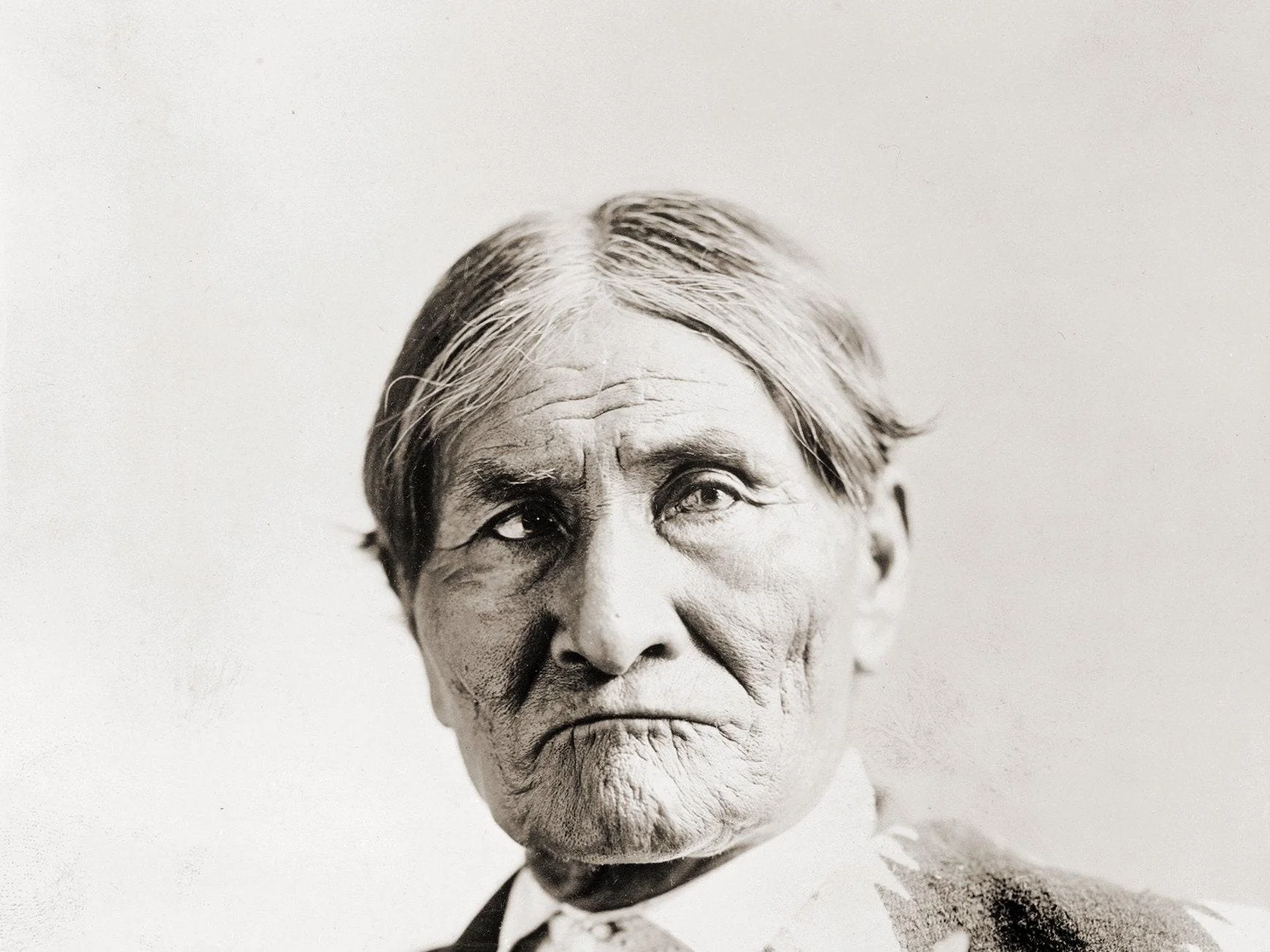
Gerhard Sisters, Geronimo, photograph, c. 1904. Library of Congress, Prints and Photographs Division. No known restrictions on publication. https://www.loc.gov/pictures/item/2011647021/
Long before the American frontier had been settled, Christian missionaries accompanied explorers, soldiers, and settlers into Native lands. Some sought to share the Gospel through learning local languages and building relationships, while others became entangled with government policies that displaced Native peoples and attempted to erase their cultures. The history of Christianity among Native Americans is therefore one of both sincere faith and profound tragedy.
One of the most unexpected converts was the famed Apache leader Geronimo. Born Goyaałé around 1829, Geronimo spent much of his life resisting Mexican and later American military campaigns after his family was killed in an attack by Mexican soldiers. His daring raids and remarkable ability to evade capture made him one of the most recognizable figures of the American West. After surrendering in 1886, however, he spent the remainder of his life as a prisoner of war in the Oklahoma Territory.
During those years of captivity, Geronimo came into regular contact with Christian missionaries. Their influence eventually led him to profess faith in Christ, and on July 1, 1903, he was baptized into the Methodist Church at Medicine Creek, Oklahoma Territory. In his autobiography, Geronimo explained that he believed Christianity helped him become a better man, writing, "I have adopted the Christian religion... I am not ashamed to be a Christian." Although his spiritual journey was uneven—he later drifted away from the church before seeking reconciliation—it reflected a sincere struggle to reconcile a violent past with a new faith.
Why This Matters
Geronimo's baptism reminds us that Christian history is rarely simple. It reflects both the complicated relationship between Christianity and Native American communities and the deeply personal nature of conversion. His story illustrates that the Gospel often took root in unexpected places and among unlikely people, while also encouraging Christians to acknowledge both the successes and the failures of the Church's witness to Indigenous peoples throughout North American history.
