
July 2, 1752 - First Bible Printed for the Algonquian People
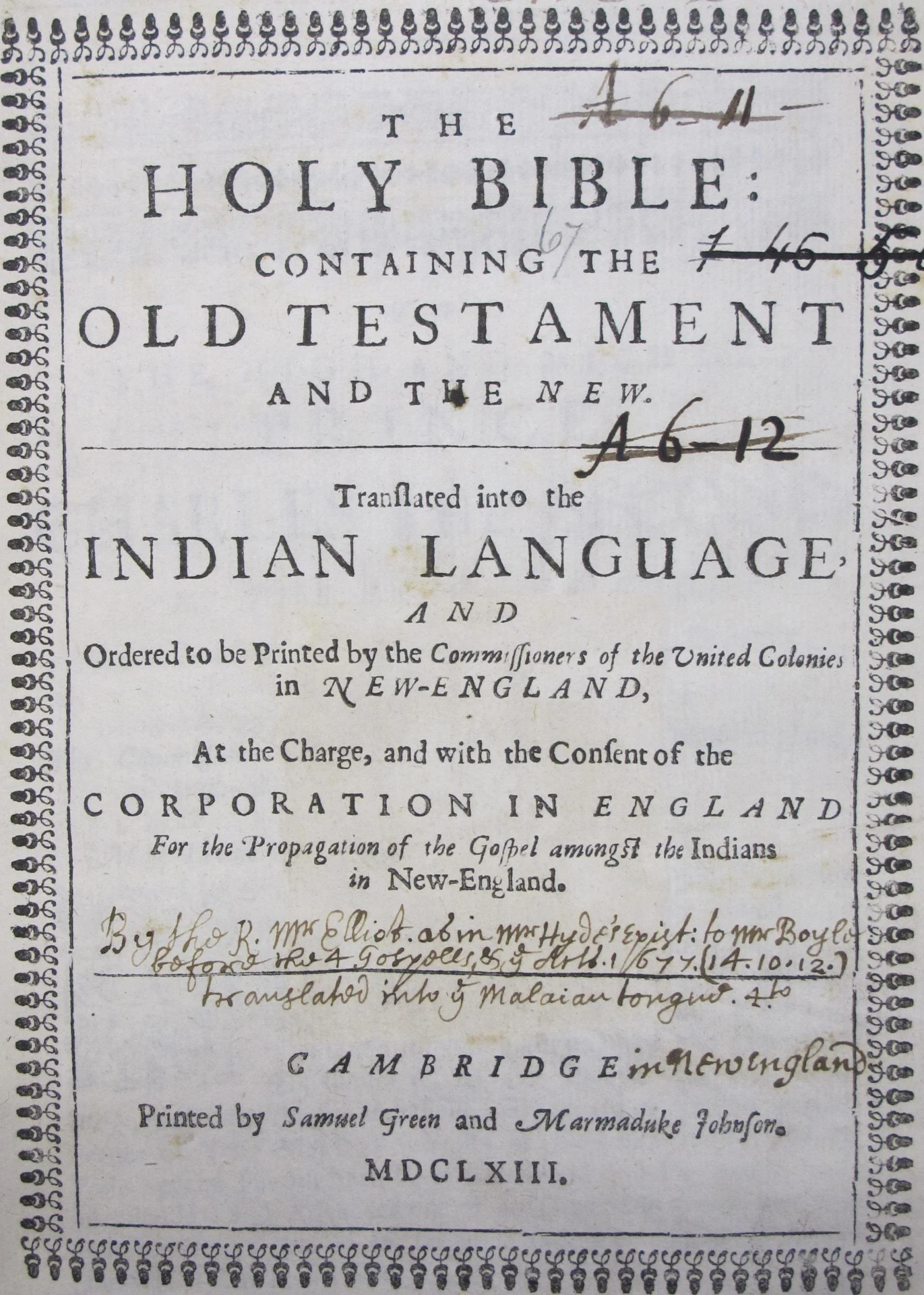
Library of Congress. The Eliot Indian Bible: The First Bible Printed in America. Rare Book and Special Collections Division, Bible Collection, Call No. BS345 A2E4 1663. https://www.loc.gov/exhibits/bibles/interactives/more/other13.html
Long before English-language Bibles rolled off American printing presses, one of the most remarkable publishing achievements in colonial history was produced for an entirely different audience. On July 2, 1752, the second edition of the complete Bible in the Algonquian language was printed in Boston, reflecting an extraordinary effort to place Scripture into the hands of Native Americans in their own language.
The driving force behind this work was the Puritan missionary John Eliot, often remembered as the "Apostle to the Indians." Convinced that genuine Christian discipleship required people to hear and read God's Word in their own language, Eliot spent years learning the Algonquian dialect spoken by many Native peoples of southern New England. His translation demanded painstaking linguistic work, as no written form of the language previously existed. The project required the creation of an alphabet, grammar, and vocabulary before the Scriptures could even be translated.
Ironically, it remained less expensive to import English Bibles from England than to print them in the American colonies. Because of that economic reality, the first Bible printed in what is now the United States was not in English at all—it was produced specifically for Native American readers. The 1752 edition replaced many copies of Eliot's original 1663 printing, which had become scarce after decades of use.
Why does this matter?
Eliot's Bible reminds us that Christian missions have often been inseparable from the work of translation. From the earliest centuries of the Church, believers recognized that the gospel was not confined to one language or culture. By investing years in learning the language of the Algonquian people, Eliot demonstrated a conviction that every nation and every people deserved access to Scripture in words they could understand. His Bible stands as one of the earliest and most enduring monuments to Bible translation in North American history.
