
July 3, 529 - Synod of Orange
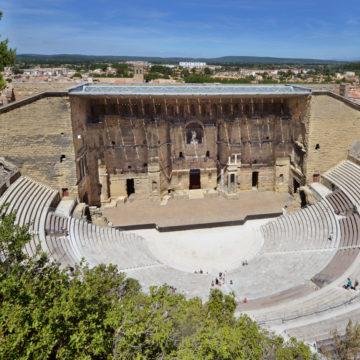
Gromelle Grand Angle. Le Théâtre Antique d'Orange, France. Wikimedia Commons. Licensed under CC BY-SA 3.0. https://commons.wikimedia.org/wiki/File:Le_Th%C3%A9%C3%A2tre_Antique_d%27Orange,_2007.jpg
Although church councils often focused on disputes over doctrine, one gathering in southern Gaul helped shape Christian teaching on a question that had divided theologians for generations: How do God's grace and human free will work together in salvation?
That question took center stage when the Synod of Orange convened in the city of Arausio (modern Orange, France) on July 3, 529. Presided over by Caesarius of Arles, the assembly brought together thirteen bishops to address the growing influence of Semi-Pelagianism, a theological position that taught human beings could take the first step toward God through their own will before receiving divine grace.
The bishops rejected that view, affirming instead that even the initial desire to seek God is itself the result of God's grace. Drawing heavily from the writings of St. Augustine, the synod declared that salvation begins entirely through God's initiative while still affirming that people freely cooperate with that grace after it has been given. At the same time, the council avoided the more extreme interpretations sometimes associated with Augustine by rejecting the idea that God predestines anyone to evil or condemnation.
Although it was a regional council rather than an ecumenical one, its decisions proved highly influential. Later that same year, Pope Boniface II formally approved the synod's canons, giving them broader authority throughout the Western Church. The Synod of Orange became one of the most important statements on grace in Christian history, shaping medieval theology and continuing to influence discussions between Catholics and Protestants centuries later.
Why It Matters
The Synod of Orange stands as one of the most influential church councils you've probably never heard of. While it never achieved the status of an ecumenical council like Nicaea or Chalcedon, its conclusions helped define the Western Church's understanding of salvation for centuries. By affirming that every aspect of salvation begins with God's grace while preserving genuine human responsibility, the synod rejected both Pelagianism and more extreme forms of predestination. Its balanced treatment of grace and free will influenced medieval theology, shaped Roman Catholic teaching, and continues to be cited in discussions between Catholics and Protestants today. Few regional councils have left such a lasting theological legacy.

