
July 4, 1832 - "My Country 'Tis of Thee" Written
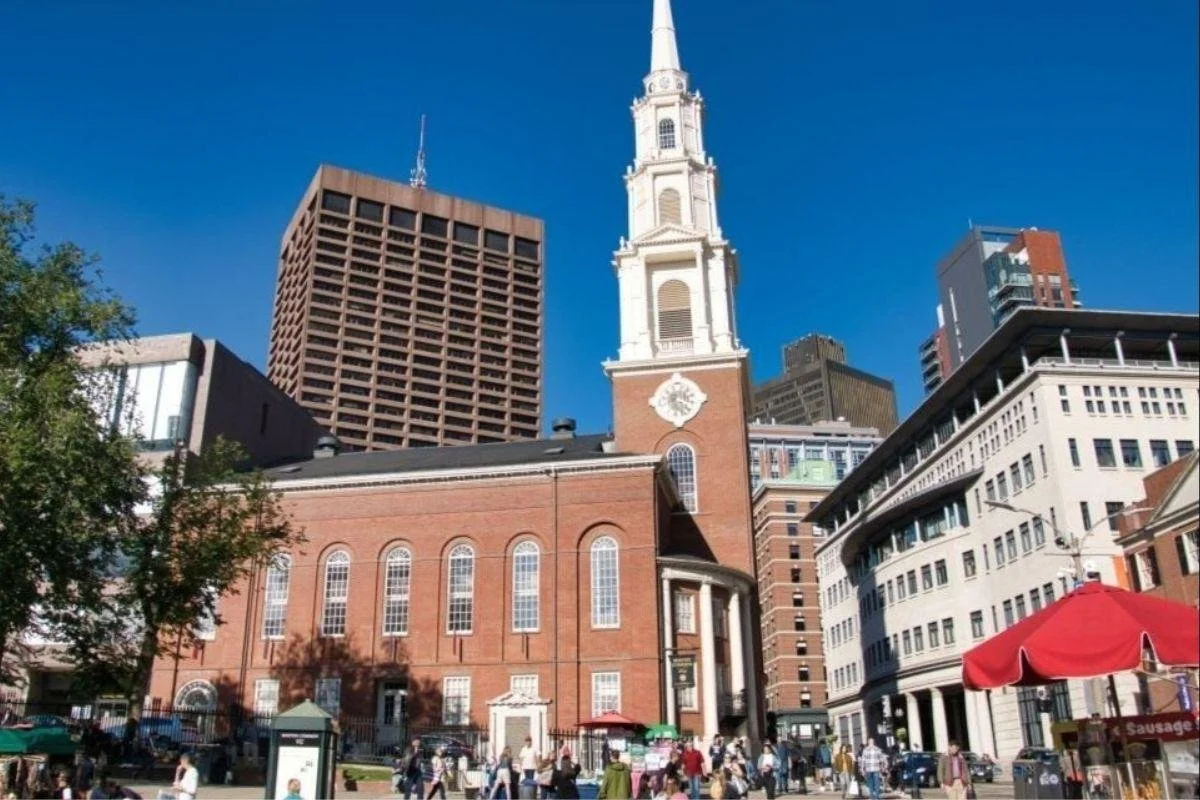
Wikimedia Commons – Park Street Church, Boston, Massachusetts
https://commons.wikimedia.org/wiki/Category:Park_Street_Church_(Boston)
One of America's most beloved patriotic hymns had its public debut in a church sanctuary rather than at a civic celebration. As the nation prepared to celebrate Independence Day, a children's choir at Boston's historic Park Street Church introduced a new song that would become woven into the fabric of American life.
The occasion came on July 4, 1832, when the choir first sang “My Country, ’Tis of Thee” before the congregation. The hymn, more commonly known simply as “America,” was written by the Rev. Samuel Francis Smith while he was a student at Andover Theological Seminary. Ironically, Smith paired his patriotic lyrics with the familiar melody of the British national anthem, “God Save the King.” Rather than diminishing its appeal, the familiar tune helped the song spread rapidly throughout the United States.
Smith would go on to become a Baptist minister and respected hymn writer. A graduate of Harvard, where he had been classmates with Oliver Wendell Holmes Sr., he devoted much of his life to Christian ministry while continuing to write hymns that emphasized faith, liberty, and gratitude to God.
For generations, “My Country, ’Tis of Thee” served as the unofficial national anthem of the United States before the adoption of “The Star-Spangled Banner” in 1931. Its opening line—“My country, ’tis of thee, sweet land of liberty”—became instantly recognizable to millions of Americans and was sung in churches, schools, and public gatherings across the nation.
Why It Matters
The debut of “My Country, ’Tis of Thee” reminds us that, in early nineteenth-century America, expressions of patriotism and Christian worship were often closely intertwined. Introduced within one of Boston's most influential evangelical churches, the hymn reflected a generation that saw gratitude for national freedom as something worthy of being expressed before God as well as before fellow citizens.
