
July 5, 1844 - Kensington Riots Begin
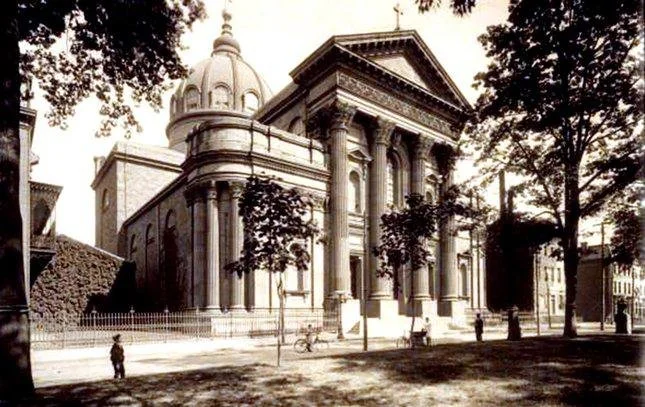
"St. Philip Neri Church, Philadelphia." Photograph. Wikimedia Commons. https://commons.wikimedia.org/wiki/Category:St._Philip_Neri_Church_(Philadelphia). Accessed June 27, 2026.
Immigration was one of the most explosive issues in mid-nineteenth-century America. As thousands of Irish Catholics arrived in cities like Philadelphia, competition for jobs, religious differences, and political tensions fueled growing hostility between native-born Protestants and Catholic immigrants.
Those tensions erupted during the Philadelphia Nativist Riots of 1844. After earlier violence had destroyed two Catholic churches in May, parishioners at St. Philip Neri Church in the Kensington neighborhood prepared to defend their congregation against another anticipated attack. Rather than abandon the church, they fortified the grounds and armed themselves for protection.
On the evening of July 5, 1844, the local militia positioned three cannons facing St. Philip Neri Church as more than a thousand rioters gathered nearby. Fighting continued into the following day, but unlike the churches destroyed earlier that year, St. Philip Neri remained standing. The determined defense by parishioners, combined with the presence of militia forces, ultimately dispersed the mob and prevented the church from being burned.
Today, St. Philip Neri Church remains one of the few surviving physical reminders of the anti-Catholic violence that swept Philadelphia in 1844. The riots exposed deep religious and ethnic divisions within the United States while also demonstrating the determination of immigrant Christian communities to preserve both their faith and their place in American society.
Why It Matters
The defense of St. Philip Neri illustrates how religious liberty in America has often been tested during periods of intense social and political conflict. The events of July 1844 remind us that freedom of worship has sometimes required extraordinary courage from ordinary believers.
