
July 6, 1415 - Jan Hus Burned at the Stake
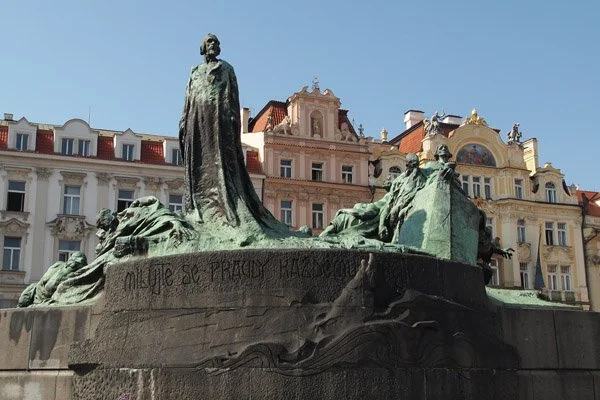
Ludmila Pilecká, "Jan Hus Memorial, Old Town Square, Prague," Wikimedia Commons, CC BY-SA 3.0, https://commons.wikimedia.org/wiki/File:Pomn%C3%ADk_Mistra_Jana_Husa.jpg.
One hundred years before Martin Luther nailed his Ninety-Five Theses to the church door at Wittenberg, another reformer was already calling the Church back to biblical faithfulness.
Jan Hus, a Czech preacher and scholar at the University of Prague, believed the Church had drifted from the teachings of Scripture. While he challenged abuses of papal authority, one of his greatest concerns was much more practical: ordinary Christians could not fully participate in worship when the Mass was conducted exclusively in Latin. Hus argued that God's Word and the worship of the Church should be accessible to the people in their own language so they could better understand and grow in their faith.
His ideas drew heavily from the earlier English reformer John Wycliffe and earned him powerful enemies. Summoned to the Council of Constance under a promise of safe conduct, Hus was instead arrested, tried for heresy, and repeatedly ordered to recant his teachings. Refusing to deny what he believed Scripture taught, he was condemned and burned at the stake on July 6, 1415.
Although Hus did not live to see the Protestant Reformation, his writings and example profoundly influenced later reformers, especially Martin Luther. His martyrdom also sparked the Hussite movement in Bohemia, demonstrating that calls for reform within the Church were growing long before the sixteenth century.
Why it matters:
Jan Hus reminds us that the Protestant Reformation did not begin overnight. His commitment to Scripture, understandable worship, and personal conviction helped lay the foundation for one of the most significant movements in Christian history.

