
Christian History Today
Resources for your journey through the exploration of Christian History.

May 5, 533 - Fifth Ecumenical Council Convenes
May 5, 533 held the Fifth Ecumencial Council, also known as the Second Council of Constantinople. It was one of the seven Ecumencial councils recognized by many Christian traditions, and it was held with the purpose of doctrinal clarification.

May 4, 1814 - Thomas Coke Dies at Sea
The first bishop of the Methodist Church, Thomas Coke was an early leader in global Methodism and missions. Both an attorney and the mayor of Brecon, Wales, he was ordained by John Wesley and was a key agent in spreading Methodism beyond England.

May 3, 1679 - James Sharp Murdered
James Sharp was a key and controversial religious leader in 17th-century Scotland. Following the Restoration of the monarchy under Charles II, he was named archbishop of St. Andrews, making him the head of the Church of England in Scotland and reimposing episcopal church governance.

May 2, 373 - Alexandrian Bishop Athanasius Dies
The former bishop of Alexandria, Egypt, Athanasius, was the first person to use the term “canon” when referring to Scripture and its authority, and he opposed a major heresy known as Arianism. Named for Alexandrian churchman Arius, Arianism stated that Jesus was not in full agreement with God the Father, and therefore the concept of the Trinity could not be correct. This led to the formation of the Council of Nicea, where Athanasius would be exiled several times and ultimately flee for his life. Despite this, his faith and his positions about the total authority of Scripture never wavered. He died on May 2, 373.

May 1, 1942 - Father Charles Coughlin Warned about his Pro-Nazi Tendencies
During the 1930s, Germany gained several unexpected allies as it fell to Nazi influence, one of which being Father Charles Coughlin from Michigan. Coughlin was one of the first major political influencers in U.S. history as his national radio program reached 30-40 million listeners weekly. Originally he supported FDR, but upon Hitler’s rise to power, he began to support the Nazi regime.
April 30, 418 - Pelagians Banned from Roman Empire
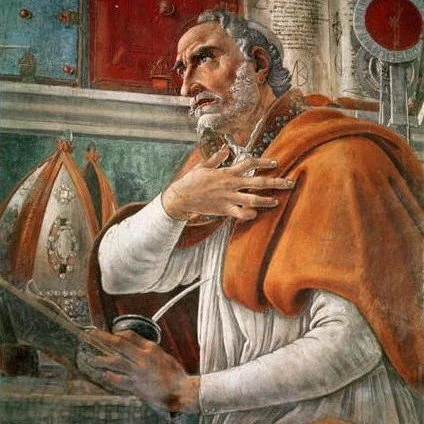
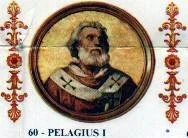
The Council of Nicea in 325 AD marked one of the first major instances of imperial involvement in church doctrine. Pelagius, the original “anti-calvanist” was a theologian who believed in human moral responsibility, rejecting the idea of original sin as taught by his opponents. His primary theological opponent was Augustine of Hippo, who argued for grace and human inability without God. On April 30, 418, at the Council of Carthage, Pelagianism was officially condemned, and all Pelagians were banned from Rome as they were considered a threat to the Empire’s peace. Roman Emperor Honorius issued the ban in an attempt to maintain religious and political unity within the empire.

April 29, 1529 - Town in Switzerland Criminalizes Mass
In 1529, during the early stages of the Protestant Reformation, the nation of Switzerland began to separate itself from the Roman Catholic Church. The city of Basel became a center for Reformation thought and printing, helping to spread Protestant ideas across Europe.

April 28, 1801 - Lord Shaftesbury Born
At Piccadilly Circus, the busiest intersection in London, England, there sits a fountain called “The Angel of Christian Charity,” which some call “Eros.” Placed there to commemorate Lord Shaftesbury, born April 28, 1801, it symbolizes Shaftesbury’s belief that his Christian duty was to support the less fortunate.

April 27, 1960 - Protest Saves Polish Cross
With Marxism on the rise, Nowa Huta, Poland was planned to be a communist city fashioned to be a model of an atheistic, industrial society with no churches. On April 27, 1960, police were deployed to remove a cross from a church construction site, which sparked what is frequently known as the “Defense of the Cross” protests.


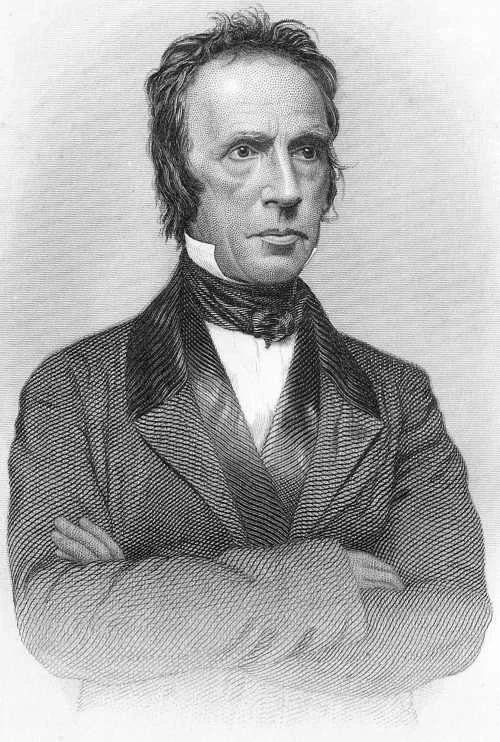
April 23, 1968 - Walter Scott
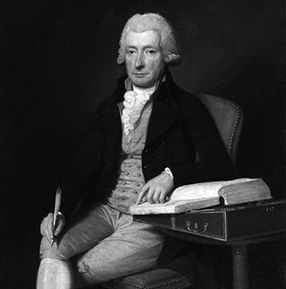
A Scottish immigrant, Scott was one of the most effective early evangelists of the Stone-Campbell (Restoration) Movement in the United States. He arrived in the United States in 1818, and he became closely connected with reform efforts led by Alexander Campbell and those who sought to restore New Testament Christianity free from denominational creeds.